
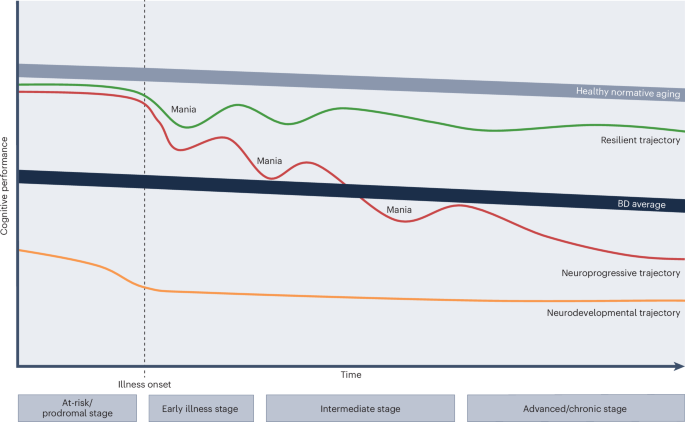
Millan, M. J. et al. Cognitive dysfunction in psychiatric disorders: characteristics, causes and the quest for improved therapy. Nat. Rev. Drug Discov. 11, 141–168 (2012).
Van Rheenen, T. E. et al. Current understandings of the trajectory and emerging correlates of cognitive impairment in bipolar disorder: an overview of evidence. Bipolar Disord. 22, 13–27 (2020).
Bora, E. A meta-analysis of data-driven cognitive subgroups in bipolar disorder. Eur. Neuropsychopharmacol. 90, 48–57 (2025).
Roux, P. et al. Prevalence and determinants of cognitive impairment in the euthymic phase of bipolar disorders: results from the FACE-BD cohort. Psychol. Med. 49, 519–527 (2019).
Tse, S., Chan, S., Ng, K. L. & Yatham, L. N. Meta-analysis of predictors of favorable employment outcomes among individuals with bipolar disorder. Bipolar Disord. 16, 217–229 (2014).
Christensen, T. N., Wallstrøm, I. G., Eplov, L. F., Laursen, T. M. & Nordentoft, M. Incidence rates and employment trends in schizophrenia spectrum disorders, bipolar affective disorders and recurrent depression in the years 2000–2013: a Danish nationwide register-based study. Nordic J. Psychiatry 76, 225–232 (2022).
Bessonova, L., Ogden, K., Doane, M. J., O’Sullivan, A. K. & Tohen, M. The economic burden of bipolar disorder in the United States: a systematic literature review. Clinicoecon. Outcomes Res. 12, 481–497 (2020).
O’Donnell, L. A. et al. Depression and executive functioning deficits predict poor occupational functioning in a large longitudinal sample with bipolar disorder. J. Affect. Disord. 215, 135–142 (2017).
Miskowiak, K. W., Mariegaard, J., Jahn, F. S. & Kjærstad, H. L. Associations between cognition and subsequent mood episodes in patients with bipolar disorder and their unaffected relatives: a systematic review. J. Affect. Disord. 297, 176–188 (2022).
Sankar, A. et al. Association of neurocognitive function with psychiatric hospitalization and socio-demographic conditions in individuals with bipolar and major depressive disorders. EClinicalMedicine 58, 101927 (2023).
Martínez-Arán, A. et al. Cognitive dysfunctions in bipolar disorder: evidence of neuropsychological disturbances. Psychother. Psychosom. 69, 2–18 (2000).
Schretlen, D. J., Finley, J.-C. A., Del Bene, V. A. & Varvaris, M. The ubiquity of cognitive impairment in human illness: a systematic review of meta-analyses. Arch. Clin. Neuropsychol. 40, 863–877 (2024).
Samame, C., Szmulewicz, A., Valerio, M. P., Martino, D. J. & Strejilevich, S. Are major depression and bipolar disorder neuropsychologically distinct? A meta-analysis of comparative studies. Eur. Psychiatry 39, 17–26 (2017).
Arts, B., Jabben, N., Krabbendam, L. & Van Os, J. Meta-analyses of cognitive functioning in euthymic bipolar patients and their first-degree relatives. Psychol. Med. 38, 771–785 (2008).
Torres, I., Boudreau, V. & Yatham, L. Neuropsychological functioning in euthymic bipolar disorder: a meta-analysis. Acta Psychiatr. Scand. 116, 17–26 (2007).
Bora, E., Yucel, M. & Pantelis, C. Cognitive endophenotypes of bipolar disorder: a meta-analysis of neuropsychological deficits in euthymic patients and their first-degree relatives. J. Affect. Disord. 113, 1–20 (2009).
Robinson, L. J. et al. A meta-analysis of cognitive deficits in euthymic patients with bipolar disorder. J. Affect. Disord. 93, 105–115 (2006).
Mann-Wrobel, M. C., Carreno, J. T. & Dickinson, D. Meta-analysis of neuropsychological functioning in euthymic bipolar disorder: an update and investigation of moderator variables. Bipolar Disord. 13, 334–342 (2011).
Kurtz, M. M. & Gerraty, R. T. A meta-analytic investigation of neurocognitive deficits in bipolar illness: profile and effects of clinical state. Neuropsychology 23, 551–562 (2009).
Bourne, C. et al. Neuropsychological testing of cognitive impairment in euthymic bipolar disorder: an individual patient data meta-analysis. Acta Psychiatr. Scand. 128, 149–162 (2013).
Green, M. J., Girshkin, L., Kremerskothen, K., Watkeys, O. & Quidé, Y. A systematic review of studies reporting data-driven cognitive subtypes across the psychosis spectrum. Neuropsychol. Rev. 30, 446–460 (2020).
Chakrabarty, T. et al. Cognitive subgroups in first episode bipolar I disorder: relation to clinical and brain volumetric variables. Acta Psychiatr. Scand. 143, 151–161 (2021).
Kjærstad, H. L., Eikeseth, F. F., Vinberg, M., Kessing, L. V. & Miskowiak, K. Neurocognitive heterogeneity in patients with bipolar disorder and their unaffected relatives: associations with emotional cognition. Psychol. Med. 51, 668–679 (2021).
Burdick, K. E. & Millett, C. E. Cognitive heterogeneity is a key predictor of differential functional outcome in patients with bipolar disorder. Eur. Neuropsychopharmacol. 53, 4–6 (2021).
Lima, F. et al. Identifying cognitive subgroups in bipolar disorder: a cluster analysis. J. Affect. Disord. 246, 252–261 (2019).
Van Rheenen, T. & Rossell, S. Facial emotion recognition impairments in bipolar disorder. A cognitive problem? J. Int. Neuropsychol. Soc. 22, 583–585 (2016).
Bora, E. & Özerdem, A. A meta-analysis of neurocognition in youth with familial high risk for bipolar disorder. Eur. Psychiatry 44, 17–23 (2017).
Gillissie, E. S. et al. Evaluating cognitive function in unaffected relatives of individuals with bipolar disorders: a meta-analysis. J. Psychiatr. Res. 152, 289–295 (2022).
Lin, K. et al. Differences in cognitive deficits in individuals with subthreshold syndromes with and without family history of bipolar disorder. J. Psychiatr. Res. 91, 177–183 (2017).
Ratheesh, A. et al. Neurocognitive functioning in the prodrome of mania—an exploratory study. J. Affect. Disord. 147, 441–445 (2013).
Meyer, S. E. et al. A prospective study of the association among impaired executive functioning, childhood attentional problems, and the development of bipolar disorder. Dev. Psychopathol. 16, 461–476 (2004).
Cannon, M. et al. Evidence for early-childhood, pan-developmental impairment specific to schizophreniform disorder: results from a longitudinal birth cohort. Arch. Gen. Psychiatry 59, 449–456 (2002).
Osler, M., Lawlor, D. A. & Nordentoft, M. Cognitive function in childhood and early adulthood and hospital admission for schizophrenia and bipolar disorders in Danish men born in 1953. Schizophr. Res. 92, 132–141 (2007).
Hiyoshi, A. et al. Precursors in adolescence of adult-onset bipolar disorder. J. Affect. Disord. 218, 353–358 (2017).
Tiihonen, J. et al. Premorbid intellectual functioning in bipolar disorder and schizophrenia: results from a cohort study of male conscripts. Am. J. Psychiatry 162, 1904–1910 (2005).
Reichenberg, A. et al. A population-based cohort study of premorbid intellectual, language, and behavioral functioning in patients with schizophrenia, schizoaffective disorder, and nonpsychotic bipolar disorder. Am. J. Psychiatry 159, 2027–2035 (2002).
Zammit, S. et al. A longitudinal study of premorbid IQ score and risk of developing schizophrenia, bipolar disorder, severe depression, and other nonaffective psychoses. Arch. Gen. Psychiatry 61, 354–360 (2004).
Elias, L. R. et al. Cognitive impairment in euthymic pediatric bipolar disorder: a systematic review and meta-analysis. J. Am. Acad. Child Adolesc. Psychiatry 56, 286–296 (2017).
Sleurs, D. et al. Functioning and neurocognition in very early and early-life onset bipolar disorders: the moderating role of bipolar disorder type. Eur. Child Adolesc. Psychiatry 33, 4029–4041 (2024).
Bora, E. & Pantelis, C. Meta-analysis of cognitive impairment in first-episode bipolar disorder: comparison with first-episode schizophrenia and healthy controls. Schizophr. Bull. 41, 1095–1104 (2015).
Torres, I. J. et al. Neurocognitive functioning in patients with bipolar I disorder recently recovered from a first manic episode. J. Clin. Psychiatry 71, 1234–1242 (2010).
Cardoso, T., Bauer, I. E., Meyer, T. D., Kapczinski, F. & Soares, J. C. Neuroprogression and cognitive functioning in bipolar disorder: a systematic review. Curr. Psychiatry Rep. 17, 75 (2015).
Bora, E. & Özerdem, A. Meta-analysis of longitudinal studies of cognition in bipolar disorder: comparison with healthy controls and schizophrenia. Psychol. Med. 47, 2753–2766 (2017).
Montejo, L. et al. Cognition in older adults with bipolar disorder: an ISBD task force systematic review and meta-analysis based on a comprehensive neuropsychological assessment. Bipolar Disord. 24, 115–136 (2022).
Samamé, C., Martino, D. J. & Strejilevich, S. A. Longitudinal course of cognitive deficits in bipolar disorder: a meta-analytic study. J. Affect. Disord. 164, 130–138 (2014).
Szmulewicz, A., Valerio, M. P. & Martino, D. J. Longitudinal analysis of cognitive performances in recent-onset and late-life bipolar disorder: a systematic review and meta-analysis. Bipolar Disord. 22, 28–37 (2020).
Samame, C., Cattaneo, B. L., Richaud, M. C., Strejilevich, S. & Aprahamian, I. The long-term course of cognition in bipolar disorder: a systematic review and meta-analysis of patient-control differences in test-score changes. Psychol. Med. 52, 217–228 (2022).
Kjærstad, H. L., Poulsen, E., Vinberg, M., Kessing, L. V. & Miskowiak, K. W. Differential trajectory of cognitive functions in neurocognitive subgroups of newly diagnosed patients with bipolar disorder and their unaffected first-degree relatives—a longitudinal study. J. Affect. Disord. 311, 115–125 (2022).
Ehrlich, T. J. et al. Cognitive subgroups and their longitudinal trajectories in bipolar disorder. Acta Psychiatr. Scand. 146, 240–250 (2022).
Hinrichs, K. H. et al. Influence of cognitive reserve on neuropsychological functioning in bipolar disorder: findings from a 5-year longitudinal study. Bipolar Disord. 19, 50–59 (2017).
Kozicky, J.-M. et al. Cognitive change in the year after a first manic episode: association between clinical outcome and cognitive performance early in the course of bipolar I disorder. J. Clin. Psychiatry 75, 3155 (2014).
Sánchez-Morla, E. M. et al. Impact of number of episodes on neurocognitive trajectory in bipolar disorder patients: a 5-year follow-up study. Psychol. Med. 49, 1299–1307 (2019).
Chen, W.-Y. et al. The heterogeneity of longitudinal cognitive decline in euthymic bipolar I disorder with clinical characteristics and functional outcomes. Front. Psychiatry 12, 684813 (2021).
Chang, W. H. et al. Which severe mental illnesses most increase the risk of developing dementia? Comparing the risk of dementia in patients with schizophrenia, major depressive disorder and bipolar disorder. Clin. Psychopharmacol. Neurosci. 21, 478–498 (2023).
Kessing, L. & Andersen, P. Does the risk of developing dementia increase with the number of episodes in patients with depressive disorder and in patients with bipolar disorder? J. Neurol. Neurosurg. Psychiatry 75, 1662–1666 (2004).
Berk, M. et al. Pathways underlying neuroprogression in bipolar disorder: focus on inflammation, oxidative stress and neurotrophic factors. Neurosci. Biobehav. Rev. 35, 804–817 (2011).
Strejilevich, S. A., Samamé, C. & Quiroz, D. The neuroprogression hypothesis in bipolar disorders: time for apologies? Bipolar Disord. 25, 353–354 (2023).
Samamé, C. What do psychiatrists do with hypotheses proven false? The case of neuroprogression in bipolar disorders. Psychol. Med. 54, 41–42 (2024).
Burdick, K. E. et al. Predictors of functional impairment in bipolar disorder: results from 13 cohorts from seven countries by the global bipolar cohort collaborative. Bipolar Disord. 24, 709–719 (2022).
Abé, C., Liberg, B., Klahn, A. L., Petrovic, P. & Landén, M. Mania-related effects on structural brain changes in bipolar disorder—a narrative review of the evidence. Mol. Psychiatry 28, 2674–2682 (2023).
Shintani, A. O. et al. Prenatal and perinatal risk factors for bipolar disorder: a systematic review and meta-analysis. Neurosci. Biobehav. Rev. 144, 104960 (2023).
Freedman, D., Brown, A. S., Shen, L. & Schaefer, C. A. Perinatal oxytocin increases the risk of offspring bipolar disorder and childhood cognitive impairment. J. Affect. Disord. 173, 65–72 (2015).
Martino, D. J. et al. Heterogeneity in cognitive functioning among patients with bipolar disorder. J. Affect. Disord. 109, 149–156 (2008).
Vieira, I. S. et al. Childhood trauma and bipolar spectrum: a population-based sample of young adults. Trends Psychiatry Psychother. 42, 115–121 (2020).
Miskowiak, K. W., Hansen, K. B., Mariegaard, J. & Kessing, L. V. Association between childhood trauma, cognition, and psychosocial function in a large sample of partially or fully remitted patients with bipolar disorder and healthy participants. Int. J. Bipolar Disord. 11, 31 (2023).
Ehrlich, T. J. et al. Childhood trauma relates to worse memory functioning in bipolar disorder. J. Affect. Disord. 333, 377–383 (2023).
Ringin, E. et al. Relative associations of behavioral and physiological risks for cardiometabolic disease with cognition in bipolar disorder during mid and later-life: findings from the UK Biobank. Psychol. Med. 54, 2612–2622 (2024).
Ringin, E. et al. Differential associations of mentally-active and passive sedentary behaviours and physical activity with putative cognitive decline in healthy individuals and those with bipolar disorder: findings from the UK Biobank cohort. Ment. Health Phys. Act. 24, 100514 (2023).
Solé, B. et al. Unravelling the link between body mass index and cognitive performance in individuals with bipolar disorder and exploration of PRS moderation effect: findings from the PsyCourse Study. Acta Psychiatr. Scand. 152, 451–461 (2025).
Bora, E., McIntyre, R. S. & Ozerdem, A. Neurococognitive and neuroimaging correlates of obesity and components of metabolic syndrome in bipolar disorder: a systematic review. Psychol. Med. 49, 738–749 (2019).
Coustals, N. et al. Chronic smoking and cognition in patients with schizophrenia: a meta-analysis. Schizophr. Res. 222, 113–121 (2020).
Gogia, M., Shah, A. Q., Kapczinski, F. & de Azevedo Cardoso, T. The impact of substance use disorder comorbidity on cognition of individuals with bipolar disorder: a systematic review. Psychiatry Res. 311, 114525 (2022).
Park, C. et al. The effect of loneliness on distinct health outcomes: a comprehensive review and meta-analysis. Psychiatry Res. 294, 113514 (2020).
Ilzarbe, L. & Vieta, E. The elephant in the room: medication as confounder. Eur. Neuropsychopharmacol. 71, 6–8 (2023).
Xu, N., Huggon, B. & Saunders, K. E. Cognitive impairment in patients with bipolar disorder: impact of pharmacological treatment. CNS Drugs 34, 29–46 (2020).
Muralidharan, K. et al. Are cognitive deficits similar in remitted early bipolar I disorder patients treated with lithium or valproate? Data from the STOP-EM study. Eur. Neuropsychopharmacol. 25, 223–230 (2015).
Kessing, L. V., Søndergård, L., Forman, J. L. & Andersen, P. K. Lithium treatment and risk of dementia. Arch. Gen. Psychiatry 65, 1331–1335 (2008).
Wingo, A. P., Wingo, T. S., Harvey, P. D. & Baldessarini, R. J. Effects of lithium on cognitive performance: a meta-analysis. J. Clin. Psychiatry 70, 1588–1597 (2009).
Burdick, K. E. et al. The association between lithium use and neurocognitive performance in patients with bipolar disorder. Neuropsychopharmacology 45, 1743–1749 (2020).
Andrade Nunes, M., Araujo Viel, T. & Sousa Buck, H. Microdose lithium treatment stabilized cognitive impairment in patients with Alzheimer’s disease. Curr. Alzheimer Res. 10, 104–107 (2013).
Vidal, N. et al. Comparative analysis of anticholinergic burden scales to explain iatrogenic cognitive impairment in schizophrenia: results from the multicenter FACE-SZ cohort. Front. Pharmacol. 15, 1403093 (2024).
Martinez-Aran, A. et al. Do cognitive complaints in euthymic bipolar patients reflect objective cognitive impairment? Psychother. Psychosom. 74, 295–302 (2005).
Miguel, N., Marquez-Arrico, J. E., Jodar, M., Navarro, J. F. & Adan, A. Neuropsychological functioning of patients with major depression or bipolar disorder comorbid to substance use disorders: a systematic review. Eur. Neuropsychopharmacol. 75, 41–58 (2023).
Kebets, V. et al. Fronto-limbic neural variability as a transdiagnostic correlate of emotion dysregulation. Transl. Psychiatry 11, 545 (2021).
Torres, I. et al. Are patients with bipolar disorder and comorbid attention-deficit hyperactivity disorder more neurocognitively impaired? Bipolar Disord. 19, 637–650 (2017).
Jespersen, A. E., Obel, Z., Lumbye, A., Kessing, L. V. & Miskowiak, K. W. Bipolar-ADHD comorbidity: screening for differences in neurocognition and virtual reality-based cognitive performance. Nord. J. Psychiatry 78, 238–246 (2024).
Wang, Y., Meng, W., Liu, Z., An, Q. & Hu, X. Cognitive impairment in psychiatric diseases: biomarkers of diagnosis, treatment and prevention. Front. Cell. Neurosci. 16, 1046692 (2022).
O’Connell, K. S. et al. Genomics yields biological and phenotypic insights into bipolar disorder. Nature 639, 968–975 (2025).
Koromina, M. et al. Fine-mapping genomic loci refines bipolar disorder risk genes. Nat. Neurosci. 28, 1393–1403 (2025).
Trampush, J. W. et al. GWAS meta-analysis reveals novel loci and genetic correlates for general cognitive function: a report from the COGENT consortium. Mol. Psychiatry 22, 336–345 (2017).
Smeland, O. B. et al. Genome-wide analysis reveals extensive genetic overlap between schizophrenia, bipolar disorder, and intelligence. Mol. Psychiatry 25, 844–853 (2020).
Coelho, D. R. et al. Association between inflammatory markers and cognitive function in adults with bipolar disorder: a systematic review. Acta Psychiatr. Scand. 10.1111/acps.13824 (2025).
Sæther, L. S. et al. Inflammation and cognition in severe mental illness: patterns of covariation and subgroups. Mol. Psychiatry 28, 1284–1292 (2023).
Garés-Caballer, M. et al. Immune-inflammatory biomarkers predict cognition and social functioning in patients with Type 2 diabetes mellitus, major depressive disorder, bipolar disorder, and schizophrenia: a 1-year follow-up study. Front. Neurol. 13, 883927 (2022).
Dombi, Z. B., Szendi, I. & Burnet, P. W. Brain derived neurotrophic factor and cognitive dysfunction in the schizophrenia-bipolar spectrum: a systematic review and meta-analysis. Front. Psychiatry 13, 827322 (2022).
Maksyutynska, K. et al. Neurocognitive correlates of metabolic dysregulation in individuals with mood disorders: a systematic review and meta-analysis. Psychol. Med. 54, 1245–1271 (2024).
Miola, A. et al. Insulin resistance in bipolar disorder: a systematic review of illness course and clinical correlates. J. Affect. Disord. 334, 1–11 (2023).
Qiu, Y. et al. Association between abnormal glycolipid level and cognitive dysfunction in drug-naïve patients with bipolar disorder. J. Affect. Disord. 297, 477–485 (2022).
Li, Z. et al. Multi-omics analyses of serum metabolome, gut microbiome and brain function reveal dysregulated microbiota-gut-brain axis in bipolar depression. Mol. Psychiatry 27, 4123–4135 (2022).
Keramatian, K., Chakrabarty, T., Saraf, G., Pinto, J. V. & Yatham, L. N. Grey matter abnormalities in first-episode mania: a systematic review and meta-analysis of voxel-based morphometry studies. Bipolar Disord. 23, 228–240 (2021).
Chen, G. et al. Functional and structural brain differences in bipolar disorder: a multimodal meta-analysis of neuroimaging studies. Psychol. Med. 52, 2861–2873 (2022).
Jones, B. D. M. et al. Associations between structural brain measures and cognitive function in bipolar disorder: a systematic review and meta-analysis. Neuropsychopharmacology 50, 1256–1264 (2025).
Cahn, A. J., Keramatian, K., Frysch, C., Yatham, L. N. & Chakrabarty, T. Longitudinal grey matter changes following first episode mania in bipolar I disorder: a systematic review. J. Affect. Disord. 291, 198–208 (2021).
Abé, C. et al. Longitudinal structural brain changes in bipolar disorder: a multicenter neuroimaging study of 1,232 individuals by the ENIGMA bipolar disorder working group. Biol. Psychiatry 91, 582–592 (2022).
Macoveanu, J. et al. Structural brain abnormalities associated with cognitive impairments in bipolar disorder. Acta Psychiatr. Scand. 144, 379–391 (2021).
Karantonis, J. A. et al. A systematic review of cognition-brain morphology relationships on the schizophrenia-bipolar disorder spectrum. Schizophr. Bull. 47, 1557–1600 (2021).
Tröger, A. et al. EEG markers of cognitive performance in bipolar disorder—a systematic review. Neurosci. Biobehav. Rev. 173, 106157 (2025).
Miskowiak, K. W. & Petersen, C. S. Neuronal underpinnings of cognitive impairment and -improvement in mood disorders. CNS Spectr. 24, 30–53 (2019).
Saldarini, F., Gottlieb, N. & Stokes, P. R. Neural correlates of working memory function in euthymic people with bipolar disorder compared to healthy controls: a systematic review and meta-analysis. J. Affect. Disord. 297, 610–622 (2022).
Zarp Petersen, J. et al. Neuronal underpinnings of cognitive impairment in bipolar disorder: a large data-driven functional magnetic resonance imaging study. Bipolar Disord. 24, 69–81 (2022).
Kjærstad, H. L. et al. The longitudinal trajectory of emotion regulation and associated neural activity in patients with bipolar disorder: a prospective fMRI study. Acta Psychiatr. Scand. 146, 568–582 (2022).
Menon, V. 20 years of the default mode network: a review and synthesis. Neuron 111, 2469–2487 (2023).
Bi, B., Che, D. & Bai, Y. Neural network of bipolar disorder: toward integration of neuroimaging and neurocircuit-based treatment strategies. Transl. Psychiatry 12, 143 (2022).
Miskowiak, K. W. et al. Can magnetic resonance imaging enhance the assessment of potential new treatments for cognitive impairment in mood disorders? A systematic review and position paper by the International Society for Bipolar Disorders Targeting Cognition Task Force. Bipolar Disord. 24, 615–636 (2022).
Damgaard, V. et al. Multivariate patterns among multimodal neuroimaging and clinical, cognitive, and daily functioning characteristics in bipolar disorder. Neuropsychopharmacology 50, 976–982 (2025).
Liang, J. et al. Physical exercise promotes brain remodeling by regulating epigenetics, neuroplasticity and neurotrophins. Rev. Neurosci. 32, 615–629 (2021).
Erickson, K. I. et al. Physical activity, cognition, and brain outcomes: a review of the 2018 physical activity guidelines. Med. Sci. Sports Exerc. 51, 1242–1251 (2019).
Dauwan, M. et al. Physical exercise improves quality of life, depressive symptoms, and cognition across chronic brain disorders: a transdiagnostic systematic review and meta-analysis of randomized controlled trials. J. Neurol. 268, 1222–1246 (2021).
Kivipelto, M., Mangialasche, F. & Ngandu, T. Lifestyle interventions to prevent cognitive impairment, dementia and Alzheimer disease. Nat. Rev. Neurol. 14, 653–666 (2018).
Chinna-Meyyappan, A. et al. Effects of the ketogenic diet on cognition: a systematic review. Nutr. Neurosci. 26, 1258–1278 (2023).
Dixon, J. S. et al. Social engagement as a protective factor for cognition in older adults: examining sex and race differences. Alzheimers Dement. 20, e094983 (2024).
Camprodon-Boadas, P. et al. Cognitive reserve and cognition in mood disorders: a systematic review and meta-analysis. Psychiatry Res. 339, 116083 (2024).
Matsumoto, K. & Hamatani, S. Impact of cognitive reserve on bipolar disorder: a systematic review. Front. Psychiatry 14, 1341991 (2024).
Van Rheenen, T. E., Lewandowski, K. E., Lipschitz, J. M. & Burdick, K. E. Conducting clinical studies targeting cognition in psychiatry: guiding principles and design. CNS Spectr. 24, 16–21 (2019).
Stroud, C. & Bain, L. Enabling Discovery, Development and Translation of Treatments for Cognitive Dysfunction in Depression: Workshop Summary (National Academies Press, 2015).
Johnson, D. E., McIntyre, R. S., Mansur, R. B. & Rosenblat, J. D. An update on potential pharmacotherapies for cognitive impairment in bipolar disorder. Expert Opin. Pharmacother. 24, 641–654 (2023).
Tamura, J. K. et al. Management of cognitive impairment in bipolar disorder: a systematic review of randomized controlled trials. CNS Spectr. 27, 399–420 (2022).
Miskowiak, K. W. et al. Randomised controlled cognition trials in remitted patients with mood disorders published between 2015 and 2021: a systematic review by the International Society for Bipolar Disorders Targeting Cognition Task Force. Bipolar Disord. 24, 354–374 (2022).
Yatham, L. N. et al. Lurasidone versus treatment as usual for cognitive impairment in euthymic patients with bipolar I disorder: a randomised, open-label, pilot study. Lancet Psychiatry 4, 208–217 (2017).
Kauer-Sant’Anna, M. et al. Adjunctive tianeptine treatment for bipolar disorder: a 24-week randomized, placebo-controlled, maintenance trial. J. Psychopharmacol. 33, 502–510 (2019).
Young, A. H. et al. Improvements in neurocognitive function and mood following adjunctive treatment with mifepristone (RU-486) in bipolar disorder. Neuropsychopharmacology 29, 1538–1545 (2004).
Watson, S. et al. A randomized trial to examine the effect of mifepristone on neuropsychological performance and mood in patients with bipolar depression. Biol. Psychiatry 72, 943–949 (2012).
McIntyre, R. S. et al. A randomized, double-blind, controlled trial evaluating the effect of intranasal insulin on neurocognitive function in euthymic patients with bipolar disorder. Bipolar Disord. 14, 697–706 (2012).
Mansur, R. B. et al. Liraglutide promotes improvements in objective measures of cognitive dysfunction in individuals with mood disorders: a pilot, open-label study. J. Affect. Disord. 207, 114–120 (2017).
Soczynska, J. K. et al. A pilot, open-label, 8-week study evaluating the efficacy, safety and tolerability of adjunctive minocycline for the treatment of bipolar I/II depression. Bipolar Disord. 19, 198–213 (2017).
Mansur, R. B. et al. Leptin mediates improvements in cognitive function following treatment with infliximab in adults with bipolar depression. Psychoneuroendocrinology 120, 104779 (2020).
Mansur, R. B. et al. Effects of infliximab on brain neurochemistry of adults with bipolar depression. J. Affect. Disord. 281, 61–66 (2021).
Zhou, Y. et al. Neurocognitive effects of six ketamine infusions and the association with antidepressant response in patients with unipolar and bipolar depression. J. Psychopharmacol. 32, 1118–1126 (2018).
Zhou, Y. et al. The potential pro-cognitive effects with intravenous subanesthetic ketamine in adults with treatment-resistant major depressive or bipolar disorders and suicidality. J. Psychiatr. Res. 144, 312–319 (2021).
McIntyre, R. S. et al. The effect of intravenous ketamine on cognitive functions in adults with treatment-resistant major depressive or bipolar disorders: results from the Canadian Rapid Treatment Center of Excellence (CRTCE). Psychiatry Res. 302, 113993 (2021).
Miskowiak, K. W., Ehrenreich, H., Christensen, E. M., Kessing, L. V. & Vinberg, M. Recombinant human erythropoietin to target cognitive dysfunction in bipolar disorder: a double-blind, randomized, placebo-controlled phase 2 trial. J. Clin. Psychiatry 75, 17060 (2014).
Miskowiak, K. W. et al. Effects of erythropoietin on hippocampal volume and memory in mood disorders. Biol. Psychiatry 78, 270–277 (2015).
Macoveanu, J. et al. Effects of erythropoietin on cognitive impairment and prefrontal cortex activity across affective disorders: a randomized, double-blinded, placebo-controlled trial. J. Psychopharmacol. 38, 362–374 (2024).
Miskowiak, K. W. et al. Effect of erythropoietin on cognitive side-effects of electroconvulsive therapy in depression: a randomized, double-blind, placebo-controlled trial. Eur. Neuropsychopharmacol. 79, 38–48 (2024).
Iosifescu, D. V. et al. Galantamine-ER for cognitive dysfunction in bipolar disorder and correlation with hippocampal neuronal viability: a proof-of-concept study. CNS Neurosci. Ther. 15, 309–319 (2009).
Ghaemi, S. N. et al. A double-blind, placebo-controlled pilot study of galantamine to improve cognitive dysfunction in minimally symptomatic bipolar disorder. J. Clin. Psychopharmacol. 29, 291–295 (2009).
Gildengers, A. G., Butters, M. A., Chisholm, D., Reynolds, C. F. & Mulsant, B. H. A 12-week open-label pilot study of donepezil for cognitive functioning and instrumental activities of daily living in late-life bipolar disorder. Int. J. Geriatr. Psychiatry 23, 693–698 (2008).
Burdick, K. E. et al. Placebo-controlled adjunctive trial of pramipexole in patients with bipolar disorder: targeting cognitive dysfunction. J. Clin. Psychiatry 72, 14601 (2011).
Van Meter, A. R. et al. Pramipexole to improve cognition in bipolar disorder: a randomized controlled trial. J. Clin. Psychopharmacol. 41, 421–427 (2021).
Alda, M. et al. Methylene blue treatment for residual symptoms of bipolar disorder: randomised crossover study. Br. J. Psychiatry 210, 54–60 (2017).
Chengappa, K. R. et al. Randomized placebo-controlled adjunctive study of an extract of Withania somnifera for cognitive dysfunction in bipolar disorder. J. Clin. Psychiatry 74, 16816 (2013).
Toniolo, R. A., Fernandes, F.dB. F., Silva, M., da Silva Dias, R. & Lafer, B. Cognitive effects of creatine monohydrate adjunctive therapy in patients with bipolar depression: results from a randomized, double-blind, placebo-controlled trial. J. Affect. Disord. 224, 69–75 (2017).
Reininghaus, E. Z. et al. The impact of probiotic supplements on cognitive parameters in euthymic individuals with bipolar disorder: a pilot study. Neuropsychobiology 79, 63–70 (2020).
Borkent, J., Ioannou, M., Neijzen, D., Haarman, B. C. & Sommer, I. E. Probiotic formulation for patients with bipolar or Schizophrenia Spectrum Disorder: a double-blind, randomized placebo-controlled trial. Schizophr. Bull. 51, 1568–1580 (2025).
Dean, O. M. et al. Effects of N-acetyl cysteine on cognitive function in bipolar disorder. Psychiatry Clin. Neurosci. 66, 514–517 (2012).
Ciappolino, V. et al. The effect of DHA supplementation on cognition in patients with bipolar disorder: an exploratory randomized control trial. Nutrients 12, 708 (2020).
Minichino, A. Prefronto-cerebellar transcranial direct current stimulation improves visuospatial memory, executive functions, and neurological soft signs in patients with euthymic bipolar disorder. Neuropsychiatr. Dis. Treat. 11, 2265–2270 (2015).
Bersani, F. S. et al. Prefronto-cerebellar tDCS enhances neurocognition in euthymic bipolar patients. Findings from a placebo-controlled neuropsychological and psychophysiological investigation. J. Affect. Disord. 209, 262–269 (2017).
Martin, D. M. et al. Transcranial direct current stimulation to enhance cognition in euthymic bipolar disorder. Bipolar Disord. 17, 849–858 (2015).
McClintock, S. M. et al. Neurocognitive effects of transcranial direct current stimulation (tDCS) in unipolar and bipolar depression: findings from an international randomized controlled trial. Depress. Anxiety 37, 261–272 (2020).
Lin, Y.-Y. et al. Efficacy and neurophysiological predictors of treatment response of adjunct bifrontal transcranial direct current stimulation (tDCS) in treating unipolar and bipolar depression. J. Affect. Disord. 280, 295–304 (2021).
Rezaei, H. et al. Effect of home-based transcranial direct current stimulation (tDCS) on cognitive functioning in bipolar depression. Preprint at Research Square https://doi.org/10.21203/rs.3.rs-5396838/v1 (2024).
Yang, L.-L. et al. High-frequency repetitive transcranial magnetic stimulation (rTMS) improves neurocognitive function in bipolar disorder. J. Affect. Disord. 246, 851–856 (2019).
McIntyre, R. S. et al. Repetitive transcranial magnetic stimulation for cognitive function in adults with bipolar disorder: a pilot study. J. Affect. Disord. 293, 73–77 (2021).
Myczkowski, M. L. et al. Cognitive outcomes of TMS treatment in bipolar depression: safety data from a randomized controlled trial. J. Affect. Disord. 235, 20–26 (2018).
Millett, C. E. & Burdick, K. E. Defining heterogeneous cognitive trajectories in bipolar disorder: a perspective. Harvard Rev. Psychiatry 29, 298–302 (2021).
Rossetti, M. G., Girelli, F., Perlini, C., Brambilla, P. & Bellani, M. Neuropsychological instruments for bipolar disorders: a systematic review on psychometric properties. J. Affect. Disord. 338, 358–364 (2023).
Miskowiak, K. W. & Kjærstad, H. L. Can cognition screening in the clinic aid personalised treatment in bipolar disorder? Eur. Neuropsychopharmacol. 81, 10–11 (2024).
Jespersen, A. E. et al. Cognition Assessment in Virtual Reality (CAVIR): associations with neuropsychological performance and activities of daily living in patients with mood or psychosis spectrum disorders. J. Affect. Disord. 369, 1053–1063 (2025).
McIntyre, R. S. et al. Efficacy of adjunctive infliximab vs placebo in the treatment of adults with bipolar I/II depression: a randomized clinical trial. JAMA Psychiatry 76, 783–790 (2019).
Bellani, M. et al. The effects of cognitive remediation on cognitive abilities and real-world functioning among people with bipolar disorder: a systematic review. J. Affect. Disord. 257, 691–697 (2019).
Vita, A. et al. Durability of effects of cognitive remediation on cognition and psychosocial functioning in schizophrenia: a systematic review and meta-analysis of randomized clinical trials. Am. J. Psychiatry 181, 520–531 (2024).
Samamé, C., Durante, P., Cattaneo, B., Aprahamian, I. & Strejilevich, S. Efficacy of cognitive remediation in bipolar disorder: systematic review and meta-analysis of randomized controlled trials. Psychol. Med. 53, 5361–5373 (2023).
Torrent, C. et al. Efficacy of functional remediation in bipolar disorder: a multicenter randomized controlled study. Am. J. Psychiatry 170, 852–859 (2013).
Tsapekos, D., Strawbridge, R., Cella, M., Young, A. H. & Wykes, T. Does cognitive improvement translate into functional changes? Exploring the transfer mechanisms of cognitive remediation therapy for euthymic people with bipolar disorder. Psychol. Med. 53, 936–944 (2023).
Jespersen, A. E. et al. Feasibility and effect of an immersive virtual reality-based platform for cognitive training in real-life scenarios in patients with mood- or psychotic disorders: a randomized, controlled proof-of-concept study. Neurosci. Appl. 2, 101120 (2023).
Jespersen, A. E. et al. Virtual reality-based cognitive remediation in mood and psychosis spectrum disorders: effects of a randomised, controlled, double-blind trial. Lancet Digit. Health (in the press).
Vieta, E. et al. Bipolar disorders. Nat. Rev. Dis. Primers 4, 18008 (2018).
Miskowiak, K. W. et al. Assessing and addressing cognitive impairment in bipolar disorder: the International Society for Bipolar Disorders Targeting Cognition Task Force recommendations for clinicians. Bipolar Disord. 20, 184–194 (2018).
Miskowiak, K. W. et al. Implementing cognitive screenings for outpatients with bipolar disorder following optimised treatment in a specialised mood disorder clinic. Eur. Neuropsychopharmacol. 84, 27–34 (2024).
Senner, F. et al. Medication adherence and cognitive performance in schizophrenia-spectrum and bipolar disorder: results from the PsyCourse Study. Transl. Psychiatry 13, 99 (2023).
Leave a Reply