
⏱ 10 min read
This Comment announces the Precision Mental Health Commission and its initiative to redefine mental disorders through brain circuit function analysis, promoting stratified, circuit-informed care that enhances treatment accuracy and efficiency. The approach mirrors advances in cardiovascular and cancer research, moving beyond trial and error toward personalized care.
As the global burden of mental illness continues to grow1, the limitations of a trial-and-error approach to treatment have become increasingly clear. Mental health care is entering a new era: in contrast to the previous reliance on symptom-based averages, advances in measuring brain circuit function now enable prospectively stratified, circuit-informed care that identifies biologically grounded subtypes and guides the selection of more targeted treatments — including pharmacological, psychotherapeutic and neuromodulatory approaches2,3,4,5. Partnering with Nature Mental Health, the Precision Mental Health Commission has been convened to bring an interdisciplinary approach to translating these advances in imaging and clinical neuroscience into an actionable plan for transforming mental health care.

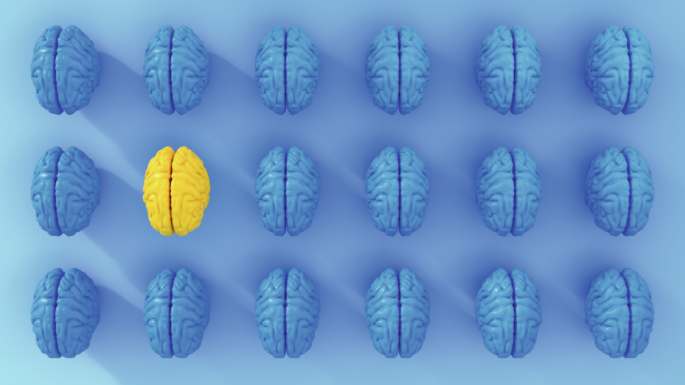
The alternative text for this image may have been generated using AI.
Credit: Westend61 / Getty
Mental disorders are among the most urgent health challenges of our time6,7. Depression alone affects more than 280 million people7 and is the leading cause of years lived with disability worldwide6, with a global economic burden exceeding US $1 trillion annually8. Mental health disorders also amplify the burden of other diseases, increasing risks for conditions such as cardiovascular disease, diabetes and cancer9. Because many mental health conditions begin early in life, their effects accumulate across decades, influencing educational attainment, physical health, economic stability and longevity.
Despite this profound and enduring burden, mental health care still relies largely on a trial-and-error approach to treatment selection. Across disorders, finding an effective treatment takes approximately 11 years on average, and about 7 years are required for depression alone10. This delay is not benign: it reflects a system in which patients cycle through successive ineffective treatments, a long-recognized limitation of trial-and-error care. When the right treatment is not identified early, symptoms persist, functional impairment accumulates and the burden of illness compounds across the lifespan, affecting multiple dimensions (personal, professional, social) of a patient’s life10.
In most areas of medicine, clinical care is organized around the organ involved. Cardiovascular disease is understood and treated as a disorder of heart function. Advances in imaging and measuring the heart transformed cardiology, enabling physicians to diagnose disease more precisely and match treatments to the underlying problem. In oncology, recognizing that cancers represent distinct biological subtypes — defined by molecular pathways and receptor signaling — fundamentally changed treatment, making it possible to match therapies to the characteristics of each subtype rather than treating all patients the same way.
Mental health care is one of the only medical fields that does not routinely use direct measures of the affected organ — the brain — to guide diagnosis and treatment selection. As a result, clinical decision-making has relied primarily on symptoms, even though individuals with similar symptoms may have fundamentally different profiles of brain circuit dysfunction. These limitations reflect the growing need for convergence between neurology and psychiatry — which have historically been pursued as distinct disciplines. They underscore the importance of integrated approaches that bring together knowledge from psychiatry, psychology and broader mental health sciences. As advances in feasibility and scalability continue, mental health care is entering a transition similar to those that transformed other areas of medicine, creating the opportunity to shift from symptom-based approaches toward brain-based, circuit-informed precision care.
The central premise of the Precision Mental Health Commission is that measurable circuits of brain function provide the organizing architecture for mental illness and for guiding precision mental health care.
Organize scientific knowledge
Mental disorders arise from11 dysregulation of large-scale brain circuits that coordinate core mental functions12. These circuits constitute the brain’s functional architecture and can be measured directly using functional neuroimaging. Disruptions of this architecture give rise to the behavioral and clinical manifestations recognized as mental illness.
Understanding mental disorders through this circuit-based framework provides a way to organize previously fragmented scientific knowledge. It enables discoveries from neuroscience, psychology, pharmacology and clinical medicine to be connected within a shared architecture of brain function. A circuit-based framework does not reduce mental illness to brain function alone — it provides a biologically grounded reference system for understanding how genetic, environmental and experiential factors shape mental health through their effects on brain circuits.
Brain circuits are not only descriptive, but actionable. They map onto specific cognitive and affective functions and are differentially modulated by pharmacological and neuromodulatory interventions, providing a biologically grounded unit for stratification and treatment selection. Circuits therefore offer a common language that links mechanism to intervention, enabling a transition from identifying dysfunction to targeting it.
Integrate measurement and discovery
Brain circuits provide a foundational reference system for integrating and interpreting multimodal data streams. Even though cognitive, behavioral, digital, genetic and environmental measures each capture how dysfunction is expressed across contexts, such domains are typically studied in isolation, resulting in fragmented findings that are difficult to translate into clinical practice.
The Precision Mental Health Commission will address this fragmentation by establishing brain circuit function as a common reference framework. By anchoring cognitive, behavioral, digital, genetic and environmental measures to directly measured circuits, it becomes possible to determine which signals reliably reflect underlying brain function and how they relate to symptoms, disease progression and treatment response. Artificial intelligence and computational methods enable integration across these layers, revealing which combinations of signals correspond to specific profiles of circuit dysfunction and are most informative for guiding clinical decisions.
This vision requires the development of standardized circuit-level metrics and data structures to support consistent implementation across research and clinical settings. The commission will establish harmonized, reproducible standards to enable comparability of circuits across sites and support scalable implementation. In parallel, it will define training frameworks that equip researchers and clinicians to generate, interpret and apply these measures in practice, ensuring consistent and reliable use across clinical and research settings.
Provide actionable solutions
The Precision Mental Health Commission will define actionable solutions to accelerate the transition from symptom-based care to precision mental health strategies grounded in brain circuit function. Integrating circuit measurements with a wide array of indicators of brain health will enable clinicians to identify biologically informed patient profiles and select treatments likely to be effective for each individual.
In practice, these layers of measurement will operate in a coordinated sequence across different stages of care. Digital and behavioral signals can enable early identification of individuals at risk and guide initial screening, analogous to the role of wearable sensors in cardiovascular health monitoring. Signals of elevated risk would then prompt direct assessment of brain circuit function, much as an abnormal electrocardiogram leads to more definitive cardiac imaging. This approach prompts evaluation at the core of the illness, enabling the identification of clinically meaningful subtypes that guide treatment selection. Longitudinal behavioral, cognitive and digital measures anchored to the circuits that drive symptom change can then subsequently support monitoring of treatment response and recovery. Other biological indicators — including genetic, metabolic, inflammatory and physiological measures — would provide additional information, clarifying how systemic processes influence brain circuit function and treatment response.
A circuit-informed precision mental health framework will drive a fundamental shift in care:
-
Prospective matching of patients to treatments based on brain circuit profiles.
-
Objective monitoring of treatment response using behavioral and digital signals linked to circuit function.
-
Biologically grounded stratification within and across diagnostic categories.
-
Screening and monitoring with digital and behavioral signals validated against brain function.
-
Preventive strategies informed by circuit development and risk trajectories.
Together, these capabilities could shift mental health care toward a model that delivers the right treatment to the right individual on the first attempt.
The commission will also evaluate emerging standards for measuring brain circuit function and identifying clinically meaningful profiles of disruption associated with mental illness. It will consider how these measurements can guide treatment selection, accelerate the development of new therapies and inform clinical practice guidelines. In parallel, the commission will examine how professional societies, health systems and training programs can incorporate advances in brain science into routine precision mental health care, and how regulatory and policy frameworks can support the responsible integration of precision brain-based measurement into clinical decision-making.
Strategy and impact
The Precision Mental Health Commission will convene a multidisciplinary, cross-sector, globally representative group of international leaders that span neuroscience, clinical medicine, health systems, health technology and public policy to define a new era of precision mental health care. Commission members will be selected on the basis of their leadership in advancing innovative approaches to research and care, and will span disciplines and career stages from established leaders to emerging investigators. The commission will include representation from academia, international organizations, governments, health systems, patient advocacy groups, philanthropic organizations and industry. Selection will ensure representation across gender, geography and health system contexts, including high-, low- and middle-income countries. Patient and lived-experience perspectives will be integrated throughout to ensure that recommendations reflect the priorities and needs of those receiving care.
The commission will produce a series of outputs aimed at advancing the science and clinical implementation of precision mental health, including the following:
-
scholarly publications synthesizing current evidence and milestone findings;
-
recommendations for standards and validation of precision mental health measures; and
-
strategic guidance for clinical implementation and health system adoption.
The commission will generate a final report that provides a field-defining, actionable framework that establishes brain circuits as the central organizing axis for precision mental health, linking measurement to stratification, treatment selection and clinical implementation. By bringing together a multidisciplinary group of experts, the Precision Mental Health Commission will catalyze a coordinated global effort to translate advances in brain circuit science into a more precise, effective and personalized model of mental health care to substantially improve outcomes for individuals worldwide.
References
-
Mao, Q. S., Guo, Y. X., Tian, X. L., Zhao, H. L. & Kong, Y. Z. World J. Psychiatry 15, 106887 (2025).
-
Ahn, J. et al. Biol. Psychiatry https://doi.org/10.1016/j.biopsych.2025.08.019 (2025).
-
Tozzi, L. et al. Nat. Med. 30, 2076–2087 (2024).
-
Drysdale, A. T. et al. Nat. Med. 23, 28–38 (2017).
-
Hack, L. M. et al. Nat. Ment. Health 3, 1363–1373 (2025).
-
Ferrari, A. J. et al. Lancet 403, 2133–2161 (2024).
-
Global Health Data Exchange. Global Burden of Disease Study 2021 https://ghdx.healthdata.org/gbd-2021 (IHME, accessed 13 August 2025).
-
The Lancet Public Health. Lancet Public Health 10, e890 (2025).
-
Dragioti, E. et al. World Psychiatry 22, 86–104 (2023).
-
Wang, P. S., Berglund, P. A., Olfson, M. & Kessler, R. C. Health Serv. Res. 39, 393–415 (2004).
-
Kesler, S. R., Henneghan, A. M., Prinsloo, S., Palesh, O. & Wintermark, M. Frontiers Med. 10, 1199605 (2023).
-
Williams, L. M. Lancet Psychiatry 3, 472–480 (2016).
Ethics declarations
Competing interests
L.M.W. declares US patent applications 10/034,645 and 15/820,338: Systems and methods for detecting complex networks in MRI image data. The other authors declare no competing interests.
Rights and permissions
About this article

Cite this article
Williams, L.M., Foland-Ross, L.C. & Wintermark, M. The Precision Mental Health Commission: transforming mental health through brain circuit science. Nat. Mental Health (2026). https://doi.org/10.1038/s44220-026-00649-x
-
Published:
-
Version of record:
-
DOI: https://doi.org/10.1038/s44220-026-00649-x
Leave a Reply