
⏱ 5 min read
Abstract
Randomized controlled trials (RCTs) guide treatment decisions in youth with mental health disorders, yet concerns remain about their generalizability. Here we conducted a Preferred Reporting Items for Systematic Reviews and Meta-Analyses-compliant systematic review and meta-analysis (CRD42024629137) to assess the inclusivity and representativeness of RCTs on pharmacological and nutraceutical interventions in children and adolescents with Diagnostic and Statistical Manual of Mental Disorders and/or International Classification of Diseases-defined mental disorders. Random-effects meta-analyses were conducted by disorder, and temporal trends were assessed. Primary outcomes were the representativeness of RCTs with respect to sex (pooled proportion of female participants) and race/ethnicity (distribution of racial and ethnic groups); secondary outcomes included the exclusion of key clinical populations (for example, autistic individuals, those with intellectual disability and those with suicide risk). A total of 397 RCTs (46,989 participants; mean age 10.2 ± 3.1 years) were included, mostly targeting attention deficit hyperactivity disorder (34.5%) or autism spectrum disorder (29.7%). Female participants represented 28.3%. Only 53.7% of RCTs reported racial data; 75.0% were white, 10.1% Black, 6.2% Hispanic and 2.0% Asian. Autistic individuals and those with learning disabilities were excluded in 56.5% and 44.3% of trials, respectively; 76.0% of depression RCTs excluded participants at suicide risk. There is a persistent mismatch between the youth most affected by mental health disorders and those included in RCTs. Some vulnerable populations including people of colour, women and special populations seem to be under-represented, requiring more inclusive practice to support equitable and effective care.
Article PDF
Main
Among individuals who develop a mental disorder, half of them experience onset before the age of 18 years, and one-third before the age of 14 years1. Globally, between 10% and 20% of children and adolescents experience a mental disorder2, which is burdensome for the individuals and their families3, making these disorders the leading cause of years lived with disability among youth4.
The burden of mental health disorders is not equally distributed across all demographics, particularly in terms of sex and race. A large and cross-cultural gender gap exists in mental health indicators, both in adulthood5 and childhood6, with girls and young women consistently reporting worse mental health than boys and young men in affective and anxiety disorders, while neurodevelopmental disorders (NDDs) are more male prevalent7. This disparity widens during adolescence8. In addition, in some countries such as the USA, certain racial and ethnic groups, such as Hispanic, African American, American Indian or Alaska Native children and adolescents, face higher rates of mental disorders and poorer access to care compared with their white peers9. Some populations are especially vulnerable to mental health difficulties; individuals with NDDs—including, but not limited to, autistic individuals10,11 or those with intellectual disabilities (ID)12—are also at an increased risk of developing other comorbid mental health disorders, such as depression, anxiety or psychosis.
Despite this, representativeness in randomized controlled trials (RCTs) remains a major concern. This issue is particularly pronounced in psychopharmacological trials, where drug effects may vary substantially across sexes and ethnic groups owing to differences in body composition, size, pharmacogenomic, pharmacokinetic or pharmacodynamic parameters13,14,15. Yet, reporting of these demographic characteristics is often incomplete. Several reviews have shown that sex is either under-reported or imbalanced in RCTs16, with female participants frequently under-represented relative to their disease burden. Similarly, race and ethnicity data are inconsistently collected and reported, with many trials omitting this information or using broad categories that limit interpretability17. These imbalances may be driven by restrictive eligibility criteria excluding comorbidities or other higher clinical risk, methodological concerns around outcome measurement and consent and structural barriers to trial participation that disproportionately affect females, racial and ethnic minorities and individuals with NDDs. However, when clinical trials do not adequately reflect the populations most affected by mental health disorders or those that are more vulnerable, their findings might lack external validity and fail to inform effective interventions in real-world settings.
A recent meta-analysis by Bellato and colleagues evaluated the racial representativeness of RCTs on mental health disorders, including mostly adult participants and highlighting the under-representation of certain racial groups18. However, despite growing awareness of these gaps in adult populations, no previous research has systematically and quantitatively assessed the inclusivity and representativeness of RCTs across a wide range of children and adolescents with mental health disorders nor examined other important outcomes such as sex or the inclusion of children and adolescents with autism spectrum disorder (ASD), ID or suicidal risk.
The aim of this systematic review and meta-analysis was to (1) meta-analytically evaluate the inclusivity and representativeness of RCTs investigating pharmacological and dietary supplement interventions for children and adolescents with mental health disorders and (2) assess whether this has changed over time, given more recent awareness of the importance of inclusivity in research inclusion.
Results
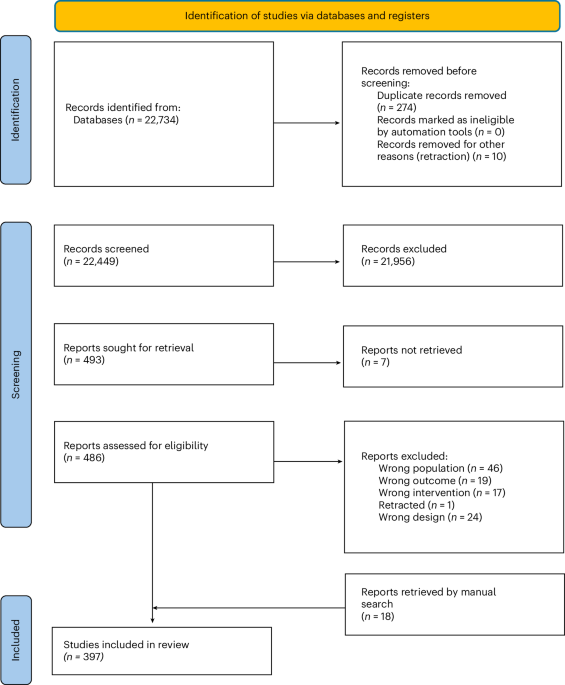
After deduplication, 22,446 citations were retrieved from electronic databases and screened for eligibility. A total of 487 full-text original articles were assessed; 108 were excluded, and 18 additional records were identified through manual search from previous meta-analyses (see above). Reasons for full-text exclusions are provided in Supplementary Results 2. The final dataset included 397 RCTs (Fig. 1) from 49 countries and reporting on 46,989 participants (mean age 10.2 ± 3.1 years). RCTs were conducted in North America (231; 58.2%, of which 218 were conducted in the USA), Asia (66; 16.6%), Europe (58; 14.6%), Oceania (17; 4.3%), South America (2; 0.5%) and across multiple continents (23; 5.8%) (see Fig. 2 for the complete distribution of RCTs and participants by continent). For 194 trials (48.9%), more than one study site was involved. The risk of bias was rated as low in 169 studies (42.6%), with 170 (42.8%) presenting some concerns and 58 (14.7%) rated as high risk. None of the studies reported incorporating patient and public involvement (PPI) in their design or conduct.
PRISMA flow diagram illustrating the study identification, screening, eligibility assessment and final inclusion process for the systematic review.
Red bars represent the number of RCTs (left y axis), and blue bars represent the number of participants (right y axis).
The most commonly evaluated mental health disorders were ASD (k = 137; 34.5%), attention deficit hyperactivity disorder (ADHD; k = 118; 29.7%), affective disorders (k = 41; 10.3%), anxiety disorders (k = 22; 5.5%), Tourette’s syndrome (k = 22; 5.5%) and schizophrenia spectrum disorders (k = 18; 4.5%). Six of the included RCTs investigated less represented disorders and were grouped under ‘other’: trichotillomania19, functional abdominal pain20, post-traumatic stress disorder21,22, conduct disorder23 and juvenile fibromyalgia24. Disorder-specific trial details are presented in Table 1. A full description of included studies and references is provided in Supplementary Results 1.
Female representation
Sex was reported in 97.0% of included studies, indicating that information on this variable was generally available.
Regarding representation, the pooled proportion of female participants was 28.3% (k = 385; 95% confidence interval (CI) 26.1–30.7), with high heterogeneity (Q = 4,711.8; I2 = 91.9%; P < 0.01). Female representation varied substantially by disorder, ranging from 18.1% in ASD (k = 135; 95% CI 15.4–21.2) and 24.3% in ADHD (k = 112; 95% CI 21.7–27.0) to 100% in eating disorders (k = 4; 95% CI 0.0–100.0). Only trials on eating and depressive disorders (56.5%; 95% CI 49.6–63.2) included a proportion of female participants equal to or exceeding that of male participants.
Sensitivity analyses found no significant differences based on risk of bias (Q = 1.14; P = 0.77). Multicenter trials (k = 187; 30.7%; 95% CI 27.9–33.7) included more females than unicenter trials (k = 198; 25.8%; 95% CI 22.4–29.5). Differences were also observed by continent, with multicontinental trials reporting the highest female representation (k = 22; 42.5%; 95% CI 35.3–50.1) and Asian trials the lowest (k = 64; 23.2%; 95% CI 18.7–28.3). Full details by disorder are presented in Table 1, with meta-analyses and sensitivity results provided in Supplementary Results 3 and 4. According to Egger’s test, publication bias was detected for most of the studied disorders, with studies including a higher proportion of female participants being more likely to remain unpublished (P < 0.01).
Finally, pooled analyses showed no significant change in female proportion in RCTs over the past five decades (β = 0.19; P = 0.11). However, significant increases were observed for ADHD (β = 0.50; s.e.m. 0.19; P < 0.01), while no significant trends were demonstrated for any other disorder. Temporal trends in female representation by disorder are shown in Fig. 3 and Supplementary Results 5.
Linear trend lines are shown for each disorder. Equivalent categories with smaller sample sizes were grouped under ‘other’, which includes OCD, Tourette’s syndrome, elimination disorders, insomnia, eating disorders, trichotillomania, functional abdominal pain, post-traumatic stress disorder, conduct disorder and juvenile fibromyalgia. Linear models and full data are available in Supplementary Results 5.
Racial representation
Overall, 53.7% of trials reported data on racial representation. The percentage of white participants was reported in 208 trials (52.4%), Black participants in 163 (41.1%) and Asian participants in 130 (32.7%). Hispanic representation was reported in 105 trials (26.4%); of these, 41% treated Hispanic as an ethnicity (nonexclusive with race), while 59% classified it as a race (mutually exclusive with other racial categories). Reporting rates did not change significantly rate over time (t = −0.67; P = 0.50). Only refs. 24,25,26,27,28,29,30,31,32,33,34,35,36,37,38,39,40,41,42,43,44,45,46,47,48 (6.30% of the total included trials) reported information on multiracial participants (that is, those identifying with two or more racial-ethnic backgrounds), precluding further analyses for this group.
The pooled proportion of white participants was 75.0% (k = 208; 95% CI 71.4–78.3), with high heterogeneity (Q = 2,356.2; I2 = 91.2%; P < 0.01). The proportion of white participants ranged from 65.6% in schizophrenia trials (k = 14; 95% CI 61.4–69.5) to 98.9% in primary insomnia RCTs (k = 2; 95% CI 1.00–100). The pooled proportion of Black participants was 10.1% (k = 162; 95% CI 8.5–11.9), with significant heterogeneity (Q = 1,236.2; I2 = 86.3%; P < 0.01). For Asian participants, the pooled proportion was 2.0% (k = 130; 95% CI 1.3–3.2), also with high heterogeneity (Q = 1971.6; I2 = 93.4%; P < 0.01). When Hispanic was reported as an ethnicity (nonexclusive with race), the pooled proportion was 10.7% (k = 43; 95% CI 8.0–14.3) with high heterogeneity (Q = 344.0; I2 = 87.8%; P < 0.01). When reported as a race (mutually exclusive), it was 6.2% (k = 62; 95% CI 4.6–8.2; Q = 237.2; I2 = 74.3%; P < 0.01).
Sensitivity analyses revealed a higher proportion of white participants in studies with a high risk of bias compared with those with a low risk (86.9% versus 72.7%; P = 0.02). To facilitate interpretation, we compared the pooled proportions observed in our analyses with available population benchmarks. Among trials conducted in the USA (58% of the sample), white participants constituted 69.5%; Black participants, 13.3%; Asian participants, 2.0%; American Indian or Alaska Native participants, 0.3%; Native Hawaiian and Other Pacific Islander, 0.3%; and Hispanic participants ranged from 8.4% (when reported as a race) to 10.7% (when reported as an ethnicity). Not enough information was provided to calculate the percentage of participants reporting other races or more than one race. By contrast, the 2024 American Community Survey (ACS)—a nationally representative annual survey conducted by the US Census Bureau—estimates that the US population is 59.8% white, 12.1% Black or African American, 6.3% Asian, 1.0% American Indian or Alaska Native, 0.2% Native Hawaiian or Other Pacific Islander, 7.4% some other race and 13.2% two or more races (race alone; Hispanic/Latino is reported separately as an ethnicity)49 (Table 2).
Pooled proportions by continent are shown in Supplementary Results 7. Full meta-analytical and sensitivity analyses results related to racial representation are available in Supplementary Results 8–15.
Finally, temporal analyses showed that the proportion of white, Black and Hispanic participants did not vary over time (all P > 0.05), while the proportion of Asian participants increased (β = 0.53; s.e.m. 0.27; P = 0.04). Temporal trends in racial representation are illustrated in Supplementary Results 6.
Inclusion of clinical populations
A total of 56.5% of trials (excluding those focusing on children and adolescents with a primary ASD diagnosis) excluded participants with ASD or pervasive developmental disorder. This proportion increased to 68.0% in RCTs targeting depressive disorders and 87.5% in studies focused on obsessive–compulsive disorder (OCD). The systematic exclusion of participants with comorbid autism has become increasingly common over time (t = −2.57; P = 0.01). However, this trend has not been accompanied by a relative increase in trials specifically focusing on autistic individuals.
Regarding IDs, 44.3% of trials systematically excluded participants with intellectual impairment. Among these, 43.6% did not specify an IQ threshold. Among those that did, 34.3% excluded participants with an IQ <80; 50% with IQ <70 and 15.7% with IQ <60 or lower. Exclusion varied by disorder: over 60% of trials on bipolar disorder, schizophrenia, insomnia and OCD excluded participants with ID, compared with only 24.8% of ASD RCTs. No significant change in this pattern was observed over time (t = −0.65; P = 0.51).
Finally, suicide risk (as defined by each study) was an exclusion criterion in 26.2% of trials. Notably, exclusion was the most frequent in RCTs on depression and anxiety, where 76.0% and 59.1% of trials, respectively, excluded participants at risk. This exclusion practice has become more common over time (t = −2.37; P = 0.01).
Detailed data on systematic exclusion according to the above criteria, broken down by disorder, are presented in Table 1.
Discussion
This study comprehensively evaluated the representativeness of RCTs of pharmacological and nutraceutical interventions involving children and adolescents with mental disorders. Several key findings emerged.
First, females account for just over one-quarter (28%) of participants in the included RCTs. While this pooled proportion may reflect the actual distribution of certain disorders that are more prevalent in males (for example, ADHD or ASD), there is also consistent evidence that females with these conditions are underdiagnosed, which may contribute to their under-representation in RCTs50. Furthermore, while NDDs are indeed more common in males, estimates from recent, large meta-analyses indicate that women account for around 25% of the autistic individuals51 and 33% of individuals with ADHD52. These figures are still notably higher than the female representation observed in our meta-analyses. Furthermore, this male predominance is not observed in other disorders where female children and adolescents are equally or more affected. For instance, bipolar disorder shows similar sex ratios53, OCD has a higher prevalence in females (odds ratio, OR, 1.654) and most anxiety disorders present markedly higher risk among girls, with ORs ranging from 2.8 to 3.5 depending on the specific disorder55,56. Eating disorders constitute an exception, with evidence suggesting that males are under-represented in both diagnosis and treatment contexts57, which our study supports.
Moreover, an under-representation of females in RCTs extends across nearly all fields of medicine58,59,60. This persistent disparity is driven by a complex combination of historical biases, practical considerations and concerns about potential harm to women, particularly those of childbearing age61. In some disorders, this may also be indirectly related to other exclusion criteria in RCTs, such as suicidality in depression trials, given that self-harming and parasuicidal behaviors are more prevalent in females62. Despite regulatory efforts to address this imbalance63,64, not even animal models escape sex bias: most preclinical studies continue to rely predominantly on male specimens65, including in disorders that disproportionately affect females66. This leads to a critical lack of data on the efficacy and safety of interventions in women and girls. For instance, a US Government Accountability Office audit reported that 80% of drugs withdrawn from the market had more adverse events in women than in men, largely owing to insufficient testing in female populations67. In the field of psychopharmacology, compelling evidence supports the existence of sex differences not only in pharmacokinetics68 but also in pharmacogenetics and pharmacodynamics69,70. In response to this gap, some have proposed the replication of landmark trials in women only. However, this approach raises ethical concerns, as it would imply withholding standard-of-care treatments from girls and women71. Clinically, these patterns imply that many treatment decisions for girls and young women are informed by an evidence base that may not adequately reflect their risk–benefit profiles, potentially increasing uncertainty around dosing, efficacy and tolerability in routine care.
Another key finding of the present study was the low rate of reporting on participants’ race in RCTs, as well as the low proportion of certain racial groups. Only 53.4% of the trials reported race-related data, and even more worryingly, the reporting rate has not significantly increased in recent decades. This is despite the fact that since 2017, the National Institutes of Health (NIH) Policy on the Dissemination of NIH-Funded Clinical Trial Information has required sponsors and investigators to report participants’ race/ethnicity in the information submitted to ClinicalTrials.gov72. Among the studies that do report such data, white participants account for three-quarters of all RCT participants. The proportion of Asian participants is notably low, accounting for only 2% of the total sample.
Although no official global data exist on racial distribution—intentionally so in some countries73—it is evident that the figures observed in our sample do not reflect the demographic composition of the populations affected by these disorders on a global level In the case of the USA, where nearly 60% of the included RCTs were conducted, Asian participants represented only 2.0% of trial samples compared with 6.3% of the US population and Hispanic participants represented 8.4% compared with 19.4% of the US population. These findings are consistent with those reported by Bellato et al. in a recent meta-analysis examining racial representation in RCTs for mental health disorders across all age groups18. In addition, the near-complete absence of reporting on multiracial participants represents a further and often overlooked limitation. Only a very small proportion of the included trials reported data on multiracial participants, which is particularly problematic given that multiracial youth constitute one of the fastest-growing demographic subgroups in several countries, including the USA74. Moreover, racially and ethnically minoritized populations are at comparatively higher risk of mental ill health in some countries75,76, which further underscores the importance of their under-representation. Again, this lack of reporting and systematic under-representation of certain groups is not unique to psychopharmacological or nutraceutical research or pediatric RCTs. Rather, it extends to medical research more broadly17,77,78.
Inclusion and reporting of participants from racially and ethnically minoritized populations in clinical trials is essential to understand how findings generalize to diverse populations. Thus, failure to capture and report multiracial identities may lead to further misclassification, obscure heterogeneity in treatment response and compound existing inequities in evidence generation. Variability in the pharmacokinetics of psychotropic medications across ethnic groups has been documented for several decades79,80, with differences in drug metabolism influencing both efficacy and tolerability. While there remains considerable debate over what the constructs of race and ethnicity actually measure81, they are sometimes used as proxies for variables such as culture, diet, health behaviors and, in certain contexts, pharmacogenetic profiles. In particular, differences in the frequency of polymorphisms affecting drug-metabolizing enzymes have been reported across populations, which in some studies have been examined in relation to racial or ethnic categorization82. For instance, studies have shown that Asian populations, on average, require lower doses of psychopharmacological agents to achieve therapeutic effects compared with white populations and are more likely to experience more severe side-effects and greater sensitivity to such medications83. Much like the long-standing under-representation of women and girls in clinical research84, the underinclusion of racial and ethnic groups remains another barrier in the path toward equity in access to care, particularly relevant in the field of mental health85. Interestingly, the proportion of white participants was significantly higher in studies rated as having a high risk of bias compared with those rated as having a low risk. This may reflect the fact that lower-quality studies are more likely to recruit from narrow or less diverse populations, limiting the representativeness of their samples. Conversely, higher-quality trials—often larger, multicenter and better resourced—may be better able to include more diverse populations.
This issue is further exacerbated by the striking geographical imbalance in where RCTs are conducted. Very few trials were carried out in low- and middle-income countries (LMIC). Entire continents, such as Africa, were not represented at all in the eligible studies, while other regions (for example, South America) contributed only a handful of trials. This lack of geographical diversity casts serious doubt on the external validity of the available evidence, as it means that the findings derived from most RCTs are derived from high-income settings that differ markedly from LMICs in terms of health system capacity, cultural context and sociodemographic composition. In clinical terms, this geographical concentration implies that evidence used to inform prescribing and service provision may be the least applicable precisely where resources, service structures and patient needs differ mostly, thereby increasing uncertainty in implementation and potentially widening global inequities in care.
Furthermore, we found that several populations are systematically excluded from a substantial proportion of RCTs of pharmacological and nutraceutical interventions conducted in children and adolescents with mental health disorders. Over 50% of RCTs (except those focusing on ASD) excluded autistic participants, and 43% exclude those with ID. Paradoxically, both these groups are overrepresented in clinical populations owing to their high rates of psychiatric comorbidities86,87. While in some cases this exclusion may be justified by methodological considerations (for example, when certain outcomes cannot be reliably measured in nonverbal participants), it nonetheless undermines the generalizability of study findings. Moreover, excluding participants with NDDs from trials perpetuates a research gap that disproportionately affects those already more vulnerable to adverse effects from psychotropic medications88. These individuals are more likely to be prescribed medications off label (about 45.7% receive at least one medication89) yet less likely to be included in the evidence base guiding such treatment decisions. As a consequence, clinicians frequently manage complex, comorbid neurodevelopmental presentations with limited trial-based evidence on dosing, efficacy and safety, reducing confidence in treatment selection and monitoring and potentially increasing reliance on extrapolation from nonrepresentative samples.
Finally, adolescents with suicide risk are another population systematically excluded from a substantial proportion of RCTs. While the proportion of studies applying this exclusion criterion varies depending on the disorder and age (for example, suicidality is less a concern in younger children, who are often the focus of pharmacological trials in disorders such as ASD), it is particularly striking that up to 77.8% of trials in depressive disorders excluded participants with suicide risk. This is especially concerning given that depressive disorders are a key risk factor for suicide in adolescents90, and suicidal ideation is present in over 50% of adolescents with depression91. Notably, suicidal ideation, plans and attempts are part of the Diagnostic and Statistical Manual of Mental Disorders (DSM)/International Classification of Diseases (ICD) criteria for major depressive disorder. Furthermore, National Institute for Health and Care Excellence (NICE) guidelines recommend pharmacological intervention for young people with moderate-to-severe depression only92—the group most likely to present suicidality—which underscores the concern that these patients are frequently excluded from RCTs.
The rationale for this exclusion—such as concerns over informed consent, ensuring participant safety during the trial, the risk of delaying access to appropriate care and the possibility that suicidal ideation may emerge as a potential adverse effect of antidepressant treatment—is well documented93. However, the widespread use of this criterion inevitably results in the systematic exclusion of a highly vulnerable and severe subgroup, arguably the most in need of effective interventions. This practice has several important implications: it not only means that individuals at greater risk are under-represented in the evidence base guiding treatment decisions but also that key findings relevant to this population may be missed. As a result, the generalizability and applicability of trial findings to real-world clinical populations are severely limited. More inclusive trial designs, with robust and ethical safeguards, are therefore essential to generate clinically meaningful evidence for adolescents with depression and suicidality.
Finally, it is also important to acknowledge that the under-representation of certain groups in RCTs may not only result from investigators’ exclusion criteria but also from cultural and historical factors that influence their ability to participate. Historical mistrust of research94, experiences of discrimination95, stigma surrounding mental health96 and structural barriers such as language, accessibility and healthcare inequities can reduce participation among racially and ethnically minoritized or otherwise underserved populations. These factors, together with systematic biases in how RCTs are designed and conducted, further exacerbate the lack of diversity in trial samples.
Our findings must be considered in the light of several limitations. Most of the outcomes examined showed substantial heterogeneity, which could not be fully accounted for by subgroup analyses. As a result, pooled estimates should be interpreted as average effects across diverse study contexts rather than precise effects that can be readily extrapolated to any single setting or population. High unexplained heterogeneity also increases uncertainty around the stability of pooled effects and suggests that true effects may vary substantially across settings. While we used random-effects models and conducted sensitivity analyses, residual confounding is likely, particularly given the wide range of clinical disorders, geographical contexts and trial designs included. Our analyses were restricted to RCTs evaluating pharmacological and nutraceutical interventions, thereby excluding trials of psychotherapeutic or psychosocial approaches, which may differ in both participant demographics and inclusion criteria. As a result, the findings may not generalize to all types of clinical trials involving young people with mental health disorders; however, some preliminary data suggest that limitations in representativeness may also extend to psychotherapeutic interventions97. Lastly, a key finding—and limitation—of this review is the low number of RCTs reporting race and/or ethnicity, which hinders accurate estimation of the racial composition of study populations. Reporting practices varied widely across trials (for example, self-report versus investigator-assigned), and definitions of race and ethnicity were inconsistent. This was particularly challenging for Hispanic populations, where substantial variability was observed. To ensure feasibility and consistency in data extraction and interpretation, we used the terminology and categories most reported across trials, even if this meant excluding many racial and ethnic groups from the reported data.
In conclusion, the populations included in RCTs of pharmacological and nutraceutical interventions involving young people with mental health disorders are not representative and inclusive of those most affected by these disorders. Female participants, certain minoritized racial and ethnic groups and other high-risk populations are consistently represented in proportions that do not reflect the actual populations affected by the studied mental health disorders, which undermines the external validity and applicability of the findings. For clinicians, these findings highlight the need for caution when extrapolating trial results to real-world patients and underscore the importance of clinical judgment and careful monitoring when evidence is derived from narrowly defined study populations.
To improve the external validity, equity and clinical usefulness of future RCTs, several concrete actions are needed. First, researchers should actively recruit representative samples that reflect the real-world populations most affected by mental health disorders in children and adolescents, particularly those historically under-represented. This requires not only minimizing the use of systematic exclusion criteria that disproportionately leave out individuals with NDDs, suicidality or other vulnerable groups but also setting explicit recruitment targets by sex and racial representation and ensuring the availability of culturally appropriate materials and outreach strategies. Second, funders and regulators should increase investment in trials conducted in LMICs, where the burden or child and adolescent mental health disorders is substantial, and should also mandate transparent reporting of age, sex, race and ethnicity in funded research. Third, journals and editors should enforce compliance with reporting standards and encourage the publication of trials that provide full demographic information and clear justification for exclusion criteria. Finally, the integration of PPI into the design and execution of RCTs is essential to enhance the relevance, acceptability and impact of research on those it ultimately aims to serve98.
For scientific evidence and clinical guidance to be truly evidence-based and applicable to real-world clinical settings, it must be grounded in inclusivity and representativeness, reflecting the full spectrum of individuals it aims to serve.
Methods
The study protocol was registered on PROSPERO (CRD42024629137). The study was reported in accordance with the Preferred Reporting Items for Systematic Reviews and Meta-Analyses (PRISMA)99 (Supplementary Methods 1), following EQUATOR100.
Search strategy and selection criteria
A systematic literature search was carried out by two independent researchers (C.A. and B.P.) across Web of Knowledge (including Web of Science Core Collection, BIOSIS, KCI-Korean Journal Database, MEDLINE, Russian Science Citation Index and SciELO), Cochrane Central Register of Reviews and Ovid/PsycINFO, from inception until 1 November 2024. The search combined terms related to (1) mental health disorders, (2) the population of interest (children and adolescents) and (3) RCTs. The complete search strategy is available in Supplementary Methods 2. Abstracts were screened to exclude ineligible papers, and full texts of the remaining articles were assessed for eligibility and inclusion. The database search was supplemented by a manual search of the most comprehensive published network or, when unavailable, pairwise meta-analyses of pharmacological and nutraceutical interventions for the studied disorders101,102,103,104,105,106,107,108,109,110.
The inclusion criteria were: (1) RCTs, (2) samples with a DSM/ICD-diagnosed mental health disorder, (3) mean participant age under 18 years, (4) investigating pharmacological or nutraceutical interventions (that is, food-derived bioactive substances with potential therapeutic effects, often administered as dietary supplements) and (5) primary outcome related to mental health or quality of life. The exclusion criteria included: (1) reviews, case reports, nonrandomized or uncontrolled trials, qualitative studies and conference proceedings, (2) studies on healthy individuals or populations with primarily nonpsychiatric disorders, (3) investigations of psychotherapeutic or lifestyle interventions and (4) studies reporting only biochemical or neuroimaging outcomes. For overlapping publications (that is, multiple reports derived from the same RCT sample), the most comprehensive report—determined by sample size and available demographic data—was selected.
The present review focused on pharmacological and dietary supplement interventions because these trials typically use more standardized exposure definitions and have direct implications for prescribing and regulatory decisions. Nonpharmacological interventions were not included owing to their heterogeneity in modality and delivery context, which warrants a separate dedicated review.
Data extraction and quality assessment
Data were extracted by independent researchers (C.A., B.P., O.I. and J.C.), with each study reviewed by at least two. Datasets were cross-checked and discrepancies resolved by consensus under senior supervision (C.A.). Extracted variables included: first author and year, country, age (mean ± standard deviation, s.d.), sex (percentage female), race, targeted disorder, intervention, outcome(s), inclusion/exclusion criteria, PPI and quality assessment. Race and ethnicity variables were recorded as defined by each study.
Risk of bias was assessed using the Cochrane risk-of-bias tool for randomized trials (RoB 2)111, with studies classified as having a low risk, some concerns or a high risk of bias on the basis of five domains: randomization, deviations from intended interventions, missing data, outcome measurement and selective reporting.
Data synthesis and statistical analysis
We first conducted a systematic, descriptive synthesis of study characteristics and the representativeness of included samples. Categorical variables (for example, exclusion criteria) were summarized as absolute numbers and percentages while continuous variables (for example, participant age) were reported as means and s.d.
Second, where data permitted, we performed meta-analyses. The primary effect size was the pooled proportion of (1) female participants and (2) participants from each racial group (or, where Hispanic was reported as an ethnicity, from that ethnic group as well). Studies that did not report sex or race/ethnicity were not included in the corresponding pooled proportion analyses, and no data were imputed. Meta-analyses were only performed when a minimum of three studies contributed data. Proportions were pooled with 95% CIs. Separate analyses were conducted for each mental health disorder.
Data were stratified by mental health disorder and continent, and global distributions were visualized using a publicly available mapping tool112. As a post hoc decision, we analyzed the results of RCTs conducted in the USA separately, given that they represented over 50% of included trials.
Additional sensitivity analyses were conducted to test the robustness of pooled estimates. First, we compared pooled proportions across studies at different levels of risk of bias (low, some concerns and high), as rated with the RoB 2 tool, using subgroup analyses within the meta-analytic models. Second, we examined whether the representativeness of samples differed by continent, by calculating separate pooled estimates for each geographical region and testing for between-group differences. Third, we compared multicentric versus unicentric trials, again using subgroup analyses, to evaluate whether trials with multiple recruitment sites were associated with different demographic profiles than those conducted at a single site. For each sensitivity analysis, differences across subgroups were tested using Q-tests for heterogeneity across subgroups, and pooled estimates with 95% CIs were reported when such differences were significant.
All pooled estimates were generated using random-effects models with restricted maximum likelihood method estimators, as this approach accounts for between-study heterogeneity expected in trials spanning diverse disorders, settings and time periods. Study weights were assigned using the inverse-variance method. Statistical significance was set at a two-sided P < 0.05. Between-study heterogeneity was assessed using the Q statistic (with P < 0.10 indicating significant heterogeneity), and the proportion of overall variability attributable to heterogeneity was quantified using the I2 index, interpreted as low (I2 = 25%), moderate (I2 = 50%) or high (I2 = 75%). Given the very large number of included studies and the descriptive rather than comparative focus of the review, we did not generate forest plots, as these would not have been informative for visualization.
Publication bias was evaluated through visual inspection of funnel plots and, when more than ten studies were available for a given outcome, using Egger’s regression test113 for small-study effects. Funnel plot asymmetry was interpreted cautiously, as it can also reflect between-study heterogeneity or other source of bias.
Third, the proportion of studies that systematically excluded key participants on the basis of key clinical categories—suicidal risk (as defined in each study), comorbid ASD and ID—was reported as percentages.
Fourth, temporal trends were assessed using regression models. For sex and race, linear regression analyses tested the association between year of publication (treated as a continuous variable) and the reported proportion. For exclusion criteria (suicidality, ASD and ID), independent-samples t-tests compared publication years between studies that did or did not apply each exclusion criterion, treating exclusion as a dichotomous variable. Regression coefficients (β), standard errors and P values were reported.
All analyses were conducted in R software (version 4.2.2) using the metafor and meta packages for meta-analyses and regression models and ggplot2 for data visualization.
Reporting summary
Further information on research design is available in the Nature Portfolio Reporting Summary linked to this article.
Data availability
This meta-analysis did not require the collection of new data but rather the analysis of previously published data. Data used for the study will be available on reasonable request to the corresponding author.
Code availability
The R scripts used for the study will be available on reasonable request to the corresponding author.
References
-
Solmi, M. et al. Age at onset of mental disorders worldwide: large-scale meta-analysis of 192 epidemiological studies. Mol. Psychiatry 27, 281–295 (2022).
-
The State of the World’s Children 2021. On My Mind: Promoting, Protecting and Caring for Children’s Mental Health (UNICEF, 2021).
-
Fusar-Poli, P. et al. The lived experience of mental disorders in adolescents: a bottom-up review co-designed, co-conducted and co-written by experts by experience and academics. World Psychiatry 23, 191–208 (2024).
-
Erskine, H. E. et al. A heavy burden on young minds: the global burden of mental and substance use disorders in children and youth. Psychol. Med. 45, 1551–1563 (2015).
-
Albert, P. R. Why is depression more prevalent in women?. J. Psychiatry Neurosci. 40, 219–221 (2015).
-
Campbell, O. L. K., Bann, D. & Patalay, P. The gender gap in adolescent mental health: a cross-national investigation of 566,829 adolescents across 73 countries. SSM Popul. Health 13, 100742 (2021).
-
Breach, M. R. & Lenz, K. M. Sex differences in neurodevelopmental disorders: a key role for the immune system. Curr. Top Behav. Neurosci. 62, 165–206 (2023).
-
Kaye-Tzadok, A., Kim, S. S. & Main, G. Children’s subjective well-being in relation to gender — what can we learn from dissatisfied children?. Child. Youth Serv. Rev. 80, 96–104 (2017).
-
Hoffmann, J. A. et al. Disparities in pediatric mental and behavioral health conditions. Pediatrics 150, e2022058227 https://doi.org/10.1542/peds.2022-058227 (2022).
-
Hossain, M. M. et al. Prevalence of comorbid psychiatric disorders among people with autism spectrum disorder: an umbrella review of systematic reviews and meta-analyses. Psychiatry Res. 287, 112922 (2020).
-
Taboas, A., Doepke, K. & Zimmerman, C. Preferences for identity-first versus person-first language in a US sample of autism stakeholders. Autism 27, 565–570 (2023).
-
Mazza, M. G., Rossetti, A., Crespi, G. & Clerici, M. Prevalence of co-occurring psychiatric disorders in adults and adolescents with intellectual disability: a systematic review and meta-analysis. J. Appl. Res. Intellect. Disabil. 33, 126–138 (2020).
-
Liu, K. A. & Mager, N. A. Women’s involvement in clinical trials: historical perspective and future implications. Pharm. Pract. 14, 708 (2016).
-
Olafuyi, O., Parekh, N., Wright, J. & Koenig, J. Inter-ethnic differences in pharmacokinetics-Is there more that unites than divides?. Pharmacol. Res. Perspect. 9, e00890 (2021).
-
Kim, Y. et al. Exploration of pharmacokinetic differences between East Asians and Caucasians: insights from pharmacokinetic studies in healthy subjects. Transl. Clin. Pharmacol. 32, 127–136 (2024).
-
Danan, E. R., Ullman, K., Klap, R. S., Yano, E. M. & Krebs, E. E. Evidence map: reporting of results by sex or gender in randomized, controlled trials with women veteran participants (2008 to 2018). Womens Health Issues 29, S112–S120 (2019).
-
Riccioni, A., Radua, J., Ashaye, F. O., Solmi, M. & Cortese, S. Systematic review and meta-analysis: reporting and representation of race/ethnicity in 310 randomized controlled trials of attention-deficit/hyperactivity disorder medications. J. Am. Acad. Child Adolesc. Psychiatry 63, 698–707 (2024).
-
Bellato A, et al. Reporting and representation of race and ethnicity in clinical trials of pharmacotherapy for mental disorders: a meta-analysis. JAMA Psychiatry https://doi.org/10.1001/jamapsychiatry.2025.0666 (2025).
-
Bloch, M. H., Panza, K. E., Grant, J. E., Pittenger, C. & Leckman, J. F. N-acetylcysteine in the treatment of pediatric trichotillomania: a randomized, double-blind, placebo-controlled add-on trial. J. Am. Acad. Child Adolesc. Psychiatry 52, 231–240 (2013).
-
Roohafza, H., Pourmoghaddas, Z., Saneian, H. & Gholamrezaei, A. Citalopram for pediatric functional abdominal pain: a randomized, placebo-controlled trial. Neurogastroenterol. Motil. 26, 1642–1650 (2014).
-
Nugent, N. R. et al. The efficacy of early propranolol administration at reducing PTSD symptoms in pediatric injury patients: a pilot study. J. Trauma. Stress 23, 282–287 (2010).
-
Sasaki, T. et al. Ifenprodil tartrate treatment of adolescents with post-traumatic stress disorder: a double-blind, placebo-controlled trial. Psychiatry Res. 311, 114486 (2022).
-
Raine, A. et al. Omega-3 supplementation reduces schizotypal personality in children: a randomized controlled trial. Schizophr. Bull. 50, 1117–1126 (2024).
-
Upadhyaya, H. P. et al. Efficacy and safety of duloxetine versus placebo in adolescents with juvenile fibromyalgia: results from a randomized controlled trial. Pediatr. Rheumatol. Online J. 17, 27 (2019).
-
Weber, W. et al. Hypericum perforatum (St John’s wort) for attention-deficit/hyperactivity disorder in children and adolescents: a randomized controlled trial. J. Am. Med. Assoc. 299, 2633–2641 (2008).
-
Nasser, A. et al. Once-daily SPN-812 200 and 400 mg in the treatment of ADHD in school-aged children: a phase III randomized, controlled trial. Clin. Ther. 43, 684–700 (2021).
-
Fristad, M. A. et al. Pilot randomized controlled trial of omega-3 and individual-family psychoeducational psychotherapy for children and adolescents with depression. J. Clin. Child Adolesc. Psychol. 48, S105–S118 (2019).
-
Beversdorf, D. Q. et al. Randomized controlled trial of propranolol on social communication and anxiety in children and young adults with autism spectrum disorder. Psychopharmacology 241, 19–32 (2024).
-
Thurstone, C., Riggs, P. D., Salomonsen-Sautel, S. & Mikulich-Gilbertson, S. K. Randomized, controlled trial of atomoxetine for attention-deficit/hyperactivity disorder in adolescents with substance use disorder. J. Am. Acad. Child Adolesc. Psychiatry 49, 573–582 (2010).
-
Fristad, M. A. et al. A randomized controlled trial of individual family psychoeducational psychotherapy and omega-3 fatty acids in youth with subsyndromal bipolar disorder. J. Child Adolesc. Psychopharmacol. 25, 764–774 (2015).
-
Coffey, B. et al. Efficacy and safety of fixed-dose deutetrabenazine in children and adolescents for tics associated with tourette syndrome: a randomized clinical trial. JAMA Netw. Open 4, e2129397 (2021).
-
Jankovic, J. et al. Safety and efficacy of flexible-dose deutetrabenazine in children and adolescents with Tourette syndrome: a randomized clinical trial. JAMA Netw. Open 4, e2128204 (2021).
-
Gilbert, D. L. et al. Ecopipam, a D1 receptor antagonist, for treatment of tourette syndrome in children: a randomized, placebo-controlled crossover study. Mov. Disord. 33, 1272–1280 (2018).
-
Findling, R. L. et al. Safety and efficacy from an 8 week double-blind trial and a 26 week open-label extension of asenapine in adolescents with schizophrenia. J. Child Adolesc. Psychopharmacol. 25, 384–396 (2015).
-
Stein, M. A. et al. Dose effects and comparative effectiveness of extended release dexmethylphenidate and mixed amphetamine salts. J. Child Adolesc. Psychopharmacol. 21, 581–588 (2011).
-
Birmaher, B. et al. Fluoxetine for the treatment of childhood anxiety disorders. J. Am. Acad. Child Adolesc. Psychiatry 42, 415–423 (2003).
-
Findling, R. L. et al. Lithium in the acute treatment of bipolar I disorder: a double-blind, placebo-controlled study. Pediatrics 136, 885–894 (2015).
-
Haas, M. et al. Risperidone for the treatment of acute mania in children and adolescents with bipolar disorder: a randomized, double-blind, placebo-controlled study. Bipolar Disord. 11, 687–700 (2009).
-
Chugani, D. C. et al. Efficacy of low-dose buspirone for restricted and repetitive behavior in young children with autism spectrum disorder: a randomized trial. J. Pediatr. 170, 45–53 (2016).
-
DeVane, C. L. et al. Pharmacotherapy of autism spectrum disorder: results from the randomized BAART clinical trial. Pharmacotherapy 39, 626–635 (2019).
-
Hollander, E. et al. Divalproex sodium vs placebo for the treatment of irritability in children and adolescents with autism spectrum disorders. Neuropsychopharmacology 35, 990–998 (2010).
-
Klaiman, C., Huffman, L., Masaki, L. & Elliott, G. R. Tetrahydrobiopterin as a treatment for autism spectrum disorders: a double-blind, placebo-controlled trial. J. Child Adolesc. Psychopharmacol. 23, 320–328 (2013).
-
Sikich, L. et al. Intranasal oxytocin in children and adolescents with autism spectrum disorder. N. Engl. J. Med. 385, 1462–1473 (2021).
-
Towbin, K. et al. A double-blind randomized placebo-controlled trial of citalopram adjunctive to stimulant medication in youth with chronic severe irritability. J. Am. Acad. Child Adolesc. Psychiatry 59, 350–361 (2020).
-
Savitz, A. J., Lane, R., Nuamah, I., Gopal, S. & Hough, D. Efficacy and safety of paliperidone extended release in adolescents with schizophrenia: a randomized, double-blind study. J. Am. Acad. Child Adolesc. Psychiatry 54, 126–137 (2015).
-
Atkinson, S. D. et al. A double-blind efficacy and safety study of duloxetine flexible dosing in children and adolescents with major depressive disorder. J. Child Adolesc. Psychopharmacol 24, 180–189 (2014).
-
Strawn, J. R. et al. A randomized, placebo-controlled study of duloxetine for the treatment of children and adolescents with generalized anxiety disorder. J. Am. Acad. Child Adolesc. Psychiatry 54, 283–293 (2015).
-
Findling, R. L. et al. Asenapine for the acute treatment of pediatric manic or mixed episode of bipolar I disorder. J. Am. Acad. Child Adolesc. Psychiatry 54, 1032–1041 (2015).
-
American Community Survey. US Census Bureau https://www.census.gov/programs-surveys/acs/about.html (2025).
-
Lockwood Estrin, G., Milner, V., Spain, D., Happe, F. & Colvert, E. Barriers to autism spectrum disorder diagnosis for young women and girls: a systematic review. Rev. J. Autism Dev. Disord. 8, 454–470 (2021).
-
Loomes, R., Hull, L. & Mandy, W. P. L. What is the male-to-female ratio in autism spectrum disorder? A systematic review and meta-analysis. J. Am. Acad. Child Adolesc. Psychiatry 56, 466–474 (2017).
-
Ayano, G., Demelash, S., Gizachew, Y., Tsegay, L. & Alati, R. The global prevalence of attention deficit hyperactivity disorder in children and adolescents: an umbrella review of meta-analyses. J. Affect. Disord. 339, 860–866 (2023).
-
Zhong, Y. et al. Global, regional and national burdens of bipolar disorders in adolescents and young adults: a trend analysis from 1990 to 2019. Gen. Psychiatr 37, e101255 (2024).
-
Fawcett, E. J., Power, H. & Fawcett, J. M. Women are at greater risk of OCD than men: a meta-analytic review of OCD prevalence worldwide. J. Clin. Psychiatry. 81, 19r13085 https://doi.org/10.4088/JCP.19r13085 (2020).
-
Steinsbekk, S., Ranum, B. & Wichstrom, L. Prevalence and course of anxiety disorders and symptoms from preschool to adolescence: a 6-wave community study. J. Child Psychol. Psychiatry 63, 527–534 (2022).
-
Merikangas, K. R., Nakamura, E. F. & Kessler, R. C. Epidemiology of mental disorders in children and adolescents. Dialogues Clin. Neurosci. 11, 7–20 (2009).
-
Nagata, J. M., Ganson, K. T. & Murray, S. B. Eating disorders in adolescent boys and young men: an update. Curr. Opin. Pediatr. 32, 476–481 (2020).
-
Strong, B. et al. Sex disparities in enrollment in recent randomized clinical trials of acute stroke: a meta-analysis. JAMA Neurol. 78, 666–677 (2021).
-
Romero, C. S. et al. Gender-gap in randomized clinical trials reporting mortality in the perioperative setting and critical care: 20 years behind the scenes. Contemp. Clin. Trials Commun. 33, 101117 (2023).
-
Ziebart, C., Dabbagh, A., Reischl, S., Furtado, R. & MacDermid, J. C. Reporting of sex and gender in randomized controlled trials of rehabilitation treated distal radius fractures: a systematic review. Arch. Phys. Med. Rehabil. https://doi.org/10.1016/j.apmr.2024.12.023 (2025).
-
Daitch, V. et al. Underrepresentation of women in randomized controlled trials: a systematic review and meta-analysis. Trials 23, 1038 (2022).
-
Diggins, E. et al. Exploring gender differences in risk factors for self-harm in adolescents using data from the Millennium Cohort Study. J. Affect. Disord. 345, 131–140 (2024).
-
NIH Policy and Guidelines on the Inclusion of Women and Minorities as Subjects in Clinical Research (NIH, 2001).
-
Clinical trials – Regulation EU No 536/2014 https://health.ec.europa.eu/medicinal-products/clinical-trials/clinical-trials-regulation-eu-no-5362014_en (European Commission, 2014).
-
Karp, N. A. & Reavey, N. Sex bias in preclinical research and an exploration of how to change the status quo. Br. J. Pharmacol. 176, 4107–4118 (2019).
-
Yoon, D. Y. et al. Sex bias exists in basic science and translational surgical research. Surgery 156, 508–516 (2014).
-
GAO Performance and Accountability Report, 2001 https://www.gao.gov/products/gao-02-428sp (GAO, 2002).
-
Zucker, I. & Prendergast, B. J. Sex differences in pharmacokinetics predict adverse drug reactions in women. Biol. Sex Differ. 11, 32 (2020).
-
Duffy, K. A. & Epperson, C. N. Evaluating the evidence for sex differences: a scoping review of human neuroimaging in psychopharmacology research. Neuropsychopharmacology 47, 430–443 (2022).
-
Seeman, M. V. The pharmacodynamics of antipsychotic drugs in women and men. Front. Psychiatry 12, 650904 (2021).
-
Matthewson, A. et al. Rationalisations for women-only randomised controlled trials in conditions that affect both sexes: a scoping review protocol. BMJ Open 11, e043370 (2021).
-
NIH Policy on the Dissemination of NIH-Funded Clinical Trial Information https://www.federalregister.gov/documents/2016/09/21/2016-22379/nih-policy-on-the-dissemination-of-nih-funded-clinical-trial-information (NIH, 2016).
-
Simon, P. The choice of ignorance: the debate on ethnic and racial statistics in France. In Social Statistics and Ethnic Diversity 65–87 https://doi.org/10.1007/978-3-319-20095-8_4 (Springer, 2015).
-
Vespa, J., Armstrong, D. M. & Medina, L. Demographic Turning Points for the United States: Population Projections for 2020 to 2060 (US Census Bureau, 2020).
-
Bignall, T., Jeraj, S., Helsby, E. & Butt, J. Racial Disparities in Mental Health: Literature and Evidence Review https://raceequalityfoundation.org.uk/wp-content/uploads/2022/10/mental-health-report-v5-2.pdf (Race Equality Foundation, 2019).
-
Udry, J. R., Li, R. M. & Hendrickson-Smith, J. Health and behavior risks of adolescents with mixed-race identity. Am. J. Public Health 93, 1865–1870 (2003).
-
Delma, S. et al. Race and ethnicity reporting in randomized controlled trials published in upper-extremity journals. J. Hand Surg. Am. 48, 340–347 (2023).
-
Lindsay, W. A., Murphy, M. M., Almghairbi, D. S. & Moppett, I. K. Age, sex, race and ethnicity representativeness of randomised controlled trials in peri-operative medicine. Anaesthesia 75, 809–815 (2020).
-
Chaudhry, I., Neelam, K., Duddu, V. & Husain, N. Ethnicity and psychopharmacology. J. Psychopharmacol. 22, 673–680 (2008).
-
Marazziti, D. et al. The increasing challenge of the possible impact of ethnicity on psychopharmacology. CNS Spectr. 26, 222–231 (2021).
-
Doyle, J. M. What race and ethnicity measure in pharmacologic research. J. Clin. Pharmacol. 46, 401–404 (2006).
-
McGraw, J. & Waller, D. Cytochrome P450 variations in different ethnic populations. Expert Opin. Drug Metab. Toxicol. 8, 371–382 (2012).
-
Zanger, U. M. & Schwab, M. Cytochrome P450 enzymes in drug metabolism: regulation of gene expression, enzyme activities, and impact of genetic variation. Pharmacol. Ther. 138, 103–141 (2013).
-
Patalay, P. & Demkowicz, O. Debate: don’t mind the gap – Why do we not care about the gender gap in common mental health difficulties?. Child Adolesc. Ment. Health 28, 341–343 (2023).
-
Bansal, N. et al. Understanding ethnic inequalities in mental healthcare in the UK: a meta-ethnography. PLoS Med. 19, e1004139 (2022).
-
Khachadourian, V. et al. Comorbidities in autism spectrum disorder and their etiologies. Transl. Psychiatry 13, 71 (2023).
-
Matson, J. L. & Cervantes, P. E.Comorbidity among persons with intellectual disabilities. Res. Autism Spectr. Disord. 7, 1318–1322 (2013).
-
Ballester, P. et al. The challenge of detecting adverse events in adults with autism spectrum disorder who have intellectual disability. Autism Res. 15, 192–202 (2022).
-
Jobski, K., Hofer, J., Hoffmann, F. & Bachmann, C. Use of psychotropic drugs in patients with autism spectrum disorders: a systematic review. Acta Psychiatr. Scand. 135, 8–28 (2017).
-
Moitra, M. et al. Estimating the risk of suicide associated with mental disorders: a systematic review and meta-regression analysis. J. Psychiatr. Res. 137, 242–249 (2021).
-
Haberling, I. et al. Clinical characteristics of depressed children and adolescents with and without suicidal thoughts and behavior: a cross-sectional study. Front. Child Adolesc. Psychiatry 4, 1510961 (2025).
-
National Institute for Health and Care Excellence (NICE). Depression in children and young people: identification and management. NICE (2025, accessed May 2025); https://www.nice.org.uk/guidance/ng134
-
Pearson, J. L., Stanley, B., King, C. A. & Fisher, C. B. Intervention research with persons at high risk for suicidality: safety and ethical considerations. J. Clin. Psychiatry 62, 17–26 (2001).
-
Hu, W. T., Bergren, S. M., Dychtwald, D. K., Ma, Y. & Dong, X. Variations in racial and ethnic groups’ trust in researchers associated with willingness to participate in research. Humanit. Soc. Sci. Commun. 10, 466 https://doi.org/10.1057/s41599-023-01960-z (2023).
-
Devlin, A., Gonzalez, E., Ramsey, F., Esnaola, N. & Fisher, S. The effect of discrimination on likelihood of participation in a clinical trial. J. Racial Ethn. Health Disparities 7, 1124–1129 (2020).
-
Eylem, O. et al. Stigma for common mental disorders in racial minorities and majorities a systematic review and meta-analysis. BMC Public Health 20, 879 (2020).
-
McCulloch, A., Kroll, L., Glass, J. & Dubicka, B. A systematic review of the characteristics of adolescents with major depressive disorder in randomised controlled treatment trials. Eur. J. Psychiatry 36, 1–10 (2022).
-
Salazar de Pablo, G. Editorial: advancing equity, diversity and inclusion through culturally sensitive collaboration and training. Child Adolesc. Ment. Health 29, 331–332 (2024).
-
Moher, D., Liberati, A., Tetzlaff, J. & Altman, D. G. Group P. Preferred reporting items for systematic reviews and meta-analyses: the PRISMA statement. Ann. Intern. Med. 151, 264–269 (2009).
-
Altman, D. G., Simera, I., Hoey, J., Moher, D. & Schulz, K. EQUATOR: reporting guidelines for health research. Lancet 371, 1149–1150 (2008).
-
Farhat, L. C. et al. Comparative efficacy, tolerability, and acceptability of pharmacological interventions for the treatment of children, adolescents, and young adults with Tourette’s syndrome: a systematic review and network meta-analysis. Lancet Child Adolesc. Health 7, 112–126 (2023).
-
Krause, M. et al. Efficacy, acceptability, and tolerability of antipsychotics in children and adolescents with schizophrenia: a network meta-analysis. Eur. Neuropsychopharmacol. 28, 659–674 (2018).
-
Watson, H. J. & Rees, C. S. Meta-analysis of randomized, controlled treatment trials for pediatric obsessive-compulsive disorder. J. Child Psychol. Psychiatry 49, 489–498 (2008).
-
Cortese, S. et al. Comparative efficacy and tolerability of medications for attention-deficit hyperactivity disorder in children, adolescents, and adults: a systematic review and network meta-analysis. Lancet Psychiatry 5, 727–738 (2018).
-
Dobson, E. T., Bloch, M. H. & Strawn, J. R. Efficacy and tolerability of pharmacotherapy for pediatric anxiety disorders: a network meta-analysis. J. Clin. Psychiatry. 80, 17r12064 https://doi.org/10.4088/JCP.17r12064 (2019).
-
Fornaro, M. et al. Psychopharmacology of eating disorders: systematic review and meta-analysis of randomized controlled trials. J. Affect. Disord. 338, 526–545 (2023).
-
McDonagh, M. S., Holmes, R. & Hsu, F. Pharmacologic treatments for sleep disorders in children: a systematic review. J. Child Neurol. 34, 237–247 (2019).
-
Tural Hesapcioglu, S. et al. A systematic review and network meta-analysis on comparative efficacy, acceptability, and safety of treatments in acute bipolar mania in youths. J. Affect. Disord. 349, 438–451 (2024).
-
Siafis, S. et al. Pharmacological and dietary-supplement treatments for autism spectrum disorder: a systematic review and network meta-analysis. Mol. Autism 13, 10 (2022).
-
Meera Viswanathan S. M. K. et al. Treatment of Depression in Children and Adolescents: A Systematic Review. Comparative Effectiveness Review, Vol. 224 (Agency for Healthcare Research and Quality, 2020).
-
Sterne, J. A. C. et al. RoB 2: a revised tool for assessing risk of bias in randomised trials. BMJ 366, l4898 (2019).
-
World map: advanced. MapChart https://mapchart.net/world-advanced.html (2026).
-
Egger, M., Davey Smith, G., Schneider, M. & Minder, C. Bias in meta-analysis detected by a simple, graphical test. BMJ 315, 629–634 (1997).
Funding
C. Aymerich is supported by the Alicia Koplowitz Foundation. B.P. is supported by the Biobizkaia Health Research Institute. K.R. is supported by Efficacy and Mechanism Evaluation (EME) programs, an Medical Research Council (MRC) and National Institute for Health and Care Research (NIHR) partnership (project reference nos. NIHR130077 and NIHR203684). K.R., C.N. and P.F.-P. are supported by the NIHR Maudsley Biomedical Research Centre at South London and Maudsley NHS Foundation Trust and King’s College London. C. Arango has received support by the Spanish Ministry of Science and Innovation, Instituto de Salud Carlos III (ISCIII), co-financed by the European Union, ERDF Funds from the European Commission, ‘A way of making Europe’, financed by the European Union—NextGenerationEU (grant no. PMP21/00051), PI19/01024, CIBERSAM, Madrid Regional Government (grant no. B2017/BMD-3740 AGES-CM-2), European Union Structural Funds, European Union Seventh Framework Program, European Union H2020 Program under the Innovative Medicines Initiative 2 Joint Undertaking: Project PRISM-2 (grant agreement no. 101034377), Project AIMS-2-TRIALS (grant agreement no. 777394), Horizon Europe, the National Institute of Mental Health of the National Institutes of Health under award no. 1U01MH124639-01 (Project ProNET) and award no. 5P50MH115846-03 (project FEP-CAUSAL), Fundación Familia Alonso and Fundación Alicia Koplowitz. The views expressed are those of the authors and not necessarily those of the National Health Service, the NIHR or the Department of Health and Social Care.
Ethics declarations
Competing interests
C. Aymerich received personal fees or grants from Janssen-Cilag and Neuraxpharm outside the current work. A.C. reports grants and personal fees from the Instituto de Salud Carlos III. She has also received research support from the Basque Government and honoraria from Janssen-Cilag, ROVI, Otsuka and Lundbeck, all outside of the submitted work. K.R. received a grant from TAKEDA for another study, consulting fees from SUPERNUS and speaker’s honoraria from the University La Laguna and the International Congress of Clinical and Health Psychology in Children and Adolescents. C. Arango has been a consultant to or has received honoraria or grants from Abbot, Acadia, Angelini, Biogen, Boehringer, Gedeon Richter, Janssen-Cilag, Lundbeck, Medscape, Menarini, Minerva, Otsuka, Pfizer, Roche, Sage, Servier, Shire, Schering Plough, Sumitomo Dainippon Pharma, Sunovion, Takeda and Teva. G.S.d.P. has received honoraria from Janssen-Cilag, Lundbeck and Angelini outside the current work. All other authors report no competing interests.
Peer review
Peer review information
Nature Mental Health thanks Serge Brand, Krithika Prakash and the other, anonymous, reviewer(s) for their contribution to the peer review of this work.
Additional information
Publisher’s note Springer Nature remains neutral with regard to jurisdictional claims in published maps and institutional affiliations.
Supplementary information
Rights and permissions
Open Access This article is licensed under a Creative Commons Attribution 4.0 International License, which permits use, sharing, adaptation, distribution and reproduction in any medium or format, as long as you give appropriate credit to the original author(s) and the source, provide a link to the Creative Commons licence, and indicate if changes were made. The images or other third party material in this article are included in the article’s Creative Commons licence, unless indicated otherwise in a credit line to the material. If material is not included in the article’s Creative Commons licence and your intended use is not permitted by statutory regulation or exceeds the permitted use, you will need to obtain permission directly from the copyright holder. To view a copy of this licence, visit http://creativecommons.org/licenses/by/4.0/.
About this article

Cite this article
Aymerich, C., Torres-Cortés, J., Melillo, A. et al. Representativeness and inclusivity in pharmacological and nutraceutical interventions in youth mental health disorders: a systematic review and meta-analysis. Nat. Mental Health (2026). https://doi.org/10.1038/s44220-026-00722-5
-
Received:
-
Accepted:
-
Published:
-
Version of record:
-
DOI: https://doi.org/10.1038/s44220-026-00722-5
Leave a Reply