
⏱ 2 min read
For children facing serious illness, hospital treatment can be frightening, confusing and disruptive. Health play professionals are trained to use games, toys and activities to help children manage the emotional strain of medical care.
But new analysis by Starlight Children’s Foundation indicates that this support is not consistently available across England. The organisation says too few health play professionals are being employed in NHS hospitals, leaving children exposed to avoidable distress.
A wide gap between staffing and recommendations
Figures obtained by Starlight through freedom of information requests identified 955 full-time equivalent health play professionals in NHS hospitals across England. They support an estimated 21 million child hospital admissions each year.
That works out at about one professional for every 22,061 admissions. Starlight compared this with recommended staffing of one professional for every 2,230 admissions.
The figures describe overall provision rather than the experience of every hospital. However, they point to a substantial difference between current staffing and the recommended level of support.
What health play professionals do
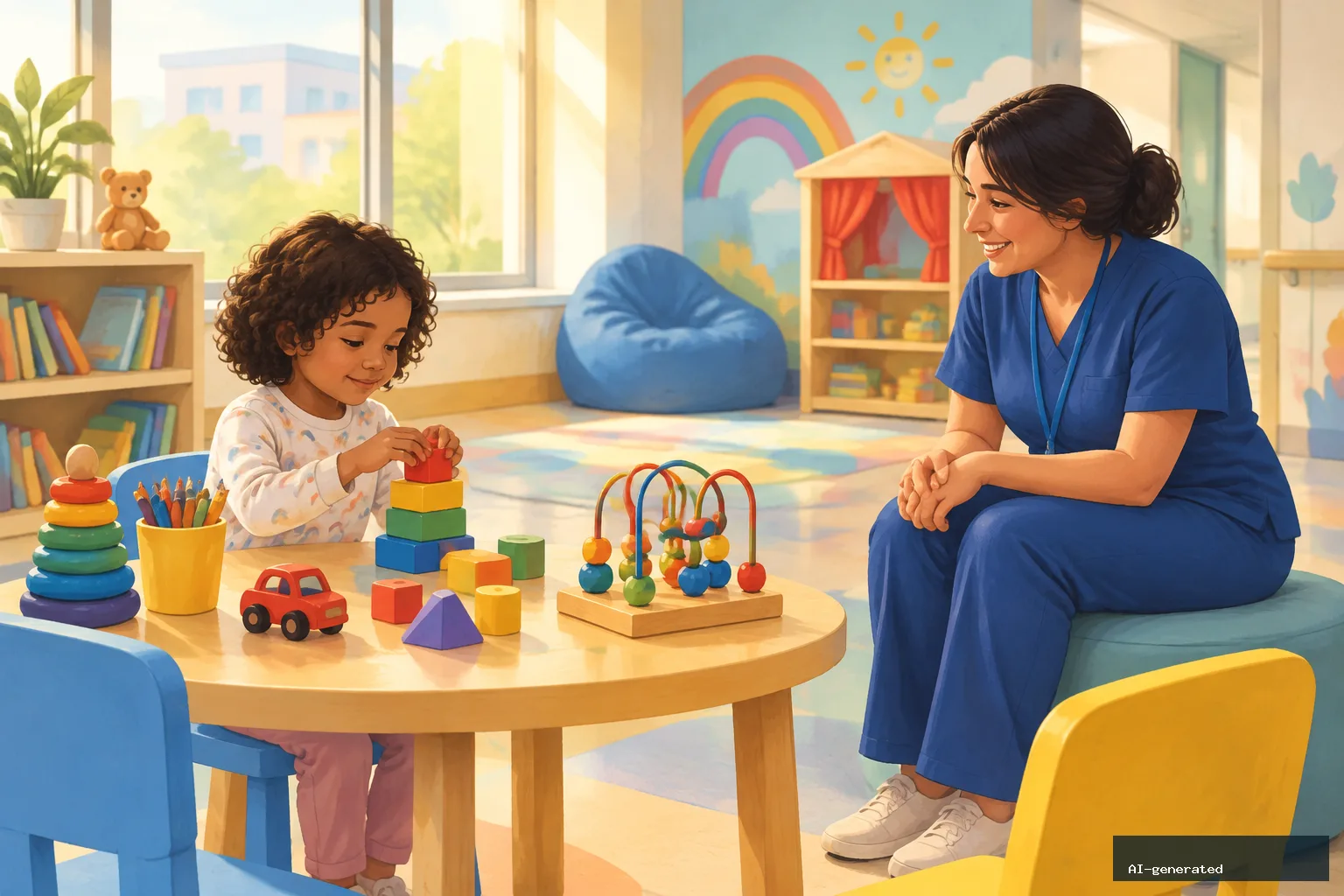
Health play is intended to help children understand what is happening and feel more involved in their care. Play can also offer a familiar way to express fear, prepare for treatment and cope with long periods in hospital.
Cathy Gilman, Starlight’s chief executive, said play can give children a sense of control, build trust with healthcare teams and reduce fear before, during and after treatment. The organisation describes health play as part of safe, effective children’s healthcare—not simply entertainment or an optional extra.
Research described by Starlight has linked positive healthcare experiences with reduced distress and better cooperation. It has also suggested that supportive experiences in childhood may help prevent later healthcare avoidance and mental health problems associated with traumatic medical care.
Support varies by location
Starlight found that only 23% of NHS trusts and health boards across the UK had dedicated budgets to train health play professionals. It said the absence of dedicated training budgets contributes to a postcode lottery, with unequal access to therapeutic play support.
The organisation also reported that no integrated care board has a dedicated health play budget, while only 5% include health play in their children and young people’s strategies.
One family’s experience
Lyndsey Hookway’s daughter, Filly, was diagnosed with acute lymphoblastic leukemia at the age of three. She spent 26 months in and out of hospital, including treatment with chemotherapy.
Filly said health play helped her feel less anxious and nervous. It also helped her cope with losing her hair and gave her something to do during lengthy treatment. Now 13, her experience illustrates why play support can matter alongside clinical care for children and families facing prolonged hospital stays.
NHS England has been approached for comment. The staffing figures cited here were obtained through freedom of information requests, and the wider claims about the effects of positive healthcare experiences are attributed to research described by Starlight.
AI tools were used to assist with the preparation of this article.
Leave a Reply