
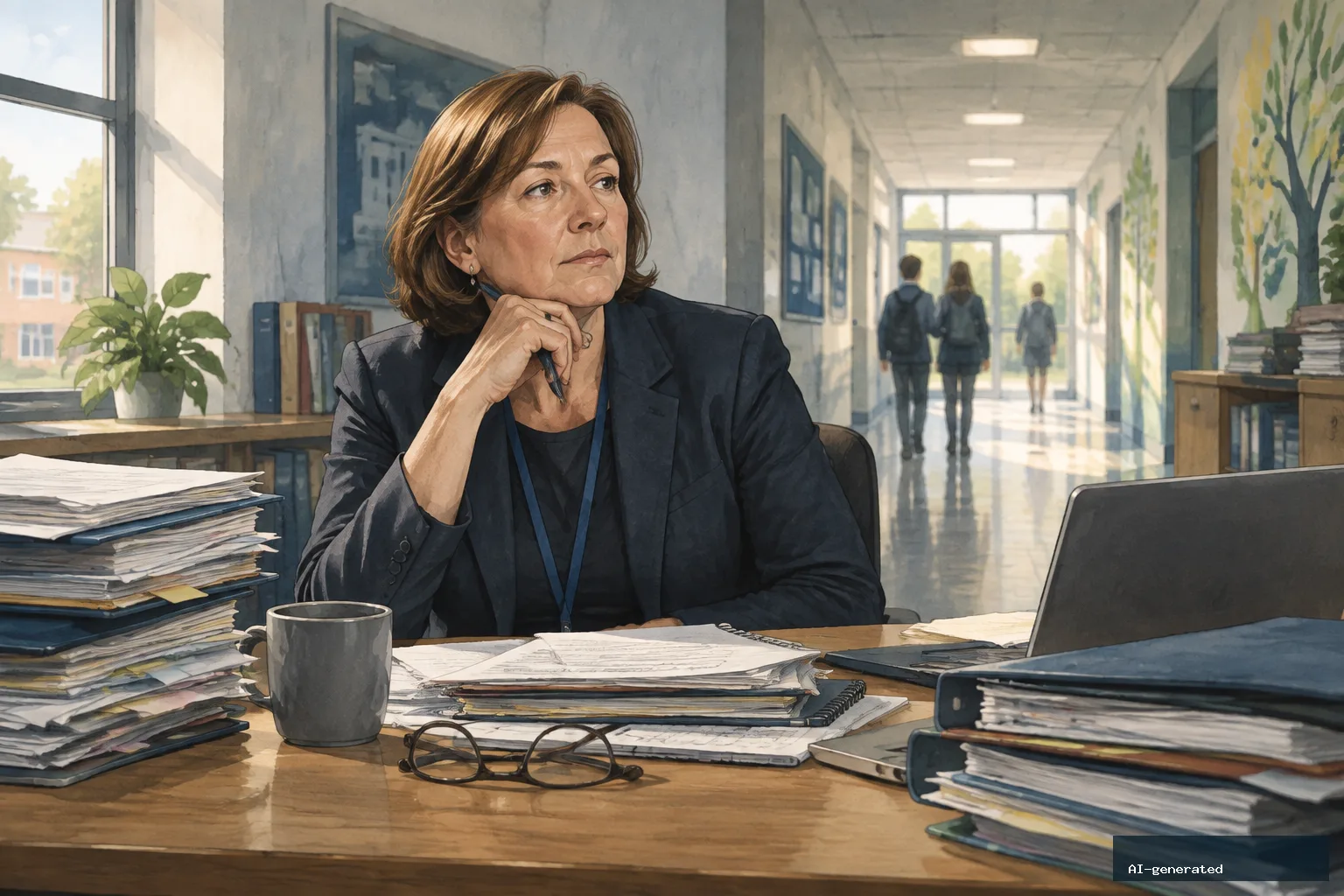
School inspections are intended to support accountability and help safeguard children. But concerns raised by a school leader wellbeing service and education experts suggest that the inspection process can also carry a serious human cost for headteachers and staff.
Headrest, described as a school leader wellbeing helpline, says it has spoken with headteachers whose physical or mental health was seriously damaged by inspections. The organisation has also spoken to leaders whom mental health professionals considered to be at risk of suicide after their experience of the Ofsted process.
These accounts describe patterns encountered by Headrest, rather than publicly identified individual cases. Pete Crockett, associated with the organisation, has said he cannot discuss individual cases.
The pressure can continue after an inspection
Some school leaders who successfully navigated inspections later chose early retirement rather than face the same level of stress again, according to Headrest. The service has also heard from leaders dealing with serious personal circumstances who requested inspection deferrals and were refused.
Those experiences sit alongside wider questions about what inspection outcomes show. Dr Iftikhar Hussain of the University of Sussex says the evidence on the effect of poor Ofsted outcomes on teachers’ careers is overwhelming. He also argues that the newer inspection framework, although designed to introduce greater nuance, has not resolved the underlying question of whether inspection outcomes accurately reflect the quality of education.
Accountability and humanity
The argument for reform is not an argument against accountability. The letters acknowledge that schools must be accountable and that children must be safeguarded. Their concern is that accountability without humanity serves neither school leaders nor children.
The coroner’s conclusion that an Ofsted inspection contributed to Ruth Perry’s suicide has made the potential consequences of inspection a particularly serious issue. It also raises the question of how a system can identify problems in schools while reducing avoidable harm to the people responsible for leading them.
England’s inspection regime is described in the letters as arguably the most stringent in the world. That claim is qualified, and the writers call for hard evidence about whether children gain more from enrolling at a school that inspectors rate highly. In other words, the debate is not only about how inspections are conducted, but also about what benefits their judgments demonstrably deliver.
What reform could address
Lucy Powell is described as proposing major changes to the education system. Colin Richards and Frank Norris say that proposals from the National Association of Head Teachers should be a first step towards reforming inspection, while arguing that further changes are needed.
The letters say school leaders have lost confidence in Ofsted’s overall direction and management, its detailed operating procedures, and its ability to inspect without causing undue harm to the health and wellbeing of headteachers and staff.
A credible reform programme would therefore need to consider more than inspection grades. It would need to examine whether procedures are proportionate, how deferral requests are handled, how findings affect careers, and whether inspection judgments reliably capture the quality of education.
The issue is ultimately about trust. As Toby Wood puts it, it is a sad and shocking indictment of the system when an article about Ofsted ends with the Samaritans’ phone number. For school leaders, a system designed to protect children should not make their own wellbeing an afterthought.
AI tools were used to assist with the preparation of this article.
Leave a Reply