
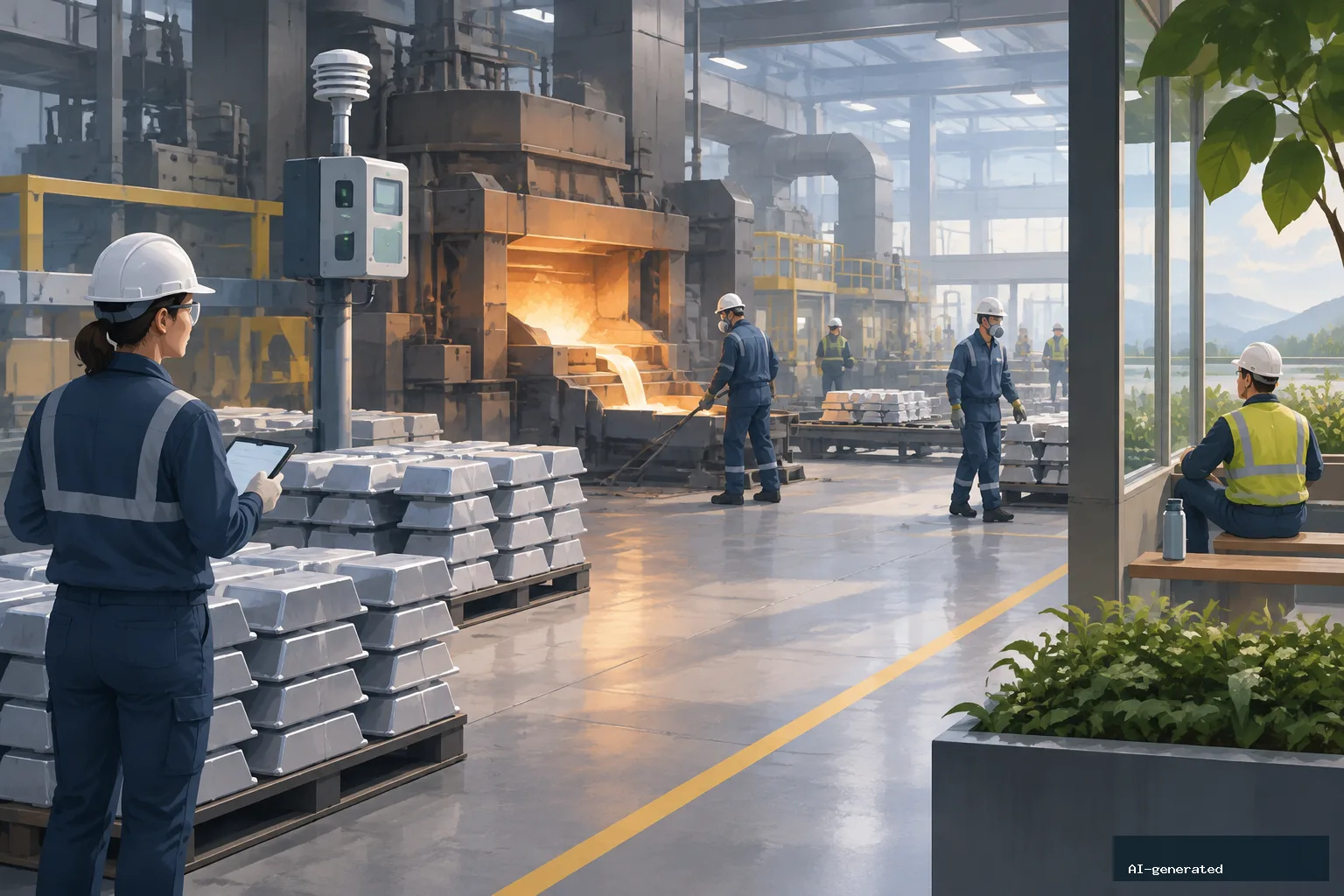
A study of 260 men at a single aluminum production plant in Iran found that workers in production areas reported slightly higher anxiety symptoms than administrative and security staff. The production workers also had higher urinary markers of polycyclic aromatic hydrocarbons (PAHs) and aluminum.
The results point to a workplace health question, but they do not show that chemical exposure caused anxiety. The study was cross-sectional, meaning exposure markers and anxiety symptoms were measured at roughly the same period rather than tracked over time.
What the researchers measured
The study included 130 workers in anode production, smelting pot-rooms and casting, along with 130 administrative and security workers. Participants completed questionnaires and provided urine samples. All participants were men, and the study took place at one plant.
Anxiety symptoms were assessed with the Beck Anxiety Inventory, a questionnaire rather than a clinical diagnosis. Average scores were 10.74 among production workers and 8.88 among the comparison group. Both averages were in the mild-anxiety range.
The difference between groups was 1.86 points, with a 95% confidence interval of 0.46 to 3.27 and a p-value of 0.010.
Exposure markers were higher in production workers
Urine samples showed higher levels of two exposure markers among production workers:
- 1-hydroxypyrene, a metabolite of pyrene used to estimate recent PAH absorption, averaged 7.30 versus 2.59 µmol/mol creatinine.
- Aluminum averaged 33.45 versus 7.35 µg/g creatinine.
Airborne benzo[a]pyrene, a PAH, averaged 2.27 µg/m³ in the exposed group and was below the detection limit among office and security workers.
PAHs can form when coal, oil, wood, tobacco or other organic material burns incompletely. The source describes high-temperature aluminum production as a setting where PAHs may be released into workplace air, while aluminum dust and fumes may be inhaled.
Job stress also mattered
Production workers reported more job stress than the comparison group, with average scores of 52.45 and 47.45. In a regression analysis that accounted for job stress, smoking, age and years on the job, both urinary 1-hydroxypyrene and urinary aluminum remained associated with higher anxiety scores.
Job stress had the strongest independent association in the model, followed by 1-hydroxypyrene, smoking and urinary aluminum. Age and years on the job were not significant. Together, the six factors explained 38.4% of the variation in anxiety scores.
That finding does not separate workplace conditions neatly into chemical and psychosocial causes. Workers in different job categories may also differ in education, income, shift schedules, sleep, alcohol use or physical demands—factors the study could not fully rule out.
Why the findings need caution
A single urine sample taken at the end of the workweek reflects recent exposure, not necessarily years of cumulative exposure. The comparison groups also performed different kinds of work, making it difficult to know which workplace differences contributed to the results.
The study excluded men with major psychiatric or neurological diagnoses, regular medication use for anxiety or depression, or major chronic diseases. Smoking rates were similar between groups: 54 production workers and 53 comparison workers smoked. Even so, the participants may not represent women, workers at other plants or people with different health conditions.
The Beck Anxiety Inventory identifies symptoms and their severity; it does not establish an anxiety disorder. The researchers’ suggested biological pathways—including inflammation, oxidative stress and altered brain signaling—come mainly from animal and cell research and remain proposed mechanisms in this context.
What the findings mean for workplace health
The study does not evaluate ordinary contact with aluminum from cookware, foil or cans. Its findings concern occupational conditions in aluminum production, where exposure levels and work processes differ from everyday use.
The source notes that exposure controls are justified because benzo[a]pyrene and other PAHs are established cancer hazards, independently of the anxiety finding. The researchers also recommend addressing psychosocial job stressors alongside chemical exposures and considering mental-health screening in workplaces with high exposure.
For now, the most accurate interpretation is limited: in this plant, production workers had higher recent exposure markers and somewhat higher anxiety symptom scores than administrative and security staff. Longer-term studies across multiple workplaces would be needed to clarify whether chemical exposure contributes to anxiety, how much job stress explains, and which workers may be most affected.
AI tools were used to assist with the preparation of this article.
Leave a Reply