
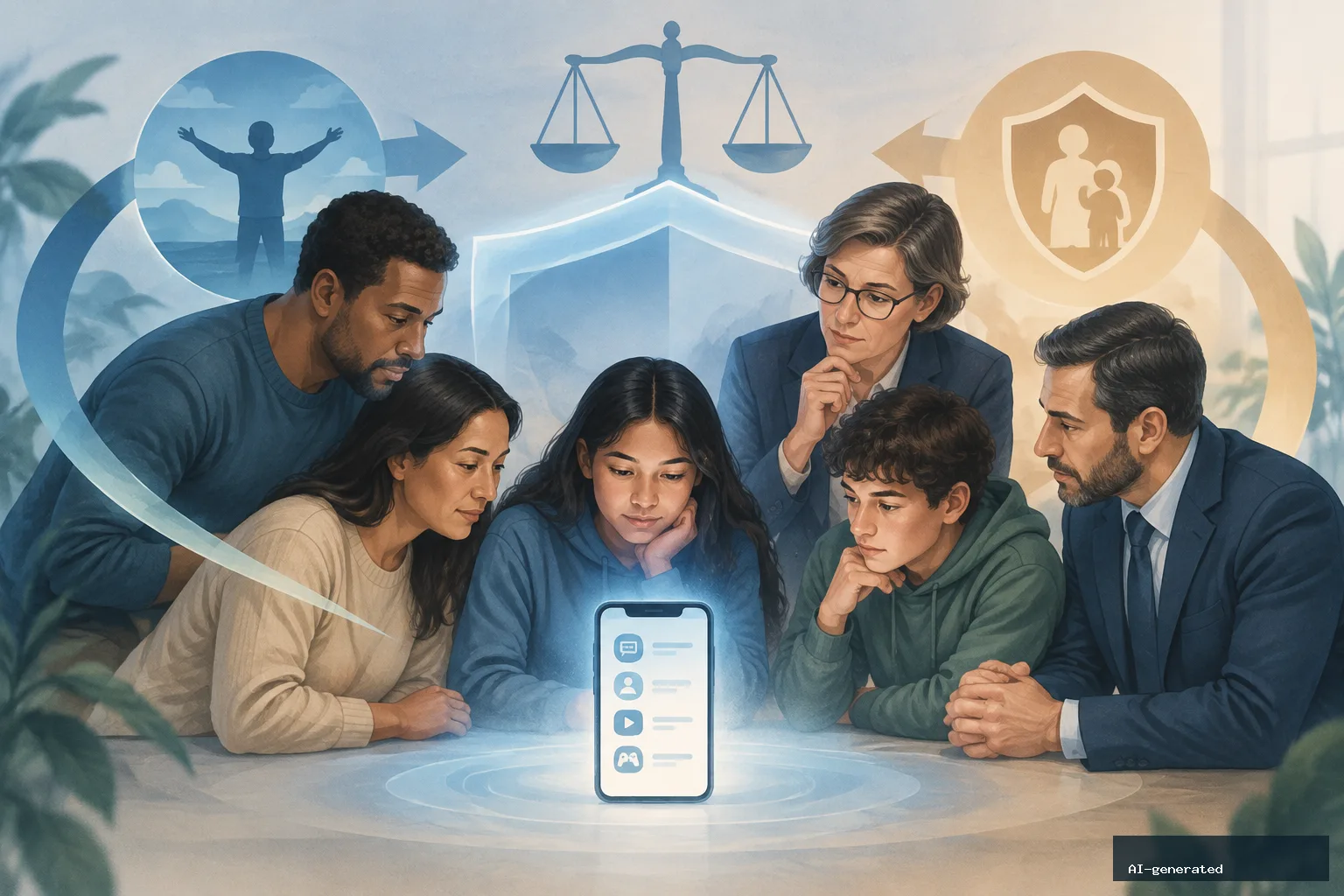
Online safety for children has become an unusual point of agreement in American politics. Democrats and Republicans are supporting investigations, lawsuits and legislation aimed at limiting the risks that young people may face on social media.
James Talarico, a Democratic Texas state lawmaker and former seminarian, has endorsed banning social media for children under 16. Republican Texas Attorney General Ken Paxton has sued technology companies, alleging that they hook young people on their apps or fail to keep sensitive videos away from children.
The agreement is broad, but the proposed solutions are not identical. Some policymakers favor age restrictions or stronger platform safeguards. Others emphasize parental control and oppose blanket bans.
What lawmakers are proposing
At least 35 candidates for the U.S. Senate this year have sponsored bills to curb social media, opened investigations or publicly criticized technology companies over their treatment of children and teenagers.
The Kids Online Safety Act is one of the most prominent proposals. It would require social media companies to introduce safeguards, including limits on users’ ability to communicate with minors. One version received 91 votes in the Senate, although the fact sheet does not establish that it became law.
Apple supports the legislation, according to a spokesperson cited by KFF Health News. Meta has promoted its teen accounts through a $10 million television advertising campaign. Meta spokesperson Ed Patterson said youth-safety laws should give parents control and argued that broad bans could push young people toward less safe platforms.
Talarico has also co-authored legislation targeting explicit deepfakes—digital imitations of people that may be created or manipulated with artificial intelligence and used to harass individuals on social media.
Pressure is also coming from courts and regulators
The debate is not limited to Congress. About 70 corporations, trade groups, nonprofits and other organizations have lobbied senators about the Kids Online Safety Act, according to a search of the Senate’s lobbying database.
School districts and governments are pursuing legal claims as well. A Kentucky school district reached a $27 million settlement with social media companies, while roughly 1,000 other districts, including districts in Los Angeles, have filed class-action lawsuits citing alleged addictive effects and other harms.
In early August, a New Mexico state court ordered Meta to pay nearly $950 million after finding the company a “significant contributing factor to the current mental health crisis.” That is a court finding, not a settled scientific conclusion about social media and mental health.
International regulators are taking different approaches. The United Kingdom and Australia recently banned social media for children under 16. The European Union has threatened Meta with a potential fine of up to 6% of its revenue over alleged “addictive designs”; the fact sheet does not say that such a fine has been imposed.
The mental-health evidence remains contested
Concerns about children’s well-being are part of the urgency behind these efforts. Centers for Disease Control and Prevention data from 2025 indicated that one-third of young people had persistent feelings of sadness or hopelessness, about 10% more than a decade earlier.
But the available evidence does not establish that social media alone caused that change. Many researchers question whether social media is the driving factor, and Sandro Galea of Washington University in St. Louis described the science as “crude and messy.” The fact sheet also notes that some other youth-health measures tracked by the CDC have improved.
That uncertainty matters for policy. Restrictions may address particular risks, such as unwanted contact, harmful content or the misuse of personal information, without proving that every mental-health trend is caused by social media.
Questions about company conduct
Several allegations have intensified scrutiny of the technology industry. Sarah Wynn-Williams testified before the Senate in 2025 that Facebook targeted people ages 13 to 17, identified when they felt worthless, helpless or like failures, and shared that information with advertisers. The fact sheet presents those points as testimony.
In rulings issued in 2025 and 2026, a Washington, D.C., judge found that Meta’s lawyers directed employees to remove portions of research concerning the company’s knowledge of teen users’ developmental vulnerability. Meta says it has approved three dozen studies on social issues affecting young people and has introduced changes including teen accounts with settings parents can control.
Roblox disclosed $91 million in legal settlements and related expenses in the first half of 2026, including costs connected to youth-related consumer protection and digital-safety matters.
What the debate means for families
For families, the policy debate is likely to produce a mix of age limits, parental controls, platform-design requirements and rules governing contact with minors. The central disagreement is whether companies, parents or governments should carry the greatest responsibility for reducing risk.
The growing bipartisan focus reflects genuine concern, but it does not resolve the most difficult questions: which online experiences are harmful, which protections work, and how to improve safety without pushing young people toward less regulated services. Those questions remain open as lawmakers and courts weigh allegations alongside an unsettled research record.
AI tools were used to assist with the preparation of this article.
Leave a Reply