
⏱ 8 min read
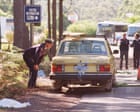
When Martin Bryant drove his yellow Volvo to Port Arthur’s historic site, its boot stuffed with high-powered and casually acquired weapons, paramedic Peter James was living in Launceston. It was 28 April 1996.
Peter was on holiday at the time, but when he heard sketchy reports of a shooting on the radio, he called the critical incident stress debriefing team to ask if he was needed. He was – not as a paramedic, but as a debriefer. With two colleagues, Peter drove to Hobart, just over two hours away, where he was briefed at ambulance headquarters. Even there, he said, he doesn’t remember the scale of the crimes being evident yet. He wasn’t “steeling himself” as he drove to the police command post that had been established at a Tasmanian devil sanctuary in Taranna, about 45 minutes from Hobart and close to Port Arthur.
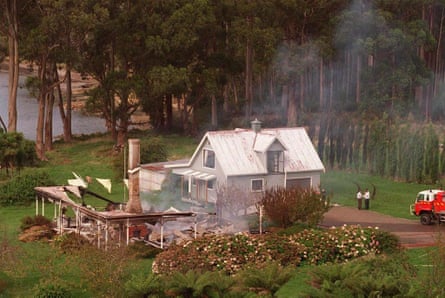
Peter arrived at the command post sometime after 5pm, and police began explaining the scale of the slaughter. The number of deaths wasn’t confirmed yet, they said, but it was unthinkably high, and the police and SES volunteers were now searching for survivors who may have crawled into bushland to hide. They also sketched for Peter the back routes to the historic site, because driving the most direct way would take him past the Seascape guesthouse, where Bryant was holed up and shooting at police.
When Peter arrived at Port Arthur, “the living had all been removed” and taken to hospitals. Rather than treat the physically wounded, Peter was there to support the volunteer ambulance service who were first on the scene – “people needed to ventilate, and it was my job to listen” – but he would quickly be asked to do much more. Peter would work at the site for almost 24 hours straight.
“I knew most of the senior police there,” he said, “because they’d been members of the critical incident debriefing team. After I’d done my debriefings, the police said, ‘You’re not going anywhere. We’ve got crime scene walk-throughs to do, and you’re gonna help us.’ And so I did. As graphic and disturbing as the place was, it was still a very large and complex crime scene, and there are logistics that go with that. Bodies had to be identified, and then forensic teams would go through again to examine the scene and photograph the bodies in position. I helped with that. I remember Tasmanian devils were starting to come out and sniff around the bodies, and the bodies had to be protected. Afterwards, they had to be loaded carefully and compassionately. These were all things that needed to be done. Forensics had so much to do.
“I would offer advice – try to reduce police fatigue by asking that they rotate the officers who were protecting bodies. A whole busload of police came after that to help. The cops were good, very responsive to my suggestions. I was also there to support people, as some were falling apart. For some who had seen the children, they had reminded them of their own. There were definitely a few who weren’t doing so well, and I would become one of them the next day.
“There’s black humour sometimes at jobs. But we operate behind a facade, and the magnitude of this, well, the facade fell away. And also when people become fatigued, like they did that day, coping mechanisms fall away.”
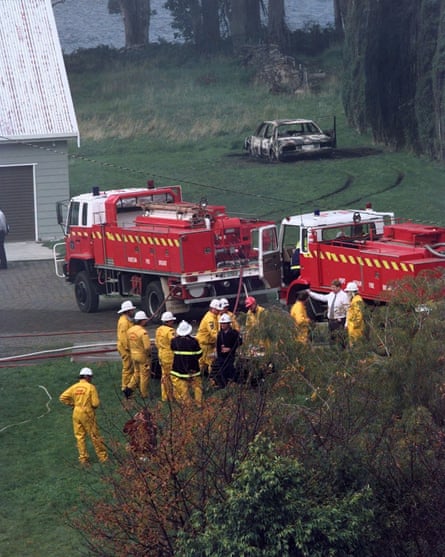
The forensic processing of the scene, as well as the psychological triaging, went on through the night, all while Bryant was still holed up at the Seascape. He was largely surrounded, but as night fell, there was no guarantee he couldn’t slip away in the darkness. Those working at Port Arthur were on edge, and soon rumours were circulating that Bryant had indeed left the bed and breakfast and was returning to the site.
“It was a well-controlled scene,” Peter said. “But we were all anxious. I remember going to the toilet, and hearing the crunching of footsteps outside, and thinking, ‘I don’t want to die falling face first into a urinal.’ I think it was the police commander.
“It was a dark, cold night. And it sucked the life out of you.”
If there’s a hell, Peter said, it would look like the Broad Arrow Cafe that day. It was in there, and the adjacent gift shop, that Bryant, in just 90 seconds, had fired 29 rounds of his AR-15, killing 20 of his 35 victims and injuring another 12.
When Peter approached the cafe to assist in the scene’s processing, there was a police officer on guard at the front, signing in those who entered. He had a warning: “Just know that the man who goes in there will not be the same man who comes out,” he said.
“Never has a truer word been spoken,” said Peter.
When Peter stepped inside, he felt a familiar sensation – or a familiar absence of sensation. Everything felt magically still, silent. He couldn’t feel his breath, or the turbulence of the ceiling fans that were still spinning. There were forensic officers, but he couldn’t hear them speak – or at least, in his traumatically embalmed memory of the scene, there were no voices.
He was operating on another plane – some senses were hyperfocused and others numbed – and he remembers that room now as if it were a literal vacuum, sucked of air.
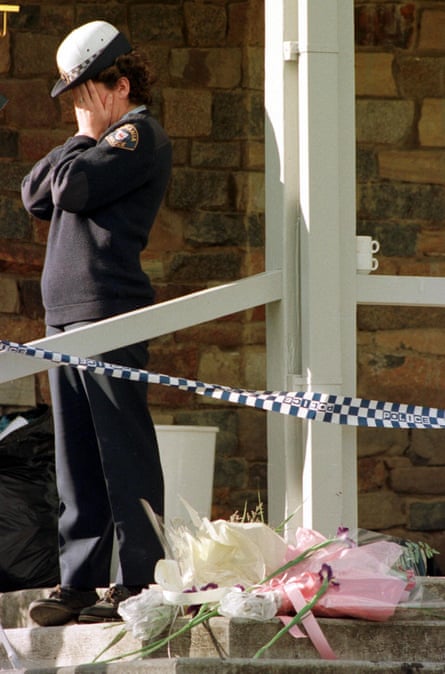
I’ve thought a lot about the police guard’s words to Peter, which were forgivably raw and honestly forbidding, but perhaps helped prime Peter for a grotesquely transformative experience. I am reminded of Mike Ryan’s experience of the scene the following day. As Tasmania police’s chief psychologist, Ryan had spent the night attempting to make contact with Bryant in the Seascape, where it was believed he was holding its two owners hostage. The next morning, the commanding police officer asked Ryan to join the state’s coroner at Port Arthur to help counsel “a few people who weren’t doing so well”.
“I found myself in Broad Arrow,” Ryan told me. “And that didn’t affect me at all. I’d never seen a dead body in my life, but I found it almost like a film set. I objectified it. [My response] was very interesting. I saw one body sitting up, looking like she was puzzling over something.
“I was waiting to be affected. The images stay with me. They’re graphic. I’m not saying I was unaffected. One thing that really stays with me, and this is bizarre, but five of us were crammed into this little car, and it was the most perfect morning in Port Arthur, just the most beautiful, bizarre setting for this horrific institution. There were these mushrooms, red with white flakes on top – a whole row of them against this green swathe of grass. The sun was coming over. We just looked at it and said, ‘It’s so beautiful.’ But there’s two kids up there dead, and others lying around. Dead. The coroner said something like: ‘You know, I’ll never come back here again.’ I’ve never been back, either.”
Ryan explained to me how a hardened officer, who has previously detached themselves from the traumas they were called to, might suddenly – and profoundly – be affected when the event was personalised. He told me of an experienced police officer – “you could cut your hair on his chin” – who had come to see him after attending a fatal road crash.
The victim was a young girl – the same age as the police officer’s daughter and wearing the same-coloured dress as she had been that morning when he said goodbye. “He told me it was just like getting shot,” Ryan said. “He said, ‘I dealt with it, did really well’, but he [later] collapsed, and then it brought everything else back [from his career]. It still gives me goose bumps.”
The same was true of Peter at Port Arthur, as it was for many others. As he was debriefing officers, conducting crime scene walk-throughs, arranging rosters and helping with the carriage of bodies, he was thinking of his own children, who were the same ages – six and three – as Alannah and Madeline Mikac, who were killed with their mother, Nanette. “It personalises it big time,” Peter said. “Your brain sort of twists it, and I remember saying later to my wife, ‘How could someone shoot Sam and Oliver?’”
Around 3pm the next day, almost 24 hours after he had arrived, Peter called time. Some police officers wanted him to stay on, and Peter wasn’t a man to say no, but his exhaustion and horror had peaked overwhelmingly. He wanted to get home. “I just couldn’t go on,” he said. “There’s only so much you can tolerate.”
So, Peter was driven home. It was a three-and-a-half-hour drive. He cried when he arrived. Hugged his wife and boys. But he didn’t say much. And his house, if it wasn’t before, became a castle. “My front door was like a drawbridge,” Peter said. “I shut that door, and [the world] stayed outside.”
This is an edited extract from Sirens by Martin McKenzie-Murray, out now through Black Inc.
Leave a Reply