
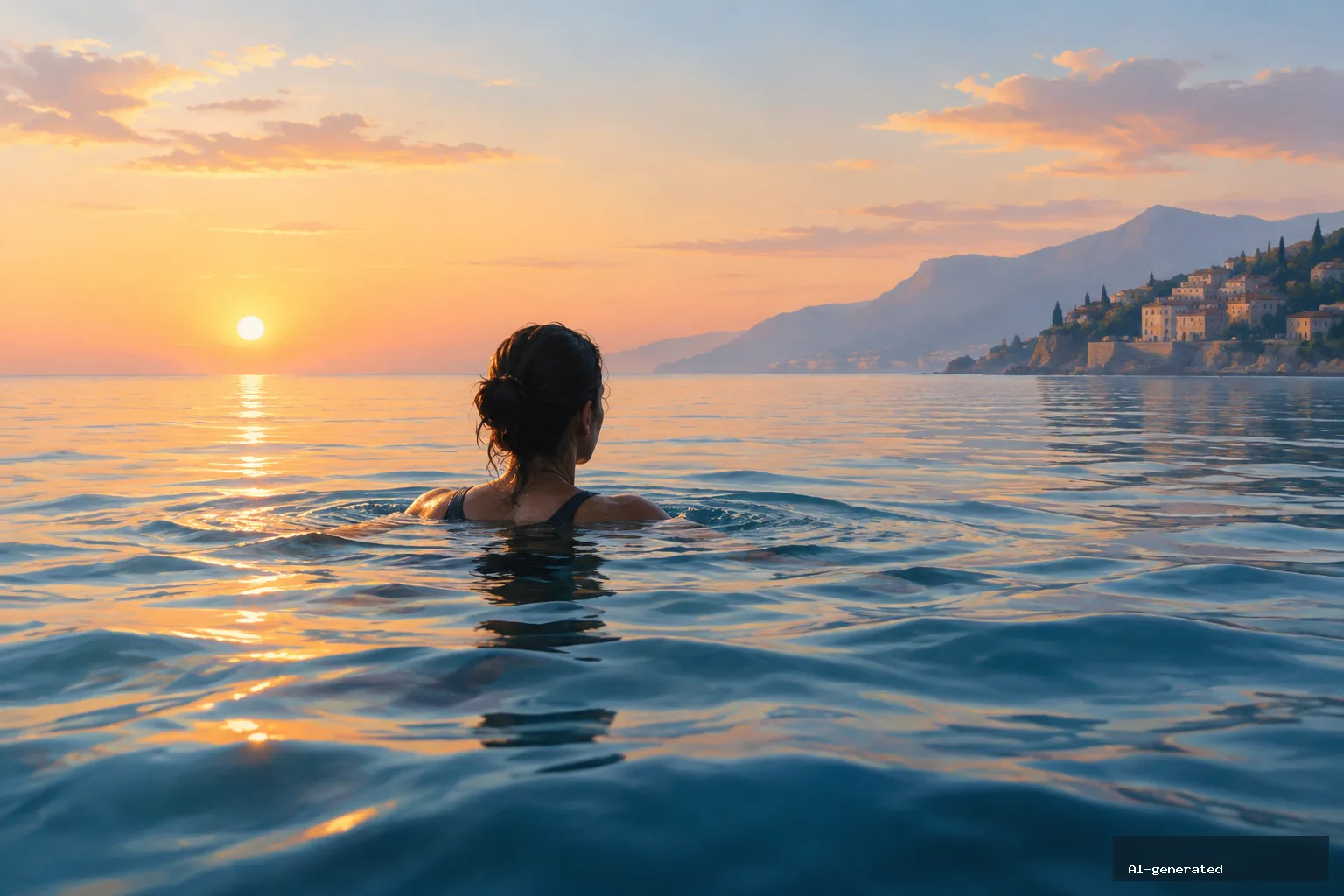
For one swimmer, the sea has become closely tied to grief, memory and moments of relief. The connection began several months after their mother died unexpectedly and has continued through guided swims in Croatia, Greece and Turkey.
In late September, swimming early one morning off the coast of Kaş, Turkey, the writer felt their mood shift. They describe finding relief in the water, despite having an unpolished technique: messy strokes, mostly knee-driven kicking and slow progress.
The swim was part of a five-day trip with SwimTrek, a Brighton-based company that offers guided open-water swimming tours. The group planned to cover 25km, a distance the writer completed. Finishing the challenge brought a strong sense of achievement, and they say they felt no shame about being the slowest swimmer in the group.
A focus during bereavement
The writer first noticed the effect of swimming during a trip to Croatia in June 2024, eight months after their mother’s death. A friend persuaded them to swim 3km a day for a week.
Before the trip, the writer describes feeling lost and anxious, with sleepless nights while trying to come to terms with the loss. They say that concentrating on the swimming challenge was the only thing that seemed to help at that time.
Their preparation had mainly taken place in a pool, using breaststroke. On the second day in Croatia, a SwimTrek guide provided flippers and introduced them to basic front-crawl technique. The writer says this increased their confidence in the sea.
They describe open-water swimming as bringing an immediate sense of relief. Buoyancy makes them feel both weightless and anchored, while rhythmic movement and watching sea life help clear their mind. Over time, the combination of swimming and the sea has become more than a holiday.
A connection rooted in childhood
The writer grew up in Croydon, south London, where their mother took them to a municipal swimming pool. While the mother swam lengths in the adult pool, the writer played in the children’s pool.
Family visits to Italy also shaped the memory. The family travelled from the UK to see relatives in Turin and Sicily, where the writer’s father was born. The writer remembers their mother swimming for long periods at Italian beaches while they watched from the shore.
The mother lived with depression and anxiety. The writer believes the sea might have offered her a similar kind of respite, but they never discussed whether swimming helped her. Their conversations about swimming were limited to practical matters such as buying a particular cap or goggles online.
The mother, who was 73 when she died, also went to the gym every morning at least until Covid, and enjoyed tennis and walking. A few years before her death, the writer’s parents moved to Bexhill-on-Sea in East Sussex.
Shared water, separate memories
The writer now visits Bexhill when returning to the UK from Italy. Walking beside the sea, listening to it and sometimes taking a cold-water dip are described as ways to feel centred.
The guided swim trips have also brought a welcoming community and new friendships. A year after the Croatia trip, the writer joined a 4km-a-day trip in Greece, where they celebrated their 50th birthday. They are already planning another swim next year.
For the writer, the sea offers both a physical challenge and a way to feel close to their mother. That sense of connection sits alongside sadness: they wish they could tell her about the swims and what they have come to mean.
What this personal account shows
This is one person’s experience of grief and open-water swimming, not evidence that swimming produces the same effect for everyone. The writer’s account suggests that structured goals, rhythmic movement, time outdoors and companionship can become meaningful parts of how someone lives with loss.
It also shows how an activity can carry several layers of meaning at once: a childhood memory, a demanding personal challenge, a social experience and a private link to someone who has died.
Key takeaways
- The writer says open-water swimming brought relief during a difficult period after their mother’s unexpected death.
- They completed a 25km, five-day guided swim trip in Turkey despite describing themselves as the slowest swimmer in the group.
- Their first significant swimming challenge took place in Croatia in June 2024, eight months after their mother died.
- The writer connects swimming with rhythmic movement, mental clarity, confidence and memories of their mother—but these are personal experiences, not established outcomes for everyone.
What this means
The story may resonate with people who connect movement, outdoor places or shared activities with memories of someone who has died. It describes one person’s experience and does not establish that open-water swimming will affect grief or wellbeing in the same way for others.
What the evidence cannot tell us
- The account is a personal narrative and does not provide clinical evidence about swimming, grief or mental health.
- The year of the late-September swim in Turkey is not stated.
- The writer does not know whether the sea or swimming gave their mother relief because they never discussed it.
- The writer says swimming was the only thing that seemed to help after their mother’s death, but this is a personal description rather than a measured comparison with other forms of support.
AI tools were used to assist with the preparation of this article under our editorial standards.
Leave a Reply