
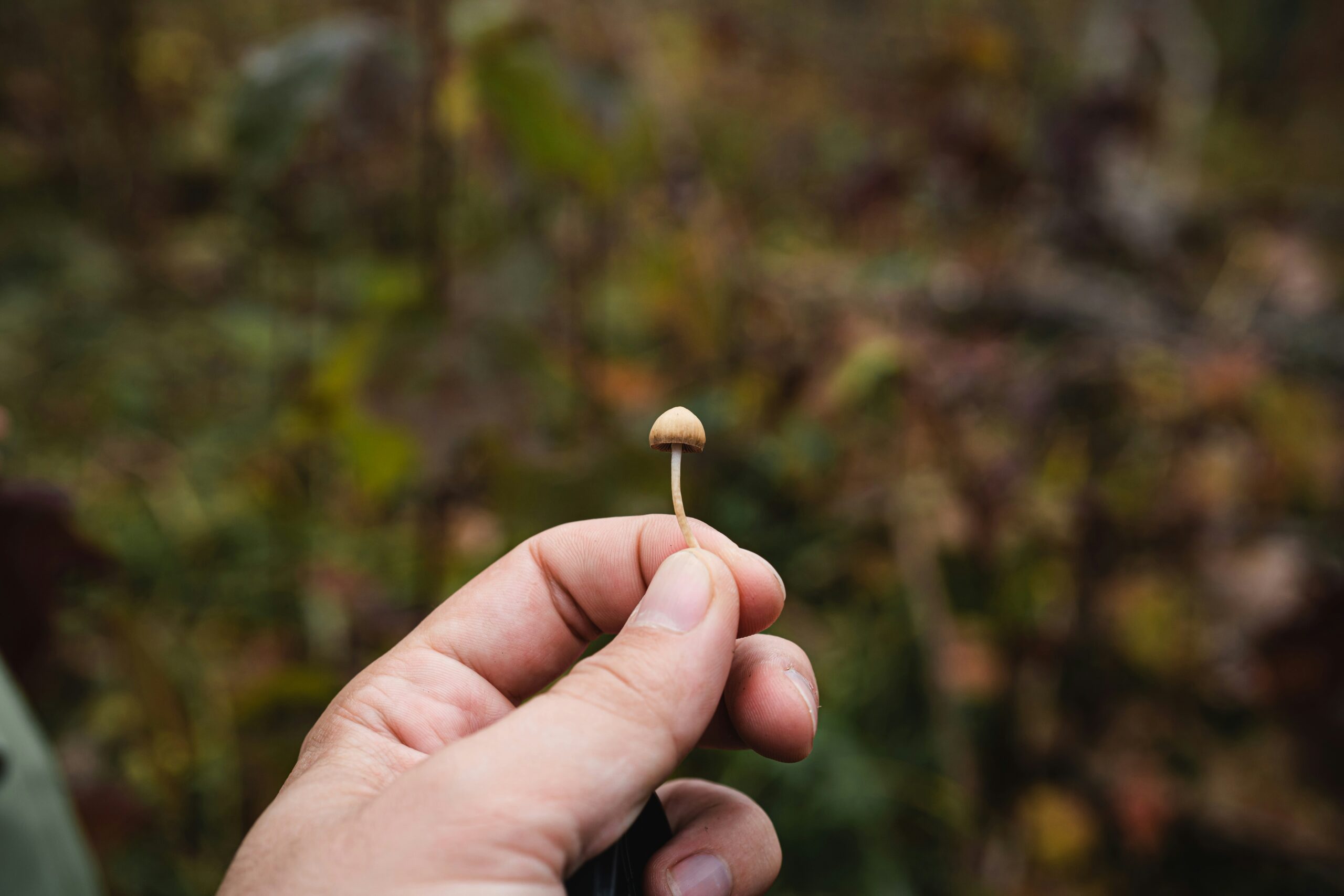

Psychedelics were once, not so long ago, held up by select vocal advocates as a New Panacea for difficult-to-treat (or treatment-resistant) depression, as psychological ‘antibiotics’ that would revolutionise psychiatry. Then came the naysayers, those with vehement reservations about the science of psychoactives. Rivers of ink were spilled in the literature over methodology, veracity, validity. In the meantime, the work of empirical evidence gathering went on: mostly quietly, somewhere in the background (save for a few notable exceptions).
The recent publication in JAMA Psychiatry of a psilocybin for depression trial by Mertens et al. (2026) is such an example of the evidence gathering that the theory-obsessed psychedelic field so badly craves. It is a well-designed, interesting, and necessarily flawed study. It inches us slightly further along the path to a better-informed understanding about the potential role for psychedelic-assisted therapy in difficult-to-treat depression. This is despite the fact that the results from the study are pretty underwhelming.

Psychedelic treatments for depression remain highly polarising, with growing empirical evidence attempting to move the field beyond hype and scepticism.
Methods
This was a three-arm, two-site randomised clinical trial conducted in Germany that compared 25mg psilocybin (the standard ‘high’ dose in modern trials), with a low, peri-perceptual, 5mg dose, and an ‘active’ placebo of nicotinamide (more on that later). Participants in the study were followed up 6 weeks after the intervention, with 50% response on the Hamilton Depression scale (HAM-D) set as the primary outcome.
Participants had moderate-to-severe difficult-to-treat depression, with a HAM-D score of 17 or higher, and a failure of at least two previous antidepressants. They received psychedelic therapy, which was thoughtfully manualised and placed in the public domain: https://zenodo.org/records/19327773. In short, the psychotherapeutic intervention in this study seems to be a ‘typical’ three-stage non-directive support package often utilised in modern psychedelic trials: preparation, dosing support, and integration.
Results
A total of 142 people were dosed across three arms, equally split. The sample overrepresented educated (72% had a degree), intelligent (median IQ 110) White (98%) men (59%). The median number of depressive episodes was three, psychiatric hospitalisations two, years of depressive illness twelve, and previous antidepressants five. The mean HAMD score was 22, which is at the high-moderate level. Many (73%) had at least passive suicidal ideation in the past six months.
The headline: eight of 47 participants met the primary outcome in the 25mg psilocybin group at week six. This is eight people with otherwise difficult-to-treat depression whose symptoms decreased by more than half. The results, though, are a little less impressive when compared with the six patients that met the primary outcome in the low-dose psilocybin group, and the five in the placebo (nicotinamide) group. We don’t really need statistics to show that these across-group differences are non-significant.
The authors were a bit more excited about the secondary outcomes, and for good reason. A whopping 16/47 patients in the high-dose psilocybin group met the primary outcome criteria at one week (vs. 5/48 in low-dose and 3/47 in placebo). The mean HAM-D reduction in the 25mg group was 6.1 (vs 4.6 and 3.1); statistically significant, but certainly a modest drop from a perspective of what is clinically meaningful. Perhaps one of the most important secondary results was that five patients in the 25mg group met criteria for depressive remission (<8 on HAMD) vs zero and one in the low-dose and placebo groups respectively.
Adverse events were non-negligible but generally reassuring. There were more in the psilocybin group, but this is mostly because the authors diligently reported all the phenomena one may encounter during an acute psychedelic experience, including sensory alterations, anxiety, and transient psychotic-like phenomena. Although there were slightly higher rates of suicidal ideation in the high-dose group on dosing day (4% vs. 1-2%), there was no consistently concerning signal for increased suicidality.
Importantly, one participant with a history of anxiety and dissociative symptoms experienced acute severe panic following a high dose, which progressed to anxiety, dissociation and depersonalisation, flashback phenomena, and symptoms of hallucinogen persisting perception disorder (HPPD). This required hospitalisation and was hence appropriately reported as a ‘Serious Adverse Event’. We have recently published a large study of HPPD, and summarise the evidence on this debilitating disorder which suggests it may have contributing anxious, somatic, or functional aetiologies (Butler et al., 2026).

In difficult-to-treat depression, psilocybin showed no six-week benefit over placebo or low dose, but high-dose treatment produced early response and remission signals with generally manageable adverse effects.
Conclusions
This three-armed clinical trial of psilocybin plus psychotherapeutic support in difficult-to-treat depression did not meet its primary outcome of showing superiority over low-dose psilocybin and placebo. Nevertheless, there are signals within the data to suggest that there were some participants in the high-dose group who did very well at follow-up, with five patients meeting criteria for remission of their difficult-to-treat depression.
Overall, this suggests that psilocybin plus psychotherapeutic support may demonstrate some efficacy in a small proportion of people with difficult-to-treat depression. The intervention appeared feasible and safe, with the attendant above caveats.

Psilocybin plus psychotherapeutic support may demonstrate some efficacy in a small proportion of people with difficult-to-treat depression.
Strengths and limitations
This was a study with a creative and rigorous design. It successfully recruited a clinically representative medium-sized sample. The authors considered and tried to address the challenges faced when gathering evidence in medical psychedelic trials; for example, they included a second dose (25mg psilocybin unless already received) after the primary outcome collection to mitigate disappointment effects, and they utilised independent and blinded outcome raters.
The participants included in this study were relatively unwell, and the sample likely approximates a ‘real-world’ population of people with difficult-to-treat depression. We can be relatively confident that, at least clinically, these are the types of patients for whom, in an imagined future, it is reasonable to think that psychedelics might help. The authors faithfully reported their non-significant primary outcome (it feels odd to have to state this, but this has not always happened in the psychedelic literature (Cristea et al., 2025)).
As with all research, there were some limitations to this study, most of which are related to difficulties in researching psychoactive substances in general, rather than the trial design in particular. Although an attempt to use an ‘active’ placebo should be applauded, it is extremely unlikely that nicotinamide meaningfully muddied the unblinding waters. In fact, functional unblinding was rife, with 86% of participants correctly guessing their allocation to high-dose psilocybin. This means that treatment effects between groups may be inflated (Butler et al., 2022). The authors also missed out on the opportunity of measuring phenomena which may be implicated in ‘non-drug’ contributions to treatment effects, such as expectancy and suggestibility, although, to be fair to them, this was not a mechanistic trial. You can read more on this issue of blinding in psychedelic trials in these other recent Mental Elf blogs by L Baxter and R Rifkin-Zybutz.
At six weeks, the follow-up period was very short. One other study-specific criticism I do have is the lack of diversity in their sample. Psychedelic research has consistently faced well-founded accusations that it over-represents middle-class, White men (Haft et al., 2025). This study did absolutely nothing to remedy that status quo. Unlike the United Kingdom, it is not routine to collect ethnicity data in Germany, so it is difficult to know what a representative sample might have looked like, but Germany is a wonderfully diverse country, and I doubt that 98% of the population would identify as White.

This was a well-designed trial with rigorous blinding and a clinically relevant sample, but it is limited by short follow-up, high unblinding, and poor sample diversity affecting generalisability.
Implications for practice
By itself, this paper is unlikely to significantly alter practice, particularly given psychedelics generally remain unlicensed and quasi-legal in most jurisdictions. The results, it could be said, are pretty uninspiring. Psilocybin was not superior to placebo despite a promising first week post-dose. Even if significant, there were only modest reductions in HAM-D scores, which may not be clinically meaningful (although HAM-D can be construed as a crude and unwieldy outcome measure).
It bears repeating that we desperately need new interventions for depression, a condition that is as common as it is debilitating, its burden both widespread and deep. I suspect the results from this study are a pretty good estimation of how psychedelics will actually perform if they ever enter clinical practice: mainly modest effects, a small number of big responders, and the drug being only half of the story. It’s up to us to decide if this is enough.
The fact that some people did well in the placebo and low-dose group reminds us that there are many factors implicated in treatment response beyond pharmacodynamics, many of which are foregrounded by psychedelic trials. Thus far, it has proven very difficult, if not impossible, to disambiguate what proportion of response is related to psychedelics alone, what is due to psychotherapy, and what is due to other factors.
One response to this situation may be to practice healthy scepticism, whereby we interpret results from psychedelic trials with caution, but without becoming knotted with aporia. So, what if part of response to psychedelics is mediated by placebo phenomena? Placebo should no longer be seen as a dirty word, and it is not a bad clinician who cares more for whether their patients get better than how (Burke et al., 2026).
Perhaps the discourse about medical psychedelics, influenced by data such as from Mertens et al., is now beginning to settle upon some happier, more modest medium. If these drugs are ever allowed into clinical practice, one hopes that they will be subject to appropriate regulations, be utilised with non-negotiable care and attention, be administered to judiciously selected patients, and be dispensed without undue expectation of effects. As we have seen from the above study, panaceas they are not.
It is anticipated that there will be an application for licensing of psilocybin-assisted therapy to the Food and Drug Administration in the United States perhaps as early as next year, once the currently underway Phase III studies in difficult-to-treat depression are published. Even then, it is possible that the licencing application will be rejected, just as the application for MDMA in PTSD was in 2024. Until then, we must do our best to continue to cautiously and diligently gather and interpret the evidence for and against these fascinating, genre-defying, but uniquely flawed drugs.

Psilocybin is unlikely to change practice yet, but this study supports a cautious move towards a more realistic clinical role for psychedelics, with modest benefits, some clear responders, and a likely important contribution from both pharmacological and psychological factors.
Statement of interests
Matt Butler doesn’t know the researchers personally, but has worked on several psychedelic trials for treatment-resistant depression and other neuropsychiatric conditions for the past six years. These have been funded and sponsored by both public institutions and pharmaceutical companies, but he has never been directly paid by the latter. He is an editor of a textbook on psychopharmacology, which he receives occasional royalties from. He recently wrote a textbook chapter on psychedelics, but was not paid for this. He is currently funded by the Wellcome Trust, finishing up his own study examining psilocybin assisted therapy in functional neurological disorder (Butler et al., 2025). You can read about that on their website.
Editor
Edited by Éimear Foley. AI tools assisted with language refinement and formatting during the editorial phase.
Links
Primary paper
Lea Mertens, Michael Koslowski, Felix Betzler, Manuela Brand, Ricarda Evens, Laura Kärtner, Andrea Jungaberle, Henrik Jungaberle, Tomislav Majić, Christian Schmitz, Andreas Ströhle, Dennis Scharf, Moritz Spangemacher, Max Wolff, Zahra Assadi, Scharif Bahri, Lilith Becher, Luca Färber, Niklas Kirchen, Eugenia Kulakova, Linda Kunz, Andy Meijer, Barbara Rohrmoser, Stefan Wellek, Moritz Berger, and Gerhard Gründer (2026). Efficacy and Safety of Psilocybin in Treatment-Resistant Major Depression: The EPISODE Randomized Clinical Trial. JAMA Psychiatry. https://doi.org/10.1001/jamapsychiatry.2026.0132
Other references
Baxter, L. In the Land of the Unblind: are psychedelics really better than antidepressants? The Mental Elf, 27 April 2026.
Burke, M. J., Sandra, D. A., Peciña, M., Olson, J. A., Mollica, A., Butler, M., Moss, J. H., Nicholson, T. R., Wager, T. D., & Kaptchuk, T. J. (2026). Harnessing placebo effects and mitigating nocebo effects: Implications for clinical practice in psychiatry and medicine. The Lancet Psychiatry, 13(5), 413–425. https://doi.org/10.1016/S2215-0366(25)00340-2
Butler, M., Bird, C., Maggio, C., Durden, A., Modlin, N., Campbell-Coker, K., Edwards, M., Pick, S., Millman, L. S. M., Lowery, E., Bhagavan, C., Kanaan, R., Golder, D., Mildon, B., Mehta, M., Rucker, J., & Nicholson, T. R. (2025). Probing the functional magnetic resonance imaging response to psilocybin in functional neurological disorder (PsiFUND): Study protocol. Wellcome Open Research, 9, 401. https://doi.org/10.12688/wellcomeopenres.22543.2
Butler, M., Jelen, L., & Rucker, J. (2022). Expectancy in placebo-controlled trials of psychedelics: If so, so what? Psychopharmacology, 239(10), 3047–3055. https://doi.org/10.1007/s00213-022-06221-6
Butler, M., Moore, E., Rucker, J. J., Lynch-Kelly, K., Hafeez, D., Prideaux, E., Nicholson, T. R., Edwards, M., & Pollak, T. A. (2026). Characterising the clinical associations of hallucinogen persisting perception disorder: A retrospective cohort study. Translational Psychiatry. https://doi.org/10.1038/s41398-026-04042-1
Cristea, I. A., Tomei, G., Freddi, J., & Bonessio, A. (2025). Selective outcome reporting and non-reporting in trials of psychedelic drugs for mental disorders. European Psychiatry, 68(S1), S154–S154. https://doi.org/10.1192/j.eurpsy.2025.393
Haft, S. L., Downey, A. E., Raymond-Flesch, M., Fernandes-Osterhold, G., Bradley, E. R., O’Donovan, A., & Woolley, J. (2025). A systematic review of participant diversity in psychedelic-assisted psychotherapy trials. Psychiatry Research, 345, 116359. https://doi.org/10.1016/j.psychres.2025.116359
Rifkin-Zybutz, R. MDMA-assisted therapy for depression: a promising but early first step. The Mental Elf, 1 May 2026.
Photo credits
- Photo by Artur Kornakov on Unsplash
- Photo by Volodymyr Hryshchenko on Unsplash
- Photo by Jr Korpa on Unsplash
- Photo by Vitaly Gariev on Unsplash
- Photo by Osarugue Igbinoba on Unsplash
Leave a Reply