
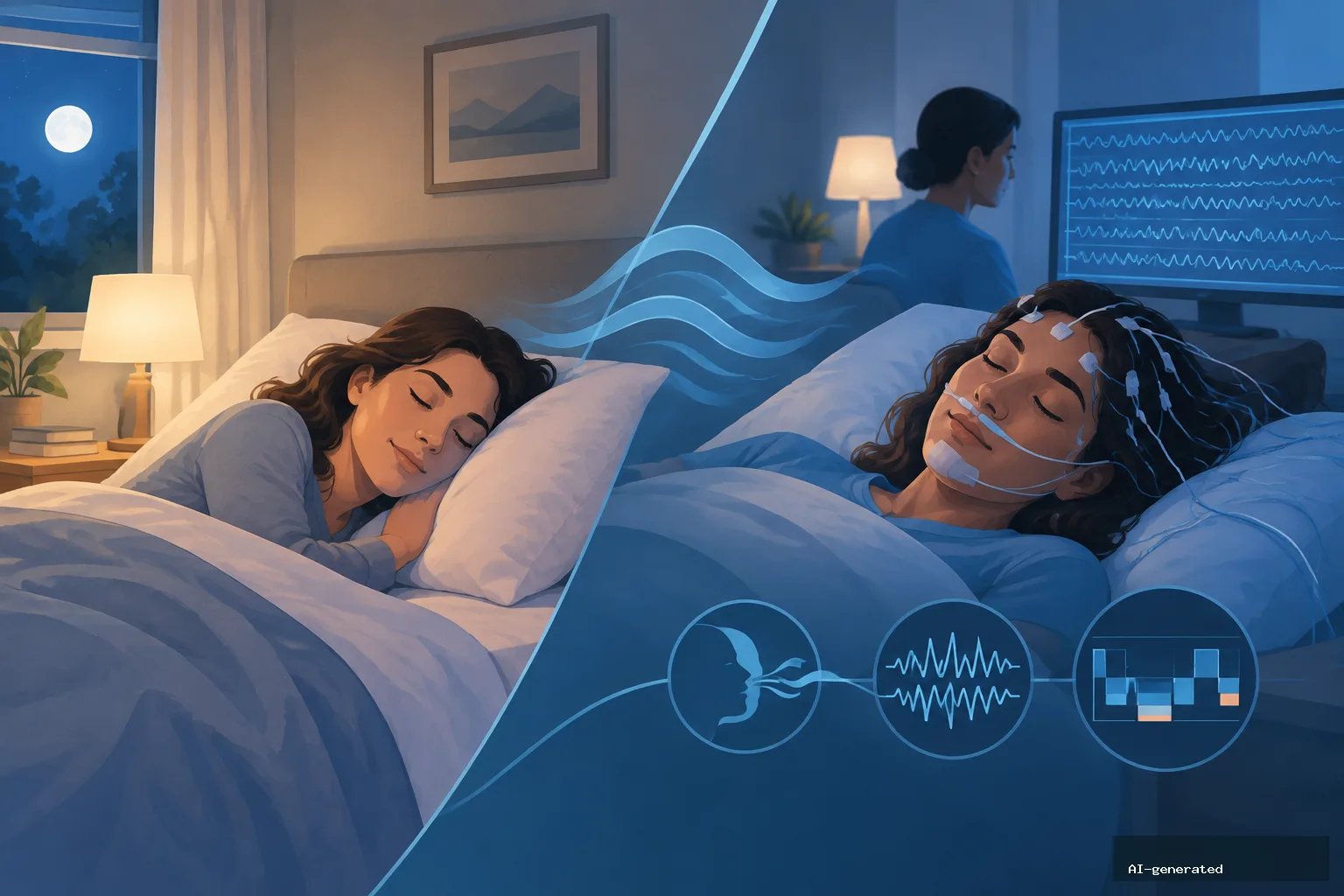
A 2026 case report from China describes a 34-year-old woman with mild intellectual disability who was evaluated for possible narcolepsy. Sleep testing and prolonged EEG recordings instead supported diagnoses of moderate obstructive sleep apnea and epilepsy with focal to bilateral tonic-clonic seizures.
The report is a reminder that daytime sleepiness can have several possible explanations. It also shows why test results need to be interpreted alongside a person’s sleep history, nighttime events and other medical findings.
What the sleep testing showed
The woman completed four daytime nap tests. She fell asleep in an average of 9.3 minutes and had no sleep-onset rapid eye movement periods, or SOREMPs. The source describes an average sleep-onset latency of eight minutes or less and at least two SOREMPs as the standard narcolepsy pattern associated with the Multiple Sleep Latency Test.
She also had no reported cataplexy, sleep paralysis or vivid hallucinations while falling asleep or waking. Taken together, the clinical picture made narcolepsy unlikely, although the report notes that the nap testing was performed while her sleep apnea was untreated and therefore required caution.
An overnight sleep study recorded an apnea-hypopnea index of 19.7 events per hour. It included 68 obstructive apneas, 29 hypopneas and 68 central apneas. Oxygen saturation fell as low as 83%. Heavy snoring and frequent breathing-related arousals supported the report’s diagnosis of moderate obstructive sleep apnea.
Why epilepsy entered the picture
The patient had experienced two nighttime episodes more than three years apart. During the November 2025 episode, family members observed snoring, a breathing pause, blue lips and face, unresponsiveness, one-sided jerking that spread to both sides, stiffening and upturned eyes. The activity lasted approximately two to three minutes.
Afterward, she was tired, dizzy and nauseated, vomited, and had no memory of the event. She also displayed purposeless sitting, hand-groping and walking. Because she could not describe what she felt before, during or after the episodes, nearly all of the history came from her family.
Two 24-hour EEG recordings showed spike-and-slow-wave discharges, most prominent over the frontal regions and especially on the right. The discharges increased during sleep. A brain MRI found no structural cause. The final diagnosis was epilepsy with focal to bilateral tonic-clonic seizures, alongside moderate obstructive sleep apnea and mild intellectual disability.
Sleep apnea and seizures may affect each other
The case authors attributed the woman’s sleepiness mainly to fragmented, oxygen-poor sleep caused by apnea, with possible additional disruption from epilepsy. The source describes a potential two-way relationship: breathing interruptions, oxygen drops, carbon-dioxide buildup, arousals and sleep loss may contribute to seizures, while nighttime seizures may disturb sleep and affect breathing.
However, the report could not determine whether the central apneas occurred at the same time as seizure activity. The sleep study did not include combined video-EEG monitoring capable of answering that question.
Other research cited in the report points in the same direction but remains limited. At a Korean university sleep center, 296 of 395 people with epilepsy who received a full-night sleep study were diagnosed with obstructive sleep apnea. About two-thirds of those cases were moderate to severe, although people referred for sleep testing may not represent everyone with epilepsy.
In a Korean records study, seizure frequency fell significantly only among 24 patients who used CPAP consistently. Still, seizure-free rates and rates of at least 50% reduction did not differ significantly between consistent users and those who used CPAP poorly or not at all. In a randomized pilot trial involving 35 adults with hard-to-control epilepsy and obstructive sleep apnea, real CPAP reduced breathing events more than sham CPAP. Seizures also dropped more with real CPAP, but the difference was not statistically significant.
What happened after treatment
The woman began levetiracetam at 500 milligrams twice daily and started CPAP at the same time. She was also advised to lose weight and improve her sleep habits.
Over six months, family members reported no further nighttime episodes, less snoring and more stable breathing. Her Epworth Sleepiness Scale score fell from 18 to 6 out of 24, and she participated more in family activities, according to the report.
Those changes are encouraging, but they do not prove that either treatment was responsible. Both began together, there was no repeat sleep study or follow-up EEG, and CPAP-use data were not available. The patient had experienced only two episodes over more than three years, so six months without another event is not strong evidence of seizure control.
Why the case matters
The source describes daytime sleepiness as common and potentially related to poor sleep, medications, sleep apnea or nighttime seizures. In people who have difficulty describing their symptoms, family observations may be especially important when clinicians assess unusual nighttime behavior or changes in alertness.
The report also raises the issue of diagnostic overshadowing: attributing new symptoms mainly to an existing intellectual or developmental disability. The source notes that evidence on this issue is mixed, and a 2024 systematic review rated the overall evidence as low quality.
This single case cannot show how often a similar presentation occurs. Its main lesson is narrower: when sleepiness and nighttime events overlap, evaluating breathing during sleep and electrical brain activity may help clarify what is happening, while test results should be interpreted in the context of untreated sleep disorders and the limits of the available monitoring.
AI tools were used to assist with the preparation of this article.
Leave a Reply