
People who use opioids and have take-home naloxone can play an important role during an overdose, according to a prospective cohort study involving participants in Sweden, England, Scotland and Wales.
The research, published in 2026, found that naloxone was reported as being used in most of the overdose events witnessed by participants. The study included people in drug treatment as well as people who used opioids but were not currently receiving treatment.
What the study found
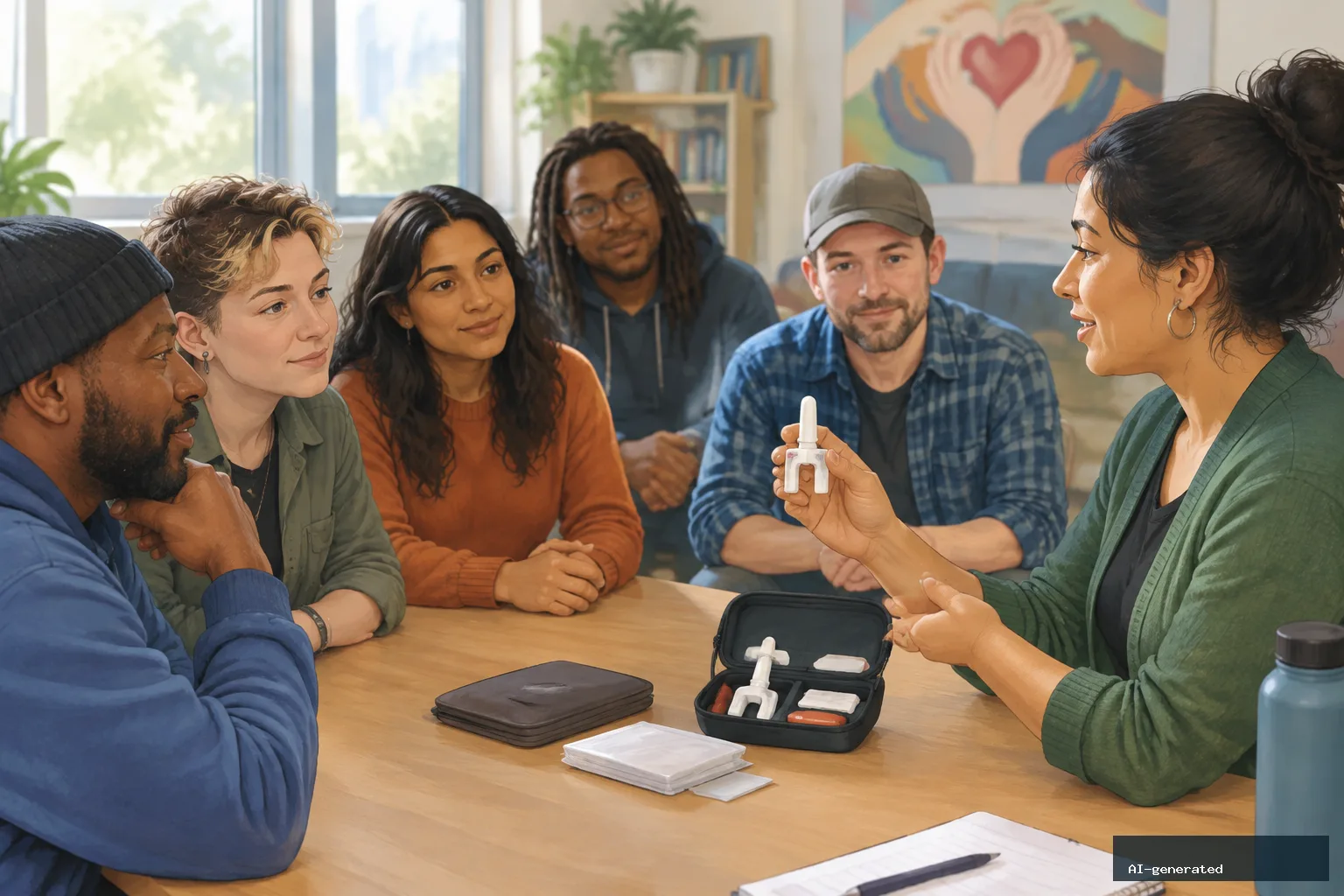
Participants were recruited between 2021 and 2024 through 22 treatment or harm reduction programmes. They received either injectable or nasal-spray naloxone, together with training in how to administer it and basic life support during an overdose.
The study enrolled 1,028 people. Three were later excluded because consent forms were missing, leaving 1,025 participants for analysis. Researchers successfully followed 594 people at six months or completed an interview about a witnessed overdose before that point.
In total, 160 participants reported witnessing 278 overdoses. Of those witnesses, 128, or 83%, said naloxone had been used during the overdose event they witnessed.
Among 151 participants who knew what happened afterwards, 143, or 95%, reported that the person was still alive when they were interviewed. Seven fatalities were reported; two participants described the same fatal overdose.
Only 42.5% of witnesses said an ambulance had been called. The study also found that people outside treatment who were engaged with harm reduction services were more likely to report witnessing an overdose.
Why take-home access matters
Naloxone has been available as a take-home medicine for people at elevated risk of overdose since the 1990s. However, uptake, particularly in the United Kingdom, has been slow, even as treatment availability and training have become more widespread.
The findings add to evidence that people without medical training can administer naloxone when they have access to the medicine and receive instruction. This includes people who are not currently in drug treatment but are in contact with specialist harm reduction services.
The research therefore supports providing take-home naloxone kits and training through drug treatment and harm reduction programmes. It also highlights the practical role of people who may be present at an overdose before professional help arrives.
Important limits to the findings
The results should not be read as a definitive measure of naloxone’s effectiveness. There was no comparison group, so the study cannot establish a causal estimate of what naloxone changed in these events.
The findings were also based on participants’ accounts of overdoses and outcomes. The reported survival outcomes were not independently verified. Although interviews were conducted in a timely way, which may reduce recall problems, it cannot eliminate them.
Follow-up was available for 58% of the remaining participants. The researchers could not determine whether those who were not contacted were more likely to have witnessed an unsuccessful intervention or a fatality. Other negative experiences may also have affected whether people stayed in contact, although this was not known.
Even with these uncertainties, the study offers encouraging evidence that take-home naloxone and training can equip people who use opioids, both in and out of treatment, to respond during an overdose.
AI tools were used to assist with the preparation of this article.
Leave a Reply