
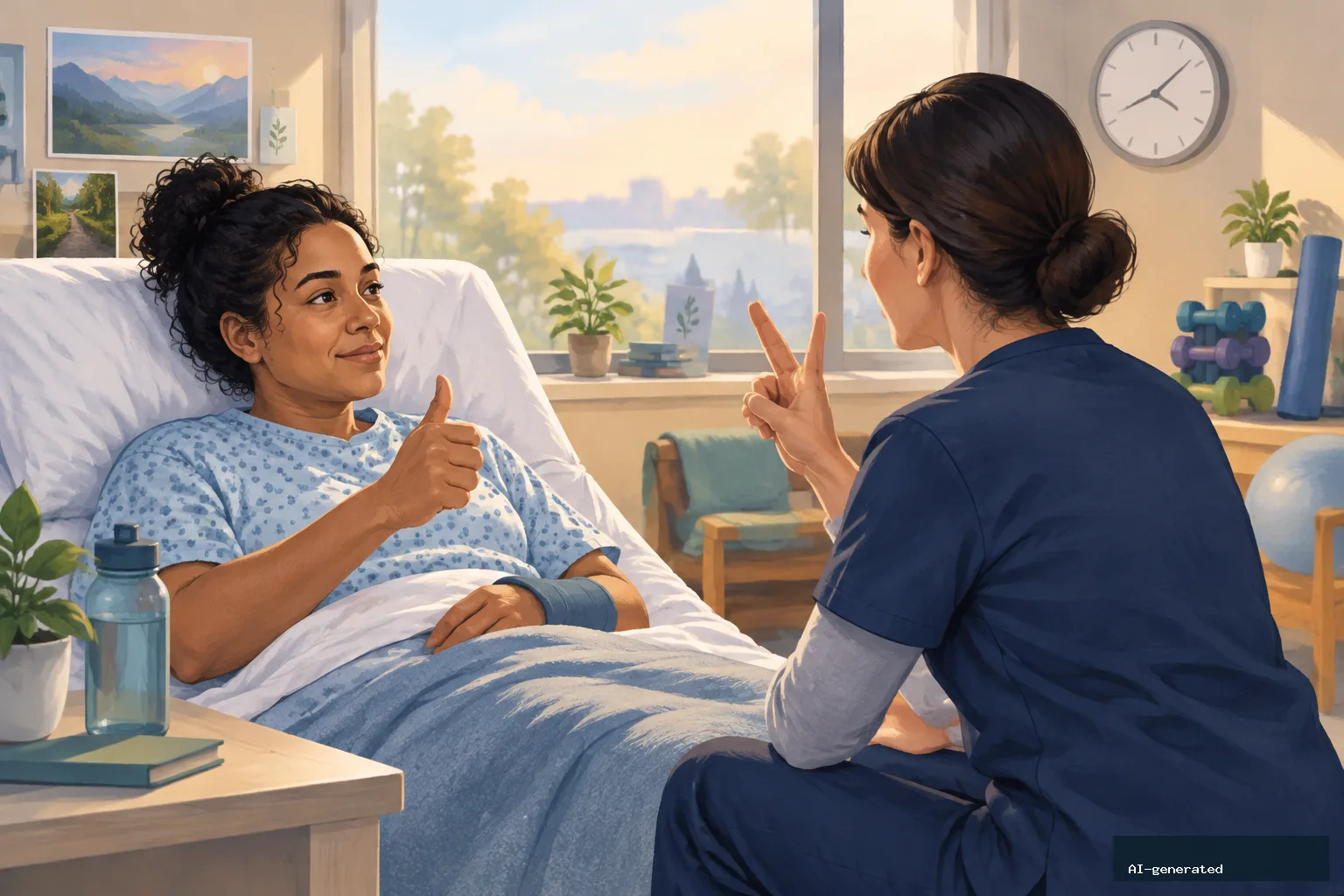
Recovery from Guillain-Barré syndrome can involve more than regaining movement. In in-depth interviews, seven survivors described fear, isolation, communication barriers, strained relationships and spiritual questions during and after intensive care treatment with plasma exchange.
The interview study, published in 2026, involved five women and two men aged 21 to 60. All had received a first diagnosis of Guillain-Barré syndrome and plasma exchange in intensive care at Dr. Hasan Sadikin General Hospital in Bandung, Indonesia. Each participant was in recovery within three years of discharge.
Four parts of the recovery experience
Researchers used open-ended interviews lasting 45 to 60 minutes and analyzed them with Colaizzi’s phenomenological method. The interviews, conducted in Bahasa Indonesia between September and December 2025, produced four broad themes:
- Changes in the body and gradual recovery
- Emotional distress and movement toward self-acceptance
- Communication barriers and rebuilt relationships
- Spiritual distress and resilience
Guillain-Barré syndrome is a rare illness in which the immune system attacks peripheral nerves, often after a chest or gut infection. The source estimates that it affects roughly 1 to 2 people per 100,000 each year. About 20% to 30% of patients may lose enough breathing strength to require a ventilator.
Intensive care could leave patients feeling powerless
Participants described shivering, fever, dizziness and neck-catheter pain during plasma exchange. Treatment sessions lasted several hours; one participant said a session lasted 12 hours because the line repeatedly clotted.
Some participants who needed ventilation could not speak. They used bed-rail taps or eyebrow movements to signal what they needed, but staff sometimes missed those signals. The inability to communicate added to feelings of helplessness and isolation.
The accounts also included fear of death and loss of hope during the acute phase. One participant reported thoughts of ending her life to a psychiatrist by nodding. The researchers linked such thoughts to the extreme helplessness caused by paralysis and an inability to speak.
Physical improvement did not always mean full recovery
Participants described gradual, incomplete improvement. Some regained the ability to walk and manage self-care, while fatigue, stiffness, numbness and tremor continued.
That pattern is consistent with the source’s wider summary of Guillain-Barré research. A European study of 113 people with Guillain-Barré syndrome or related immune nerve diseases found that about 80% had severe fatigue, and fatigue was not significantly related to current muscle strength. The source also states that fatigue and pain can persist for years after apparent recovery.
Recovery from Guillain-Barré syndrome may take months to years. Plasma exchange is described as one of two first-line treatments for severe disease, alongside intravenous immunoglobulin. A 2017 Cochrane review of six trials involving 649 participants found that plasma exchange sped recovery compared with supportive care alone. In one trial of 220 severely affected patients, the median time to walk with an aid was 30 days with plasma exchange, compared with 44 days with supportive care.
The same review found that the need for a breathing machine was about half as likely with plasma exchange, with a reported risk ratio of 0.53. Full muscle strength at one year was also more likely, with a reported risk ratio of 1.24.
Emotional support was part of the story
Participants described confusion before diagnosis and emotional distress during the most severe phase of illness. Over time, some moved toward acceptance. Six participants were Muslim and one was Christian; some described reframing the illness as a test or reminder from God rather than a punishment, while also following treatment and trusting the medical team.
The interview findings add to evidence that mental health concerns can be important during recovery. A Danish nationwide registry study found depression recorded through an antidepressant prescription or hospital diagnosis in 21.3% of people with Guillain-Barré syndrome within two years, compared with 3.3% of the general population. Risk was highest during the first three months, with a hazard ratio of 20.5, and was no longer elevated after two years.
The Indonesian researchers recommend simple non-verbal communication systems for intubated patients, psychological and spiritual screening during follow-up, and peer support among survivors. They also say patients and families should expect emotional distress and plan for a long recovery.
What the interviews can—and cannot—show
The study offers detailed accounts of how seven people experienced Guillain-Barré syndrome and intensive care. It does not establish how common any individual experience is, whether plasma exchange caused a particular emotional outcome, or whether the same themes would appear in all settings.
The research took place at one hospital in Indonesia. Its mostly Muslim participants and the resource-limited intensive care setting may have shaped the care experiences and spiritual themes. Some interviews took place up to three years after the intensive care stay, so memories may have changed over time.
For survivors and families, the findings underline that recovery may include communication challenges, fatigue, emotional distress and changes in relationships—not only improvements in strength or walking. The study’s recommendations focus on making needs easier to communicate and ensuring that psychological, spiritual and peer support are considered alongside physical recovery.
AI tools were used to assist with the preparation of this article under our editorial standards.
Leave a Reply