
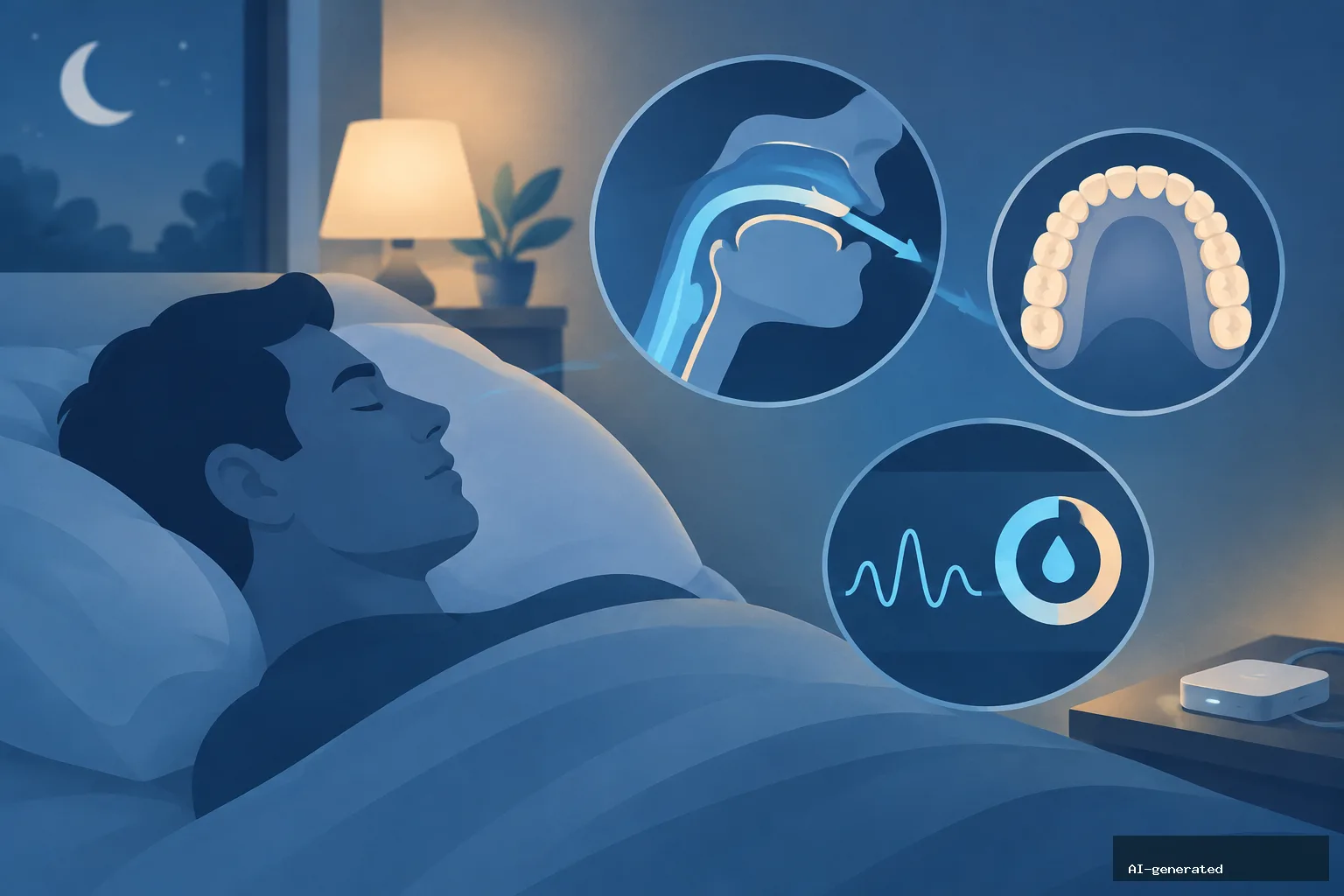
A 2026 narrative review proposes expanding sleep-apnea assessments for adults with cancer to include examinations of the mouth, jaws, face and upper airway alongside overnight sleep testing.
The review was published in Nature and Science of Sleep by three dental researchers at the University of Murcia in Spain. It did not present new patient data, and its proposed framework has not been evaluated in a prospective study.
Why the review is focusing on sleep
Sleep disturbance is common among people with cancer. A 2022 meta-analysis of 46,279 patients reported sleep disturbance in 60.7% of patients with cancer and 70.8% of those with advanced disease.
Sleep apnea rates may also be substantial in some cancer populations. In a study of people newly diagnosed with lung cancer, home sleep testing identified obstructive sleep apnea in 80% of those tested, while 50% had moderate-to-severe sleep apnea. Low overnight oxygen was common in that study.
Those findings should not be applied to every cancer type. The review says sleep-apnea rates can vary according to tumor type, disease stage, treatment and the method used for testing.
What an expanded assessment could include
The review identifies several physical features as possible clues to airway narrowing during sleep: a narrow upper jaw, a high-arched palate, narrow nasal passages, a set-back lower jaw and tongue-tie.
It also lists symptoms that may prompt screening, including unrefreshing sleep, morning fatigue, morning headaches, difficulty concentrating, daytime sleepiness, snoring, a blocked nose and broken sleep. Named screening tools include the Epworth Sleepiness Scale, STOP-BANG and the Pittsburgh Sleep Quality Index.
The proposed five-part framework consists of symptom screening; examination of the mouth, jaws and face; clinically indicated airway imaging and overnight sleep testing; treatment matched to severity and anatomy; and follow-up oxygen monitoring or repeat sleep testing.
The review recommends looking beyond the apnea–hypopnea index, or AHI. It also highlights hypoxic burden and the amount of time spent below normal oxygen levels. However, the fact sheet notes that there is no agreed standard definition of clinically meaningful nocturnal hypoxia or a validated cutoff for hypoxic burden.
What remains uncertain
Overnight sleep testing remains the established route to diagnosing sleep apnea. The review’s additional dental and airway checks are a proposed framework rather than a proven improvement to diagnosis or care.
The review says that its claim that airway-crowding anatomy is common in adults with cancer is based on the authors’ clinical practice, not on a study measuring how often those features occur. Because the review was narrative rather than systematic, selection bias cannot be ruled out.
It also does not establish that sleep apnea causes cancer or makes cancer progress. The relationship between sleep apnea and cancer development or progression remains unproven as causal.
What the evidence says about mood
The review discusses possible links between sleep apnea and psychological symptoms, but much of the cited evidence does not come from people with cancer.
A secondary analysis of the SAVE trial followed more than 2,400 people with moderate-to-severe sleep apnea and cardiovascular disease. Those assigned to CPAP had fewer depressive symptoms than participants receiving usual care alone.
Separately, a meta-analysis of 20 randomized trials involving 4,255 participants found that CPAP benefited depressive symptoms but showed no clear benefit for anxiety. These trials were not conducted in people with cancer, and the review did not test whether the treatments it describes improve fatigue, thinking or mood in this population.
Why the proposal matters—and why it needs testing
The review describes options that may be considered according to severity and anatomy, including nasal-breathing measures, breathing and tongue-posture exercises, positional therapy, mandibular advancement devices, CPAP, specialist referral and selected orthodontic or jaw-surgery approaches.
Its central argument is that sleep symptoms, airway anatomy and overnight oxygen patterns may provide complementary information. But no prospective study has tested whether the framework improves sleep-apnea diagnosis or outcomes for people with cancer. For now, the proposal adds a research question to established overnight sleep testing rather than replacing it.
AI tools were used to assist with the preparation of this article under our editorial standards.
Leave a Reply