
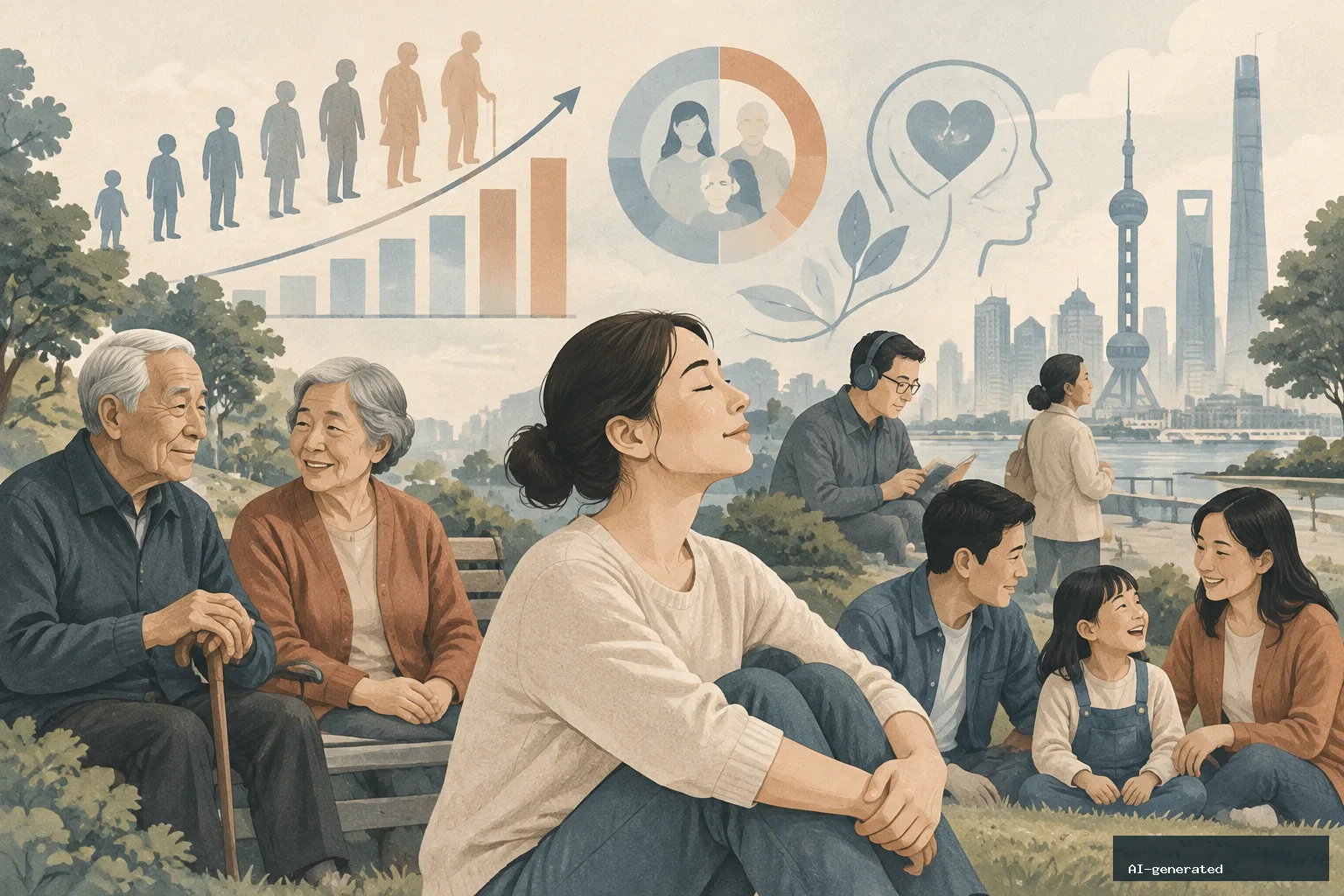
China’s age-standardized anxiety disorder burden declined by an average of 1.2% a year after 2000, yet the country’s total number of cases is projected to increase by 22% between 2021 and 2040, according to a 2026 analysis of Global Burden of Disease Study 2021 estimates.
The difference reflects two ways of measuring population health. An age-standardized rate adjusts for changes in the population’s age structure, while the total number of cases is affected by how many people there are and how old they are. China’s population grew and aged between 1990 and 2021. The study’s forecasting model projected that total cases could rise even if age-standardized rates remain stable.
What the analysis examined
Yuling Wang and colleagues at Chuzhou City Vocational College and Chuzhou hospitals compared China with the Group of Twenty, or G20, from 1990 to 2021. The G20 includes 19 major economies and the European Union and represents about 85% of global economic output and roughly two-thirds of the world’s population.
The anxiety-disorder category included generalized anxiety disorder, panic disorder and phobias. The researchers used Global Burden of Disease estimates, along with ARIMA and Bayesian age-period-cohort models to develop forecasts through 2040.
Across the G20 as a whole, age-standardized anxiety rates remained roughly flat from 1990 to 2021 even as the total number of cases increased. Forecasts indicated that incidence and overall burden would continue to rise through 2040.
China’s age pattern differed from the wider G20
In most G20 countries, anxiety burden rose sharply during adolescence, peaked between ages 20 and 30, and then gradually declined. In China, a larger share of the burden was seen among middle-aged and older adults.
Previous findings cited in the analysis placed China’s peak number of cases at ages 50 to 54, compared with ages 30 to 34 worldwide. China’s disability-adjusted life-year, or DALY, rates peaked at ages 75 to 84. DALYs combine years lived with disability and years of life lost, providing a measure of overall health burden.
The researchers listed accumulated stress, missed earlier diagnoses and physical illness as possible explanations for the continued burden among older Chinese adults. The study did not test those explanations, so they should be treated as hypotheses rather than established causes.
Anxiety disorders were estimated to be 1.8 times as common in Chinese women as in men overall. Among middle-aged and older adults, however, new cases appeared higher in men. The researchers suggested job competition, heavy family caregiving responsibilities and reluctance to seek mental-health help as possible contributors to that pattern.
Why total cases can rise when rates fall
The analysis used population growth, population aging and epidemiological change to decompose the change in China’s anxiety cases between 1990 and 2021. It reported that changing rates explained 68% of China’s rise in cases. In the most developed G20 countries, population aging accounted for 52% of the increase.
“Epidemiological change” is a broad category in this analysis. It can include genuine changes in risk, but also changes in diagnosis, survey methods and coding. The researchers did not attribute China’s post-2000 decline to a specific policy, economic development or improvement in health literacy.
The study also reported differences across G20 regions. Population growth was the main driver of rising cases in the least developed G20 regions. Areas with higher sociodemographic index values had higher anxiety prevalence; Tropical Latin America had the highest reported rate and Central Asia the lowest.
What the forecast does—and does not—show
The projected 22% increase is a model-based estimate, not a direct count of future cases. It assumes that patterns observed through 2021 provide useful information about what follows. The source noted that China’s rate curve had recently rebounded, while the forecast extended past trends to 2040.
Global Burden of Disease figures are modeled estimates and include uncertainty. Where high-quality surveys are limited, the models draw on information from similar places and years. Stigma and limited diagnosis, particularly in rural China, may also mean that the true prevalence is higher than estimated.
The analysis was ecological: it compared whole populations rather than following individuals. Its findings can describe population patterns, but they cannot establish why a particular person develops anxiety or determine whether a specific intervention caused rates to change.
AI tools were used to assist with the preparation of this article under our editorial standards.
Leave a Reply