
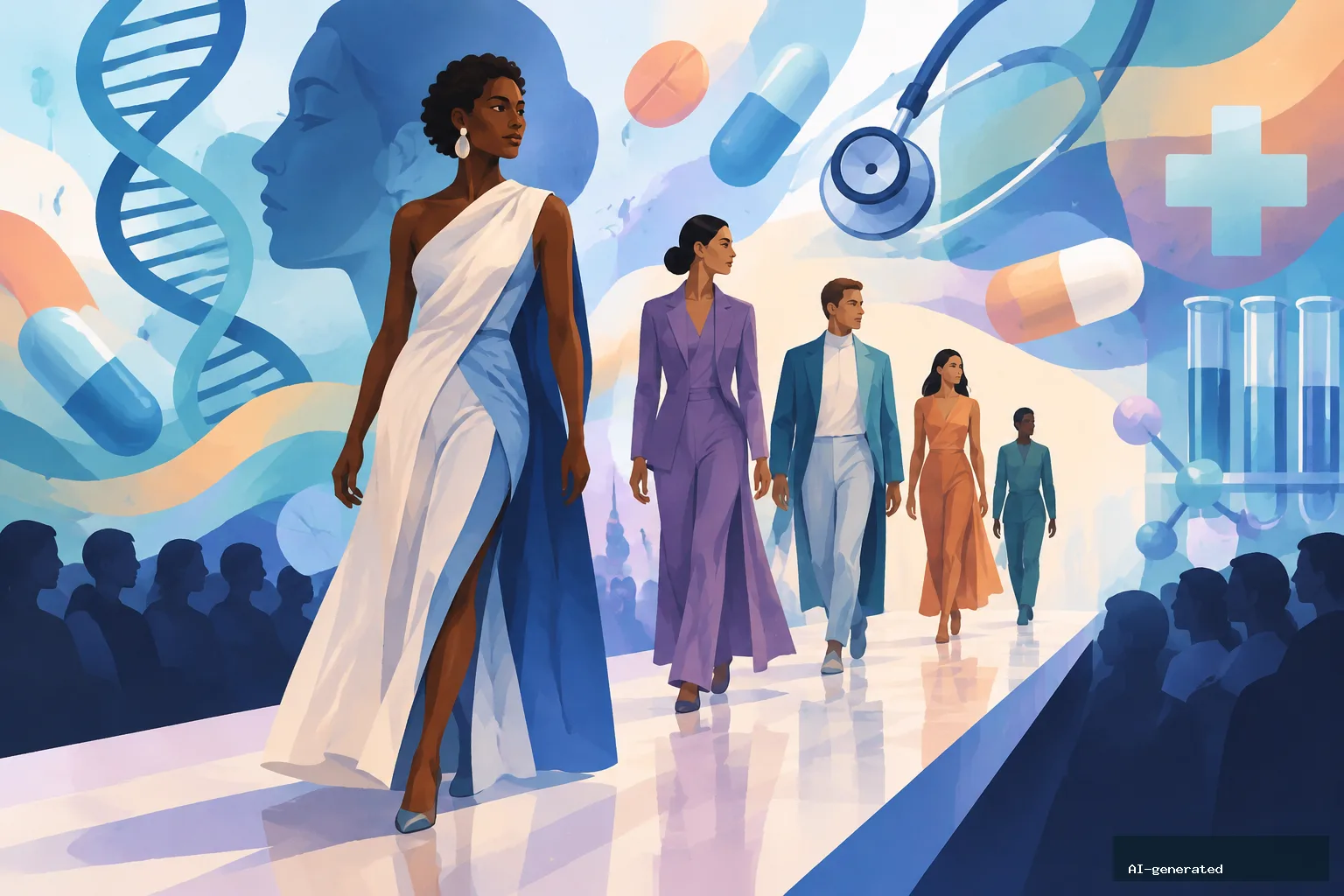
Eli Lilly’s sponsorship of Vogue World in Milan has prompted criticism from eating disorder advocates and academics, who say the partnership risks connecting pharmaceutical treatment with fashion’s long-standing emphasis on thinness.
The event, Vogue World’s fifth iteration and one overseen by Anna Wintour, took place on Tuesday night. Gigi Hadid and Jennifer Lopez appeared on the catwalk, while Eli Lilly was listed among the event’s “fashion adjacent” sponsors.
The company makes medicines including the weight-loss injections Mounjaro and the Foundayo pill. The partnership did not explicitly associate either medicine with Vogue World.
Why the partnership has drawn criticism
Charlotte Markey, a professor of psychology at Rutgers University and author of The Body Image book series, said the sponsorship could suggest that thinness is something people should aspire to and potentially achieve through medical treatment.
Markey also said the combination of fashion and pharmaceutical marketing might present prescription medication as part of an aspirational lifestyle. Lauren Downing Peters, an associate professor of fashion studies at Columbia College in Chicago, said the arrangement reflected how normalized GLP-1 medicines have become in fashion and wider culture.
Tom Quinn, director of external affairs at Beat, described the partnership as alarming and raised concerns about the widespread use and advertising of GLP-1s. He said these medicines could be particularly attractive to people with eating disorders.
Eating disorder charities and academics have previously warned about the possible effects of fashion’s promotion of thinness. Those concerns sit alongside uncertainty about how the wider use of GLP-1 medicines, particularly for aesthetic weight loss, may affect body-image pressures.
A wider conversation about representation
The concerns extend beyond the sponsor list. Vogue published a video called “Portrait of Progress” as part of the Milan partnership, produced with Eli Lilly. It compares pharmaceutical technologies with fashion manufacturing.
Downing Peters said the video linked health with creativity, although it did not directly refer to thinness or weight-loss medicines.
The debate also reflects the fashion industry’s uneven record on size representation. A Vogue Business report found that 97.1% of 9,038 looks across 198 womenswear shows in September 2025 were presented on straight-size models, defined in the report as between US sizes 0 and 4. It recorded 0.9% plus-size models and 2% mid-size models.
Vogue World included plus-size models Paloma Elsesser and Ashley Graham, but Felicity Hayward described the casting as “size diversity cosplay” and the sponsorship as “advocating for thinness with a fog horn”. The show’s promotional materials did not refer to thinness or weight-loss drugs.
How the companies describe the partnership
Eli Lilly also sponsored the 2025 Vogue World in Hollywood and the Met Gala livestream earlier this year. A Condé Nast source said the partnership was focused on Eli Lilly’s overall brand rather than a particular medicine.
An Eli Lilly spokesperson said the sponsorship marked the company’s 150th anniversary. The company said it partners with cultural platforms such as Vogue because they are places where conversations about bodies and health take place.
Eli Lilly also said it wants to shift discussions about weight away from aesthetics and toward health, while challenging stigma faced by people with obesity.
The partnership therefore leaves a contested question at the center of the debate: whether a general corporate sponsorship can be separated from the cultural messages associated with both fashion and weight-loss medicines, even when no specific drug is promoted alongside the event.
AI tools were used to assist with the preparation of this article.
Leave a Reply