
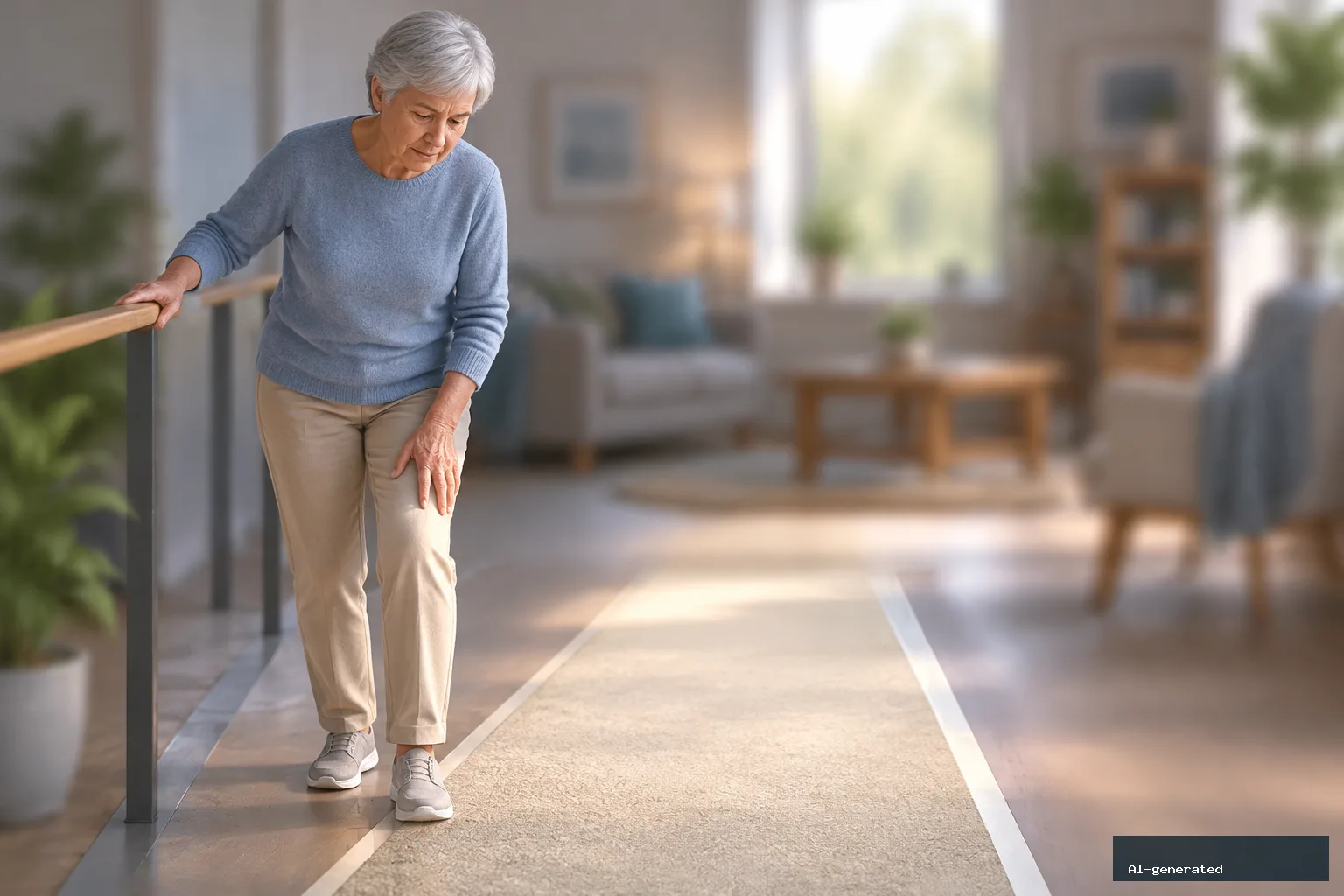
Fear of movement was associated with several health and functional concerns among people with knee osteoarthritis in a 2026 survey from a tertiary hospital in Shandong province, eastern China.
The study included 452 patients with primary knee osteoarthritis and grade II or III changes on X-rays. Their average age was 64, 77.2% were women, and 66.8% lived in rural areas. Knee pain had lasted about five years on average, and participants reported average current pain of 3.4 on a 0–10 scale.
The researchers examined fear of movement, sometimes called kinesiophobia, alongside screening results for cognition, vision, psychological well-being, vitality, locomotion, hearing and medication use. The analysis identified relationships among fear, pain and these broader health measures, but it could not determine which factor came first.
Vision and body-focused concern stood out
Vision problems had the strongest reported connection with somatic focus, a measure reflecting heightened attention to bodily symptoms. A positive vision screen was associated with more somatic focus, with a correlation of r = 0.62.
The researchers suggested that difficulty judging surroundings or maintaining balance could make movement feel riskier. However, the source notes that direct evidence for this explanation is limited, and the finding needs replication before vision is considered a main driver of fear of movement.
Somatic focus was the most central feature in the study’s network analysis, with an expected influence of 1.71. Psychological well-being followed at 0.90, and activity avoidance at 0.78. A bootstrap stability check produced a stability coefficient of 0.70 for the centrality rankings.
Connections changed at higher pain levels
Memory or thinking problems were associated with activity avoidance, with r = 0.42. Weight or appetite loss was associated with somatic focus, with r = 0.40.
Pain appeared to alter several relationships in the network. The connection between low mood and somatic focus was significant at lower pain levels but was no longer significant above a pain score of 5.08. The relationship between cognition and activity avoidance was significant at lower pain levels but not above 4.09.
By contrast, the positive connection between avoidance beliefs and somatic focus became stronger as pain increased. These results describe statistical relationships within the surveyed group; they do not show that pain caused the changes or that fear caused problems with activity, mood or cognition.
What the study can—and cannot—show
Participants completed the 11-item Tampa Scale for Kinesiophobia, the World Health Organization ICOPE screening tool and a 0–10 current-pain rating. The ICOPE questions screened for possible problems rather than diagnosing low vision, depression or other conditions.
The study was cross-sectional, used convenience sampling at one hospital and relied on self-report questionnaires. It included mostly women and excluded people with prior knee surgery or knee trauma, as well as people with the earliest or most advanced X-ray changes. There were no clinical eye examinations or objective activity tracking, and self-report measures may be affected by recall or social-desirability bias.
The findings add to earlier research summarized by the source. A 2019 systematic review of 63 studies involving 10,726 participants found strong evidence that greater fear of movement was associated with more pain and disability, plus moderate evidence that it predicted worsening disability over time. A 2022 study of 50 people with knee osteoarthritis also found that fear of movement correlated with pain intensity, poorer knee-position sense and slower sit-to-stand performance.
Another earlier finding cited in the source was that 13% of people with knee osteoarthritis reached 150 minutes per week of moderate-to-vigorous activity in bouts lasting at least 10 minutes. Together, these findings highlight why fear of movement is being studied alongside pain, function and wider aspects of health, while leaving questions about cause and effect unresolved.
AI tools were used to assist with the preparation of this article under our editorial standards.
Leave a Reply