
⏱ 2 min read
- Research Briefing
- Published:
Nature Mental Health volume 4, pages 694–695 (2026) Cite this article
Subjects
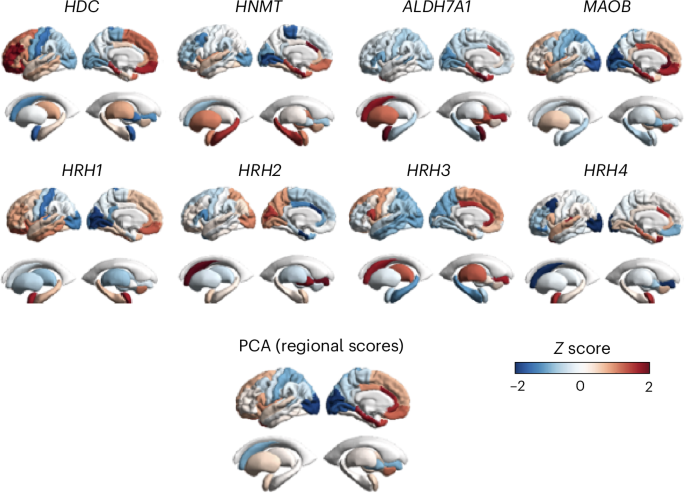
This study presents a multimodal, systems-level map of the human brain histamine system, integrating transcriptomics, molecular imaging, developmental trajectories and cognitive meta-analysis. The findings link histaminergic system architecture to higher-order cognition and vulnerability to major psychiatric disorders.
This is a preview of subscription content, access via your institution
Access options
Subscribe to this journal
Receive 12 digital issues and online access to articles
79,00 € per year
only 6,58 € per issue
Buy this article
- Purchase on SpringerLink
- Instant access to the full article PDF.
39,95 €
Prices may be subject to local taxes which are calculated during checkout

The alternative text for this image may have been generated using AI.
References
-
Nuutinen, S. & Panula, P. Histamine in neurotransmission and brain diseases. Adv. Exp. Med. Biol. 709, 95–107 (2010). This review highlights the role of histamine as a neuromodulator and evidence linking histaminergic dysfunction to neurological and psychiatric disorders.
-
Schwartz, J. C. et al. Histaminergic transmission in the mammalian brain. Physiol. Rev. 71, 1–51 (1991). A seminal overview of histaminergic transmission in the mammalian brain.
-
Timmerman, H. Histamine receptors in the central nervous system. Pharm. Weekbl. Sci. 11, 146–150 (1989). This article provides an early characterization of central histamine receptor subtypes and their pharmacological properties, contributing to the conceptual framework for receptor-specific drug development.
-
Haas, H. L. & Panula, P. The role of histamine and the tuberomamillary nucleus in the nervous system. Nat. Rev. Neurosci. 4, 121–130 (2003). This review discusses the tuberomammillary nucleus (the source of histaminergic neurons) and the role of histamine in arousal, cognition and homeostatic regulation.
-
Panula, P. & Nuutinen, S. The histaminergic network in the brain: basic organization and role in disease. Nat. Rev. Neurosci. 14, 472–487 (2013). This review integrates anatomical, molecular and clinical evidence to map the organization of the histaminergic network and its involvement in brain disorders.
Additional information
Publisher’s note Springer Nature remains neutral with regard to jurisdictional claims in published maps and institutional affiliations.
This is a summary of: Martins, D. et al. Mapping histamine pathway networks in the human brain across cognition and psychiatric disorders. Nat. Mental Health https://doi.org/10.1038/s44220-026-00637-1 (2026).
Rights and permissions
About this article

Cite this article
Mapping the human brain histamine system at the molecular, structural and functional levels. Nat. Mental Health 4, 694–695 (2026). https://doi.org/10.1038/s44220-026-00641-5
-
Published:
-
Version of record:
-
Issue date:
-
DOI: https://doi.org/10.1038/s44220-026-00641-5
Leave a Reply