
⏱ 3 min read
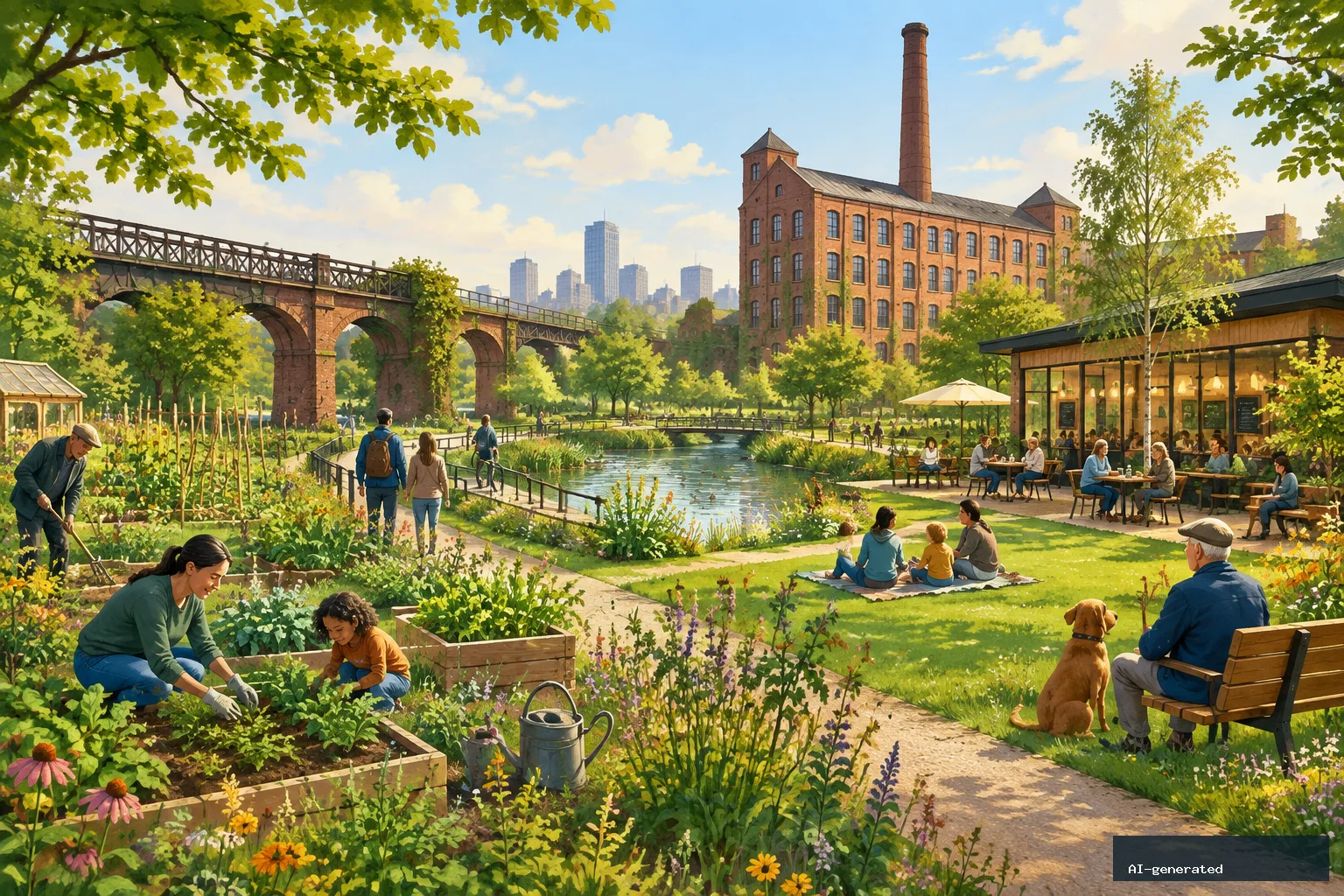
In Oldham, Greater Manchester, a 65-hectare site shaped by cotton mills, coalmines and an industrial railway is being given a new purpose. Northern Roots, a charity that has spent the past five years developing the land, aims to create the UK’s largest urban farm and eco-park.
The site’s industrial history is substantial. It once contained two cotton mills, two coalmines and a railway. About 24 hectares later became a tip, while much of the wider area was left to nature. Northern Roots is now combining that recovering landscape with spaces for food, culture, learning and community activity.
A new public facility
A facility is scheduled to open to the public on 19 September. It is planned to include a cafe, shop, production kitchen, performance space, forestry skills centre, outdoor play areas and an urban farm.
The project has seven activity programmes, including farming and food, arts and culture, sports, and business and learning. Its development began with Oldham council, which wanted to explore green space as an asset. The council and Northern Roots now work together in a partnership described by the source as unique.
For Northern Roots, the site is intended to be more than a destination. Its goal is to create opportunities for local people while showing how a former industrial landscape can support everyday community life.
Connecting people with nature
One of the project’s community programmes is the Natural Health Service. It is designed around intentional connection with nature, rather than focusing mainly on exercise or gardening.
The programme was commissioned through Northern Roots by NHS England and launched in 2023 as a six-month pilot involving patients from Hill Top GP surgery in Fitton Hill. It now works with healthcare providers to support people experiencing mental health challenges.
Sessions can include foraging, bushcraft, making something from natural materials or simply noticing the surrounding environment. Faiza Awan and Louise Gibbs, who grew up in the area, became involved as community champions and now work as Natural Health Service guardians.
Independent NHS research published in 2025 found that participants’ wellbeing scores increased by an average of 8.15 points on the Short Warwick-Edinburgh Mental Wellbeing Scale. The project also generated an estimated £4,940 in social value per participant. That figure is an estimate, and the findings describe the participants in the project rather than proving that the approach will have the same effect for everyone.
Green space as community infrastructure
Northern Roots proposes that urban green space should be treated as critical infrastructure, alongside services such as hospitals and schools. Its broader argument is that relatively modest investment in land may help reduce pressure on other public services while creating places for people to learn, work, gather and spend time outdoors.
The organisation aims to attract 300,000 visitors a year by 2030. It also hopes to provide hundreds of Natural Health Service social prescriptions and create employment and training opportunities. These are future targets, not outcomes already achieved.
The project’s next phase will show how successfully the former industrial site can balance public access, nature recovery, food production and community services. For Oldham, Northern Roots represents an attempt to make a long-neglected landscape useful in a different way: as a shared setting for health, culture, skills and connection.
AI tools were used to assist with the preparation of this article.
Leave a Reply