
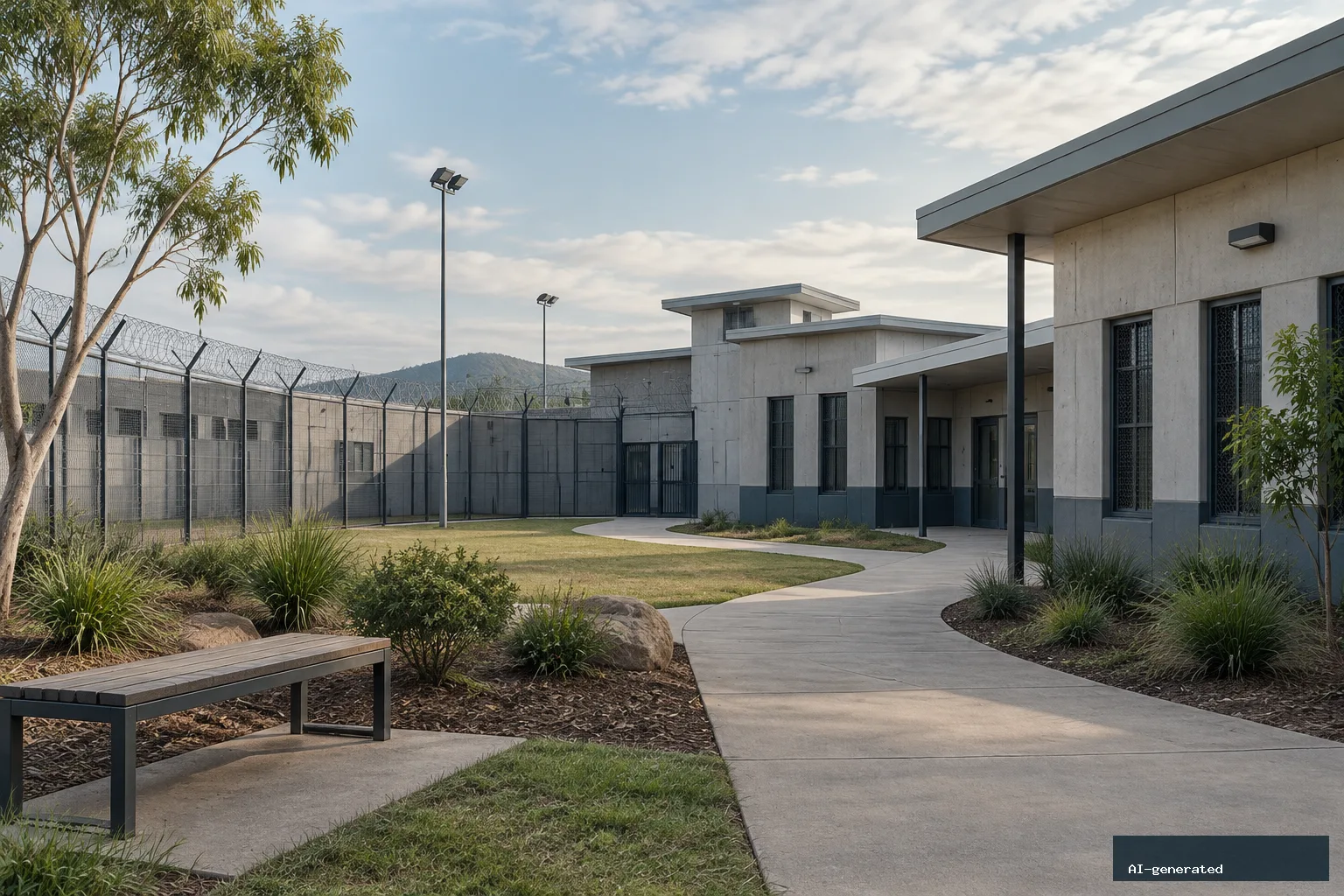
Queensland Ombudsman Anthony Reilly has backed away from his earlier call to close the Wacol youth remand centre when the new Woodford youth detention centre opens.
His change in position reflects a concern that Queensland’s youth detention system may not have enough capacity in the year ahead, particularly if new bail laws increase the number of children held in custody.
Concerns about Wacol
An inspection report published last week found that Wacol was not suitable for holding children for extended periods. Reilly described the facility as “austere and institutional”, with limited space, privacy and natural light.
Wacol, near Brisbane, was originally built and designed as a police watch house before being converted under law into a youth detention centre. It is often used for Indigenous children from north Queensland because overcrowding has affected the Cleveland youth detention centre in Townsville.
The report found that some children stayed at Wacol for longer than a month. It also said some “complex and high risk” children were returned there after being placed in a youth detention centre.
Self-harm reports and the watch-house alternative
Staff told inspectors that some children from north Queensland who had spent extended periods at Wacol displayed negative behaviours and engaged in self-harm to influence and expedite their transfer to another centre. The report does not establish that self-harm was the sole or confirmed reason for every incident.
Even so, the report said Wacol was more suitable than police watch houses, where vulnerable children had previously been held in crowded cells. Some children spent more than 30 days in watch houses because youth detention places were unavailable.
Data shows that fewer children are now being held in watch houses and that their stays are shorter. Critics and children’s advocates have argued that the pressure has instead shifted to Wacol.
Why the ombudsman changed position
Queensland is building a new youth detention centre at Woodford. Reilly had previously recommended closing Wacol once that facility opened, but he has now raised concerns about the possible effect of new state bail laws, described as “breach bail, go to jail”.
The report said the reforms may leave the youth detention system without sufficient capacity. Reilly said the existing three youth detention centres, together with Woodford, might not be able to accommodate all the children the criminal justice system requires to be detained.
He warned that children could consequently be held in large numbers and for lengthy periods in police watch houses. Keeping Wacol available, he said, could help reduce both the number of children held in watch houses and the length of their stays.
Advocates reject the compromise
Sisters Inside described the change in position as “a gutless retreat”. Its chief executive, Debbie Kilroy, said Wacol was unsuitable for children and that their safety should not be reduced to accommodate a political agenda.
The ombudsman’s position leaves Queensland with a difficult choice between two forms of unsuitable accommodation: retaining a youth detention facility that was not designed for long-term stays, or risking renewed pressure on police watch houses if detention demand rises.
AI tools were used to assist with the preparation of this article.
Leave a Reply