
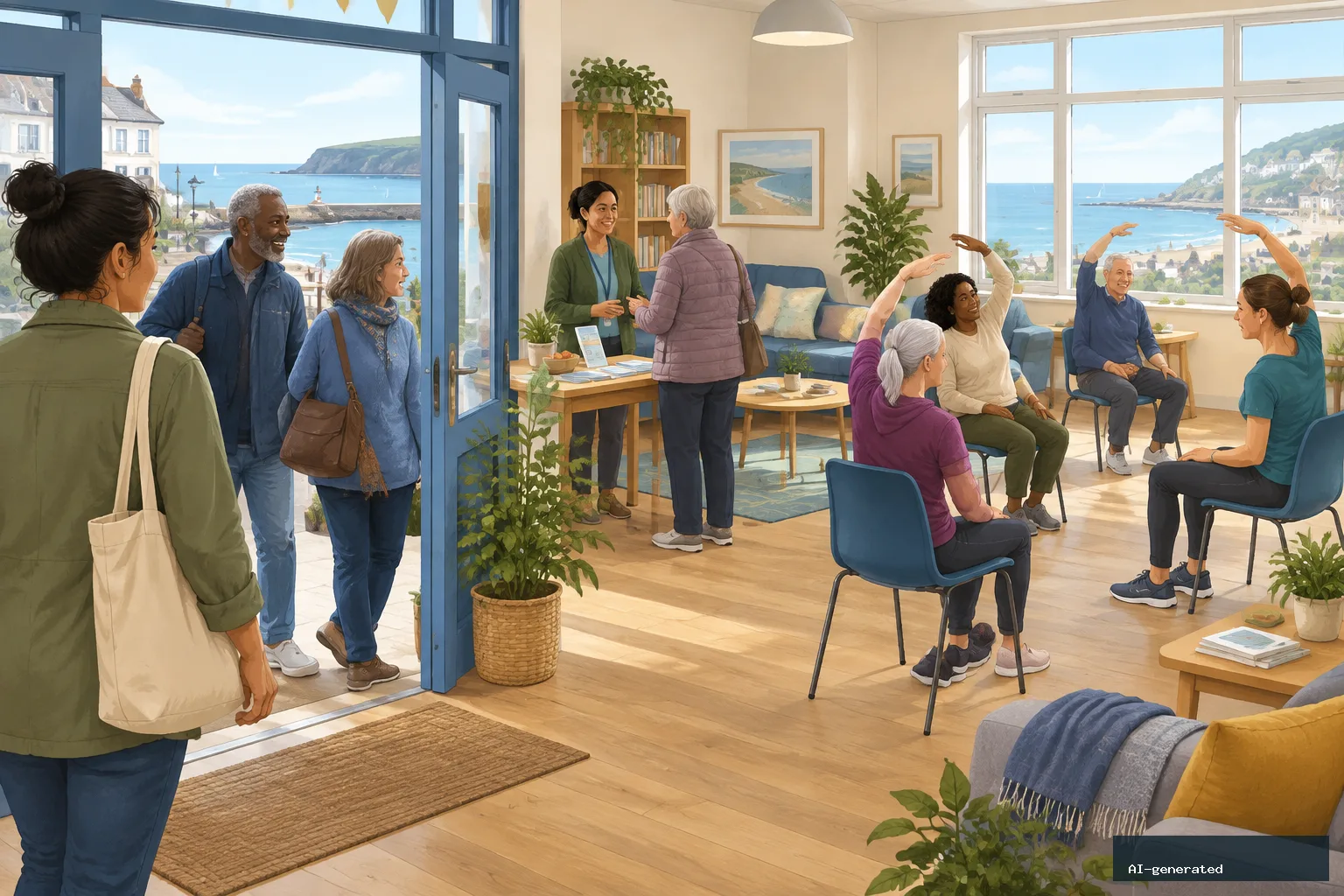
For people in Whitehaven who need mental health support, the first step does not have to involve a diagnosis, referral or appointment made weeks in advance.
Hope Haven, a new community mental health hub, provides open-access support around the clock. In its first five months, from March to July, about 3,000 people used the service either in person or digitally. Nearly half had not previously been in contact with NHS mental health services.
The early figures are being watched closely because Hope Haven is part of a six-site pilot designed to test a different approach to community mental health care. An evaluation of the pilot centres is planned for later this year.
A low-barrier place to seek help
The hub is intended to support people regardless of their mental health history. Its services include practical help with issues such as housing and finances, exercise classes and short-stay beds for overnight support.
The model builds on the Trieste approach to mental health care, a 24-hour holistic model that began in Italy in the 1980s. The other pilot centres are in Lewisham and Tower Hamlets in London, Birmingham, York and Sheffield.
For Tamara, 22, the ability to arrive without a referral mattered. She first visited Hope Haven after being abused by an acquaintance during childhood and going through a lengthy legal process that resulted in her abuser being sentenced.
She said she was frightened when she entered the hub and felt that her life was falling apart. After being dropped off at about 11pm, she was seen immediately by a staff member and offered an appointment for the next day. Tamara said she believed she would still be at “rock bottom” without the support.
Early signs, but not yet a final verdict
Admissions to inpatient mental health wards in the area fell by 24% between January and September, compared with the same period the previous year. The reduction was reported alongside Hope Haven’s opening, but the available information does not show that the hub caused it.
Local circumstances provide important context. The area is described as having one of the highest suicide rates in England, at 20 deaths by suicide per 100,000 people, according to NHS Alliance—almost twice the national rate cited in the source. Referrals to local mental health services have trebled since 2017.
Staff members Vikki Ford-Powell and Sue Papworth pointed to the effects of deprivation, isolation and the loss of factories and other major employers. Sellafield Ltd, a nuclear decommissioning site, is the main employer in Whitehaven.
Josh MacAlister, the Labour MP for Whitehaven and Workington, described the hub’s early signs as positive. He said its walk-in format, lower stigma and broad range of support could become a significant part of the response to local need.
Support that extends beyond crisis care
Accounts from people using the service suggest that its role is not limited to moments of acute distress.
Gordy, 47, said he had struggled with alcohol addiction and had taken antidepressants for four and a half years. He attributed his ability to come off the medication to his engagement with Hope Haven. That account describes his experience and does not establish that the hub caused the change. He also said one-to-one, non-judgmental support helped him walk in public without feeling terrified.
Mary Bragg, 91, lives alone after her husband died seven years ago. She attends a weekly chair-based exercise class at Hope Haven and has made friends there. She said she was “a lot happier now in myself” and valued the company.
A wider redesign of mental health services
The pilot hubs form part of NHS England’s 10-year health plan. After Andy Burnham announced £343m for what was described as “the biggest redesign of mental health services in a generation”, 100 more hubs are due to open gradually, beginning in autumn.
The planned evaluation should provide a fuller picture of whether the model improves access, how different services are used and whether the early changes in local hospital admissions are sustained. For now, Hope Haven offers an example of a community-based service attracting people who may not previously have reached NHS mental health care, while the wider evidence is still developing.
Key takeaways
- Hope Haven supported about 3,000 people in person or digitally during its first five months, from March to July.
- Nearly half of those using the hub had not previously been in contact with NHS mental health services.
- The hub offers 24-hour, open-access support without requiring a diagnosis or referral.
- Inpatient mental health ward admissions in the area were 24% lower from January to September than during the same period the previous year, but the available information does not establish that Hope Haven caused the reduction.
What this means
Hope Haven is relevant to wider discussions about making mental health support easier to reach, particularly for people who may not have a diagnosis or previous contact with NHS services. Its practical services, social activities and overnight support illustrate a broader community-based model, but the pilot’s effectiveness will not be clear until the planned evaluation and further evidence are available.
What the evidence cannot tell us
- The source provides early activity figures, not the results of a completed evaluation.
- The reported 24% fall in inpatient admissions is a year-on-year comparison and does not establish causation.
- The suicide-rate figure is attributed to NHS Alliance in the source.
- Gordy’s account of coming off antidepressants reflects his experience and does not establish that Hope Haven caused the change or that the same outcome applies to others.
AI tools were used to assist with the preparation of this article under our editorial standards.
Leave a Reply