
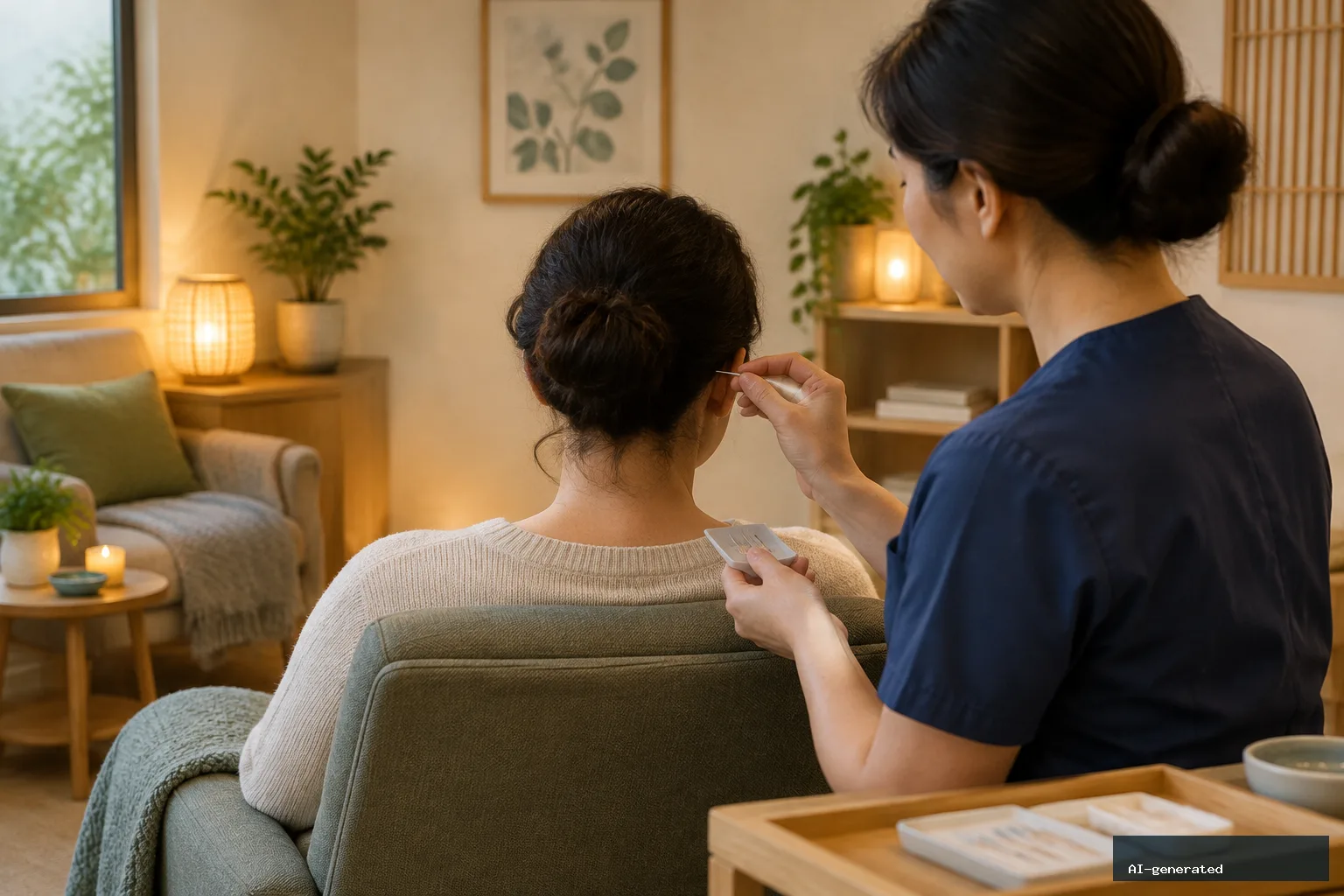
A small Swedish interview study found that adults with anxiety often described feeling calmer, more relaxed and sleeping better after sessions of NADA ear acupuncture added to their usual psychiatric care. But many participants also said the benefit was temporary, lasting only during treatment or fading within days to weeks after the final session.
The study included interviews with 20 adults—16 women and four men—with a mean age of 42. Researchers identified four broad themes: well-being that built over several sessions; relief that was often short-lived; calm, relaxation and improved sleep; and discomfort or disappointment.
What participants reported
Some participants described anxiety relief that returned between sessions or after treatment ended. Others reported needle pain, headaches or dizziness, while some remained uncertain that the treatment had helped.
The interviews were conducted one to two weeks after the final session and used open-ended questions. Researchers analyzed the accounts using latent content analysis. The study described a range of experiences, but it did not count participants within each theme or measure changes in anxiety symptoms.
An enhanced treatment protocol
The treatment was delivered twice a week for five weeks, with each session lasting 40 minutes in a quiet room. Participants continued their regular therapy and medication.
The standard NADA protocol uses five fine needles at fixed points on each ear and was developed in the 1970s for addiction care. In this study, nurses trained in NADA used 13 needles: five in each ear, one in the middle of the scalp and one in each little finger. The additional scalp and finger needles were based on staff clinical experience, and the researchers said this enhanced version had not been tested.
What the study can—and cannot—show
The research took place at outpatient psychiatric clinics in northern Halland County, Sweden, between September 2019 and June 2020. Because there was no comparison group, the study cannot show whether the needles caused the reported improvements or whether they were related to time, attention, relaxation or usual care.
Seven of 27 people who enrolled stopped early and were not interviewed. That means the participants whose experiences were collected may have been more favorable toward treatment than those who left. The sample was also small, mostly female and drawn from one Swedish region. People with psychotic disorders, active substance use, severe suicidality or unstable bipolar disorder were excluded.
The researchers described the treatment as safe and relatively well tolerated. However, the study did not report systematic side-effect data, even though interviews included reports of pain, headaches and dizziness.
How this fits with earlier evidence
A 2022 review that pooled nine randomized trials reported that ear acupuncture reduced anxiety more than placebo and more than a waiting list. The reported effects were small to moderate, with moderate certainty. The reviewers said the approach might help mainly as an add-on for situational anxiety, such as anxiety before surgery, and noted that safety evidence was limited.
Evidence for NADA specifically in ongoing anxiety remains limited. In a 101-person randomized trial conducted in an addiction-treatment service, NADA was no better than sham-point needles or the treatment setting alone for reducing anxiety over three days during drug withdrawal.
Overall, the Swedish interviews suggest that some people experienced short-term calm or better sleep while receiving the treatment, but they do not establish durable anxiety reduction. The study presents ear acupuncture as an add-on rather than a replacement for usual care.
Key takeaways
- A Swedish interview study examined 20 adults with anxiety who received 10 sessions of NADA acupuncture alongside usual psychiatric care.
- Participants commonly described calm, relaxation, better sleep and some relief, but benefits often faded during the days or weeks after treatment ended.
- The study had no comparison group and did not measure symptom change, so it cannot show that acupuncture caused the reported improvements.
- The protocol added scalp and finger needles to the usual ear-based NADA approach, and this enhanced version has not been tested separately.
What this means
The findings may be relevant to people interested in complementary approaches for anxiety, particularly because the treatment was studied alongside—not instead of—regular psychiatric care. The interviews suggest that experiences varied and that any perceived relief was often temporary. Evidence for NADA in ongoing anxiety remains limited, and the enhanced protocol used in this study may not represent standard ear-only NADA.
What the evidence cannot tell us
- The study included only 20 interviewed participants from one Swedish region, and the sample was mostly female.
- Seven of 27 enrolled participants stopped early and were not interviewed.
- There was no comparison group, so the study could not distinguish effects of the needles from time, attention, relaxation or usual care.
- Participants continued regular therapy and medication during the study, which makes the independent effect of acupuncture unclear as reported in the fact sheet body? Actually this is a limitation supported. Ensure clean.
AI tools were used to assist with the preparation of this article under our editorial standards.
Leave a Reply