
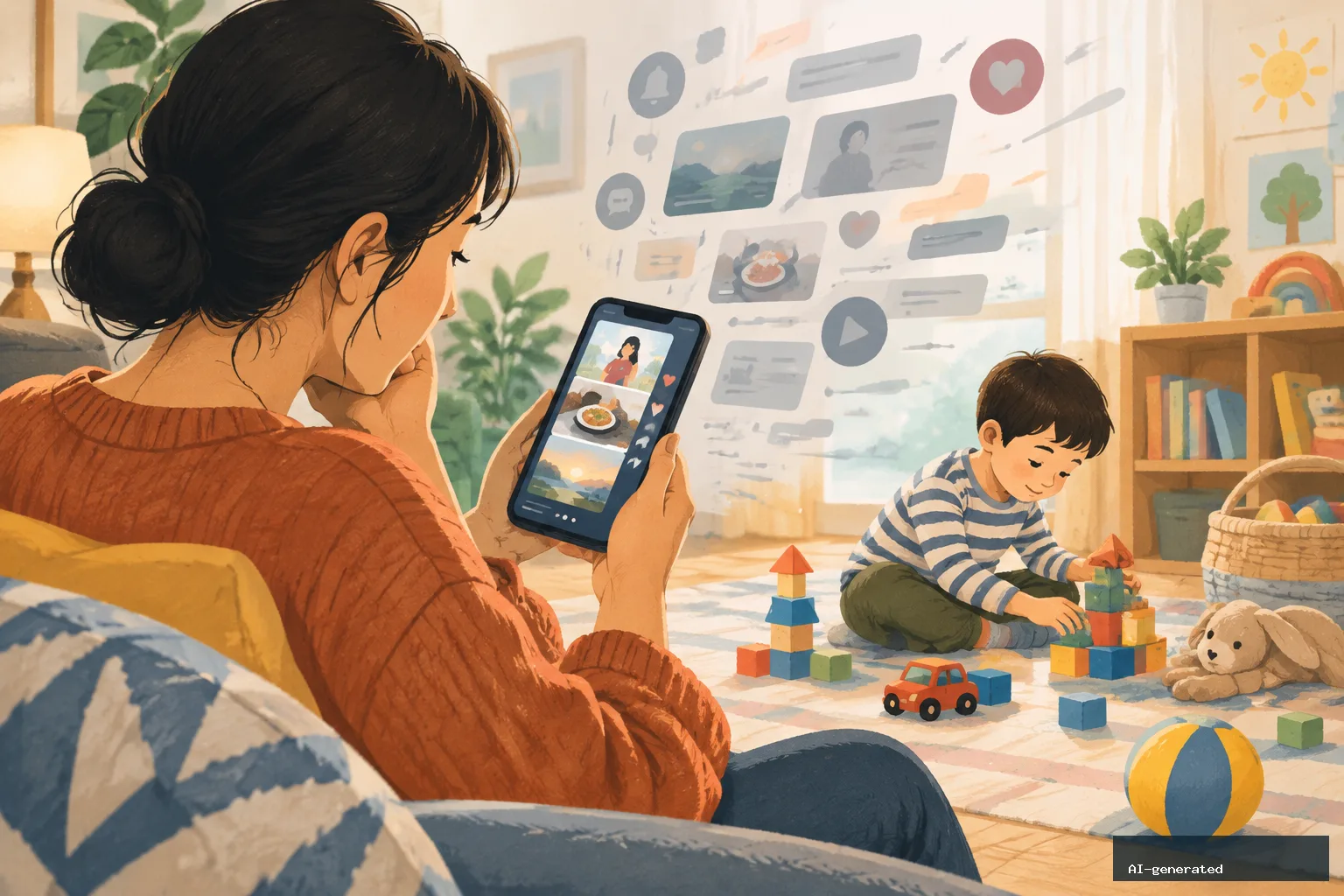
Short videos gave some Chinese parents of autistic children a more practical way to learn caregiving techniques and find emotional recognition. The same feeds could also intensify anxiety, encourage comparisons and keep parents watching after the content became distressing, according to an interview study.
The study involved 24 parents—13 mothers and 11 fathers—who were the main caregivers for children aged 4 to 15. Each parent came from a different family. The children had been diagnosed between one and 11 years earlier, and the parents had watched autism-related short videos for one to six years.
Most participants used Douyin, while others mentioned WeChat Channels, Xiaohongshu and Kuaishou. The researchers recruited parents through four autism rehabilitation and family support groups in four Chinese provinces, as well as social-media advertisements and referrals. Of 35 parents contacted, 24 completed interviews.
Videos made some techniques easier to see
Parents said video demonstrations could communicate techniques such as prompting, waiting and rewarding more clearly than written advice. They described being able to observe when a caregiver spoke, when they paused and how long they waited for a child’s response.
The ability to replay a clip was also important. For some parents, repeated viewing made it easier to revisit a technique rather than rely on a single reading or memory of an explanation.
Videos featuring other families also offered emotional recognition. Parents said stories about diagnoses, setbacks and exhaustion helped them identify feelings they were experiencing themselves. They tended to place greater trust in creators who documented progress and difficulties over months or years than in dramatic promotional claims about rapid results.
Helpful information could sit beside pressure
Participants also described several ways short-video feeds could become stressful. Advice without enough context sometimes left parents uncertain about whether it applied to their child. Some encountered increasingly frightening content, selective success stories or messages suggesting that immediate action was necessary.
Parents said sales pitches could be mixed with supportive personal stories. Some creators built trust through accounts of family life before promoting courses, training materials, nutritional products or services.
Autoplay and endless scrolling were another concern. Some parents said they continued watching even when the content made them anxious, including at times when it contributed to lost sleep.
Comparison was a recurring pressure. Parents compared their children with same-age children shown in videos and compared their own patience and effort with those of other caregivers. The interviews, however, did not establish how many parents experienced each of these concerns.
Experience changed how some parents used feeds
Parents with more experience said they developed ways to limit the emotional impact of short-video use. They described setting viewing limits, unfollowing accounts that increased anxiety and avoiding autism-related videos before bed.
They also became more cautious about absolute claims and dramatic before-and-after clips. Some consulted clinicians or therapists before making major decisions.
These practices came from the participants’ reported experiences; the study did not test them as an intervention or determine whether they reduce anxiety.
Why accuracy and context matter
The findings are relevant in a wider information environment where the quality of autism-related short videos varies. Earlier research cited in the source found that, among the 133 most-viewed informational autism videos on TikTok, 27% were rated accurate, 41% inaccurate and 32% overgeneralized. Accurate videos did not receive more engagement, while videos made by healthcare professionals were more likely to be accurate.
A separate analysis of 279 pediatric autism videos on Douyin, Bilibili and Rednote rated overall quality as moderate, with substantial differences between platforms and more low-quality videos on Rednote.
Based on the interview findings, Cun Z and Ye Y suggested that clinicians and social workers treat short-video use as part of a family’s information diet. They proposed helping parents check creator credentials, notice missing context and identify sales pitches. The study did not test these proposed approaches, and the platforms were not compared directly.
What the study can—and cannot—show
The researchers used thematic analysis of interviews lasting 45 to 75 minutes, with an average length of about 58 minutes. Seventeen interviews were conducted online and seven in person. The analysis identified three themes and 12 subthemes.
Because this was a small qualitative study, it describes a range of experiences rather than measuring how common they are. It cannot show whether short videos raise or lower parental anxiety overall. Participants were recruited mainly through rehabilitation groups and online channels, and all used short-video apps, so their experiences may not represent parents who do not use them.
The study relied on self-report and did not include viewing histories, screen-time data or information about recommended-content feeds. Each parent was interviewed once, meaning changes over time were recalled rather than followed. Autistic children, clinicians, therapists and video creators were not interviewed.
For families seeking information, the findings point to a tension rather than a simple verdict: short videos may make ideas more visible and provide a sense of recognition, while the same platform features can amplify fear, comparison and commercial pressure. The study supports paying attention to both sides of that experience without treating a short clip as complete or universally applicable guidance.
Key takeaways
- The interview study included 24 Chinese parents who were the main caregivers of autistic children.
- Parents said videos could demonstrate prompting, waiting and rewarding more clearly than written advice.
- Some parents found family stories emotionally validating, especially when they included setbacks and exhaustion.
- Participants also described anxiety from decontextualized advice, frightening recommendations, comparison, sales pitches and endless scrolling-related sleep loss.
What this means
Short-video platforms can combine demonstrations, peer experiences, emotional support and commercial content in the same information environment. This study is relevant to families and professionals because it shows why usefulness and stress may coexist, while its small, self-reported sample cannot determine the overall effect of short videos on parental anxiety or establish that any viewing strategy will help every family.
What the evidence cannot tell us
- The 24 interviews cannot establish how common these experiences are or whether short videos raise or lower parental anxiety overall.
- Participants were recruited mainly through rehabilitation groups and online channels, and all used short-video apps.
- The study relied on self-report and collected no viewing histories, screen-time data or recommended-content data.
- Each parent was interviewed once, so changes over time were recalled rather than followed. The platforms were not compared directly, and autistic children, clinicians, therapists and video creators were not interviewed.
AI tools were used to assist with the preparation of this article under our editorial standards.
Leave a Reply