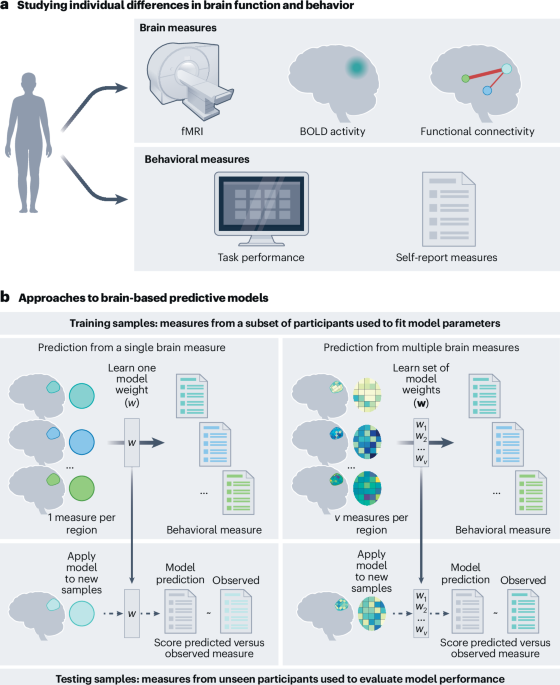
McGrath, J. J. et al. Age of onset and cumulative risk of mental disorders: a cross-national analysis of population surveys from 29 countries. Lancet Psychiatry 10, 668–681 (2023).
Johnson, D., Dupuis, G., Piche, J., Clayborne, Z. & Colman, I. Adult mental health outcomes of adolescent depression: a systematic review. Depress. Anxiety 35, 700–716 (2018).
Clayborne, Z. M., Varin, M. & Colman, I. Systematic review and meta-analysis: adolescent depression and long-term psychosocial outcomes. J. Am. Acad. Child Adolesc. Psychiatry 58, 72–79 (2019).
Copeland, W. E., Alaie, I., Jonsson, U. & Shanahan, L. Associations of childhood and adolescent depression with adult psychiatric and functional outcomes. J. Am. Acad. Child Adolesc. Psychiatry 60, 604–611 (2021).
Gore, F. M. et al. Global burden of disease in young people aged 10–24 years: a systematic analysis. Lancet 377, 2093–2102 (2011).
Insel, T. R. & Quirion, R. Psychiatry as a clinical neuroscience discipline. JAMA 294, 2221–2224 (2005).
Gabrieli, J. D. E., Ghosh, S. S. & Whitfield-Gabrieli, S. Prediction as a humanitarian and pragmatic contribution from human cognitive neuroscience. Neuron 85, 11–26 (2015).
Etkin, A. A reckoning and research agenda for neuroimaging in psychiatry. Am. J. Psychiatry 176, 507–511 (2019).
Uddin, L. Q., Castellanos, F. X. & Menon, V. Resting state functional brain connectivity in child and adolescent psychiatry: where are we now? Neuropsychopharmacology 50, 196–200 (2024).
Satterthwaite, T. D. et al. Neuroimaging of the Philadelphia Neurodevelopmental Cohort. NeuroImage 86, 544–553 (2014).
Di Martino, A. et al. The autism brain imaging data exchange: towards a large-scale evaluation of the intrinsic brain architecture in autism. Mol. Psychiatry 19, 659–667 (2014).
Casey, B. J. et al. The Adolescent Brain Cognitive Development (ABCD) study: imaging acquisition across 21 sites. Dev. Cogn. Neurosci. 32, 43–54 (2018).
Horien, C. et al. A hitchhiker’s guide to working with large, open-source neuroimaging datasets. Nat. Hum. Behav. 5, 185–193 (2021).
Haxby, J. V., Connolly, A. C. & Guntupalli, J. S. Decoding neural representational spaces using multivariate pattern analysis. Annu. Rev. Neurosci. 37, 435–456 (2014).
Rosenberg, M. D. et al. A neuromarker of sustained attention from whole-brain functional connectivity. Nat. Neurosci. 19, 165–171 (2016).
Cohen, J. D. et al. Computational approaches to fMRI analysis. Nat. Neurosci. 20, 304–313 (2017).
Woo, C.-W., Chang, L. J., Lindquist, M. A. & Wager, T. D. Building better biomarkers: brain models in translational neuroimaging. Nat. Neurosci. 20, 365–377 (2017).
Taschereau-Dumouchel, V., Kawato, M. & Lau, H. Multivoxel pattern analysis reveals dissociations between subjective fear and its physiological correlates. Mol. Psychiatry 25, 2342–2354 (2020).
Zhou, F. et al. A distributed fMRI-based signature for the subjective experience of fear. Nat. Commun. 12, 6643 (2021).
Rosen, B. R. & Savoy, R. L. fMRI at 20: has it changed the world? NeuroImage 62, 1316–1324 (2012).
Finn, E. S. & Todd Constable, R. Individual variation in functional brain connectivity: implications for personalized approaches to psychiatric disease. Dialogues Clin. Neurosci. 18, 277–287 (2016).
Finn, E. S. & Rosenberg, M. D. Beyond fingerprinting: choosing predictive connectomes over reliable connectomes. NeuroImage 239, 118254 (2021).
Greene, A. S. et al. Brain–phenotype models fail for individuals who defy sample stereotypes. Nature 609, 109–118 (2022).
Blair, R. J. R., Mathur, A., Haines, N. & Bajaj, S. Future directions for cognitive neuroscience in psychiatry: recommendations for biomarker design based on recent test re-test reliability work. Curr. Opin. Behav. Sci. 44, 101102 (2022).
Jirsaraie, R. J. et al. Mapping the neurodevelopmental predictors of psychopathology. Mol. Psychiatry 30, 478–488 (2025).
Cui, Z. & Gong, G. The effect of machine learning regression algorithms and sample size on individualized behavioral prediction with functional connectivity features. NeuroImage 178, 622–637 (2018).
Scheinost, D. et al. Ten simple rules for predictive modeling of individual differences in neuroimaging. NeuroImage 193, 35–45 (2019).
Varoquaux, G. et al. Assessing and tuning brain decoders: cross-validation, caveats, and guidelines. NeuroImage 145, 166–179 (2017).
Durstewitz, D., Koppe, G. & Meyer-Lindenberg, A. Deep neural networks in psychiatry. Mol. Psychiatry 24, 1583–1598 (2019).
Poldrack, R. A., Huckins, G. & Varoquaux, G. Establishment of best practices for evidence for prediction: a review. JAMA Psychiatry 77, 534–540 (2020).
Dhamala, E., Yeo, B. T. T. & Holmes, A. J. One size does not fit all: methodological considerations for brain-based predictive modeling in psychiatry. Biol. Psychiatry 93, 717–728 (2023).
Koutsouleris, N. & Fusar-Poli, P. From heterogeneity to precision: redefining diagnosis, prognosis, and treatment of mental disorders. Biol. Psychiatry 96, 508–510 (2024).
Marek, S. et al. Reproducible brain-wide association studies require thousands of individuals. Nature 603, 654–660 (2022).
Ramduny, J. et al. Representing brain-behavior associations by retaining high-motion minoritized youth. Biol. Psychiatry Cogn. Neurosci. Neuroimaging 11, 155–170 (2026).
Greene, A. S. & Constable, R. T. Clinical promise of brain-phenotype modeling: a review. JAMA Psychiatry 80, 848–854 (2023).
Rosenberg, M. D., Casey, B. J. & Holmes, A. J. Prediction complements explanation in understanding the developing brain. Nat. Commun. 9, 589 (2018).
Rosenberg, M. D. & Finn, E. S. How to establish robust brain–behavior relationships without thousands of individuals. Nat. Neurosci. 25, 835–837 (2022).
Chen, J. et al. Shared and unique brain network features predict cognitive, personality, and mental health scores in the ABCD study. Nat. Commun. 13, 2217 (2022).
Busch, E. L. et al. Dissociation of reliability, heritability, and predictivity in coarse- and fine-scale functional connectomes during development. J. Neurosci. 44, e0735232023 (2024).
Haxby, J. V., Guntupalli, J. S., Nastase, S. A. & Feilong, M. Hyperalignment: modeling shared information encoded in idiosyncratic cortical topographies. eLife 9, e56601 (2020).
Dubois, J. & Adolphs, R. Building a science of individual differences from fMRI. Trends Cogn. Sci. 20, 425–443 (2016).
Anderson, Z., Gratton, C. & Nusslock, R. The value of hyperalignment to unpack neural heterogeneity in the precision psychiatry movement. Biol. Psychiatry Cogn. Neurosci. Neuroimaging 6, 935–936 (2021).
Gao, S., Mishne, G. & Scheinost, D. Nonlinear manifold learning in functional magnetic resonance imaging uncovers a low-dimensional space of brain dynamics. Hum. Brain Mapp. 42, 4510–4524 (2021).
Casanova, R. et al. Embedding functional brain networks in low dimensional spaces using manifoldlearning techniques. Embedding functional brain networks in low dimensional spaces using manifold learning techniques. Front. Neuroinform 15, 740143 (2021).
Busch, E. L. et al. Multi-view manifold learning of human brain-state trajectories. Nat. Comput. Sci. 3, 240–253 (2023).
Busch, E. L., Conley, M. I. & Baskin-Sommers, A. Manifold learning uncovers nonlinear interactions between the adolescent brain and environment that predict emotional and behavioral problems. Biol. Psychiatry Cogn. Neurosci. Neuroimaging (2024).
Fortunato, C. et al. Nonlinear manifolds underlie neural population activity during behaviour. Preprint at bioRxiv https://doi.org/10.1101/2023.07.18.549575 (2024).
Lindquist, M. A., Smith, B. B., Kannan, A., Zhao, A. & Caffo, B. Measuring the functioning human brain. Annu. Rev. Stat. Appl. 12, 283–309 (2025).
Turk-Browne, N. B. Functional interactions as big data in the human brain. Science 342, 580–584 (2013).
Bijsterbosch, J. et al. Challenges and future directions for representations of functional brain organization. Nat. Neurosci. 23, 1484–1495 (2020).
Talairach, P. J. & Tournoux, P. Co-planar Stereotaxic Atlas of the Human Brain. 3-Dimensional Proportional System: An Approach to Cerebral Imaging (Thieme Medical Publishers, 1988).
Evans, A. et al. 3D statistical neuroanatomical models from 305 MRI volumes. In 1993 IEEE Conference Record Nuclear Science Symposium and Medical Imaging Conference Vol. 3, 1813–1817 (IEEE, 1993).
Jenkinson, M., Bannister, P., Brady, M. & Smith, S. Improved optimization for the robust and accurate linear registration and motion correction of brain images. NeuroImage 17, 825–841 (2002).
Fischl, B., Sereno, M. I., Tootell, R. B. & Dale, A. M. High-resolution intersubject averaging and a coordinate system for the cortical surface. Hum. Brain Mapp. 8, 272–284 (1999).
Burgund, E. D. et al. The feasibility of a common stereotactic space for children and adults in fMRI studies of development. NeuroImage 17, 184–200 (2002).
Ghosh, S. S. et al. Evaluating the validity of volume-based and surface-based brain image registration for developmental cognitive neuroscience studies in children 4 to 11 years of age. NeuroImage 53, 85–93 (2010).
Toga, A. W., Thompson, P. M. & Sowell, E. R. Mapping brain maturation. Trends Neurosci. 29, 148–159 (2006).
Raschle, N. et al. Pediatric neuroimaging in early childhood and infancy: challenges and practical guidelines. Ann. N. Y. Acad. Sci. 1252, 43–50 (2012).
Cox, D. D. & Savoy, R. L. Functional magnetic resonance imaging (fMRI) ‘brain reading’: detecting and classifying distributed patterns of fMRI activity in human visual cortex. NeuroImage 19, 261–270 (2003).
Haxby, J. V. et al. A common, high-dimensional model of the representational space in human ventral temporal cortex. Neuron 72, 404–416 (2011).
Himmelberg, M. M., Winawer, J. & Carrasco, M. Linking individual differences in human primary visual cortex to contrast sensitivity around the visual field. Nat. Commun. 13, 3309 (2022).
Thirion, B. et al. Dealing with the shortcomings of spatial normalization: multi-subject parcellation of fMRI datasets. Hum. Brain Mapp. 27, 678–693 (2006).
Poldrack, R. A. Region of interest analysis for fMRI. Soc. Cogn. Affect. Neurosci. 2, 67–70 (2007).
Calhoun, V. D. et al. Exploring the psychosis functional connectome: aberrant intrinsic networks in schizophrenia and bipolar disorder. Front. Psychiatry 2, 75 (2012).
Eickhoff, S. B., Yeo, B. T. T. & Genon, S. Imaging-based parcellations of the human brain. Nat. Rev. Neurosci. 19, 672–686 (2018).
Finn, E. S. et al. Functional connectome fingerprinting: identifying individuals using patterns of brain connectivity. Nat. Neurosci. 18, 1664–1671 (2015).
Dubois, J., Galdi, P., Paul, L. K. & Adolphs, R. A distributed brain network predicts general intelligence from resting-state human neuroimaging data. Phil. Trans. R. Soc. B 373, 20170284 (2018).
Schaefer, A. et al. Local-global parcellation of the human cerebral cortex from intrinsic functional connectivity MRI. Cereb. Cortex 28, 3095–3114 (2018).
Kong, R. et al. Individual-specific areal-level parcellations improve functional connectivity prediction of behavior. Cereb. Cortex 31, 4477–4500 (2021).
Cui, Z. et al. Linking individual differences in personalized functional network topography to psychopathology in youth. Biol. Psychiatry 92, 973–983 (2022).
Pines, A. R. et al. Dissociable multi-scale patterns of development in personalized brain networks. Nat. Commun. 13, 2647 (2022).
Keller, A. S. et al. Personalized functional brain network topography is associated with individual differences in youth cognition. Nat. Commun. 14, 8411 (2023).
Fu, Z., Liu, J., Salman, M. S., Sui, J. & Calhoun, V. D. Functional connectivity uniqueness and variability? Linkages with cognitive and psychiatric problems in children. Nat. Ment. Health 1, 956–970 (2023).
DeYoung, C. G. et al. Beyond increasing sample sizes: optimizing effect sizes in neuroimaging research on individual differences. J. Cogn. Neurosci. 37, 1023–1034 (2025).
Braga, R. M. & Buckner, R. L. Parallel interdigitated distributed networks within the individual estimated by intrinsic functional connectivity. Neuron 95, 457–471.e5 (2017).
Braga, R. M., Van Dijk, K. R. A., Polimeni, J. R., Eldaief, M. C. & Buckner, R. L. Parallel distributed networks resolved at high resolution reveal close juxtaposition of distinct regions. J. Neurophysiology 121, 1513–1534 (2019).
Feilong, M., Nastase, S. A., Guntupalli, J. S. & Haxby, J. V. Reliable individual differences in fine-grained cortical functional architecture. NeuroImage 183, 375–386 (2018).
Yoo, K. et al. Multivariate approaches improve the reliability and validity of functional connectivity and prediction of individual behaviors. NeuroImage 197, 212–223 (2019).
Badwal, M. W., Bergmann, J., Roth, J. H. R., Doeller, C. F. & Hebart, M. N. The scope and limits of fine-grained image and category information in the ventral visual pathway. J. Neurosci. 45, (2025).
Feilong, M., Guntupalli, J. S. & Haxby, J. V. The neural basis of intelligence in fine-grained cortical topographies. eLife 10, e64058 (2021).
Norman, K. A., Polyn, S. M., Detre, G. J. & Haxby, J. V. Beyond mind-reading: multi-voxel pattern analysis of fMRI data. Trends Cogn. Sci. 10, 424–430 (2006).
Hasson, U., Nir, Y., Levy, I., Fuhrmann, G. & Malach, R. Intersubject synchronization of cortical activity during natural vision. Science 303, 1634–1640 (2004).
Vanderwal, T., Kelly, C., Eilbott, J., Mayes, L. C. & Castellanos, F. X. Inscapes: a movie paradigm to improve compliance in functional magnetic resonance imaging. NeuroImage 122, 222–232 (2015).
Guntupalli, J. S., Feilong, M. & Haxby, J. V. A computational model of shared fine-scale structure in the human connectome. PLoS Comput. Biol. 14, e1006120 (2018).
Nastase, S. A., Liu, Y.-F., Hillman, H., Norman, K. A. & Hasson, U. Leveraging shared connectivity to aggregate heterogeneous datasets into a common response space. NeuroImage 217, 116865 (2020).
Anderson, Z., Turner, J. A., Ashar, Y. K., Calhoun, V. D. & Mittal, V. A. Application of hyperalignment to resting state data in individuals with psychosis reveals systematic changes in functional networks and identifies distinct clinical subgroups. Apert. Neuro 4, 10–52294 (2024).
Chen, P.-H. (Cameron) et al. A reduced-dimension fMRI shared response model. In Adv. Neural Inf. Process. Syst. Vol. 28 https://proceedings.neurips.cc/paper_files/paper/2015/file/b3967a0e938dc2a6340e258630febd5a-Paper.pdf (Curran Associates, 2015).
Mennen, A. C., Nastase, S. A., Yeshurun, Y., Hasson, U. & Norman, K. A. Real-time neurofeedback to alter interpretations of a naturalistic narrative. Neuroimage Rep. 2, 100111 (2022).
Finn, E. S. et al. Idiosynchrony: from shared responses to individual differences during naturalistic neuroimaging. NeuroImage 215, 116828 (2020).
Sava-Segal, C., Richards, C., Leung, M. & Finn, E. S. Individual differences in neural event segmentation of continuous experiences. Cereb. Cortex 33, 8164–8178 (2023).
Botch, T. L. & Finn, E. S. Neural representations of concreteness and concrete concepts are specific to the individual. J. Neurosci. 44, (2024).
Esteban, O. et al. fMRIPrep: a robust preprocessing pipeline for functional MRI. Nat. Methods 16, 111–116 (2019).
Guntupalli, J. S. et al. A model of representational spaces in human cortex. Cereb. Cortex 26, 2919–2934 (2016).
Busch, E. L. et al. Hybrid hyperalignment: a single high-dimensional model of shared information embedded in cortical patterns of response and functional connectivity. NeuroImage 233, 117975 (2021).
Van Dijk, K. R., Sabuncu, M. R. & Buckner, R. L. The influence of head motion on intrinsic functional connectivity MRI. Neuroimage 59, 431–438 (2012).
Bazeille, T., DuPre, E., Richard, H., Poline, J.-B. & Thirion, B. An empirical evaluation of functional alignment using inter-subject decoding. NeuroImage 245, 118683 (2021).
Taschereau-Dumouchel, V. et al. Towards an unconscious neural reinforcement intervention for common fears. Proc. Natl Acad. Sci. USA 115, 3470–3475 (2018).
Jiahui, G. et al. Predicting individual face-selective topography using naturalistic stimuli. NeuroImage 216, 116458 (2020).
Yates, T. S., Ellis, C. T. & Turk-Browne, N. B. Emergence and organization of adult brain function throughout child development. NeuroImage 226, 117606 (2021).
Chang, L. J. et al. Endogenous variation in ventromedial prefrontal cortex state dynamics during naturalistic viewing reflects affective experience. Sci. Adv. 7, eabf7129 (2021).
Sawalha, J. et al. Predicting pediatric anxiety from the temporal pole using neural responses to emotional faces. Sci. Rep. 11, 16723 (2021).
Kronberg, G. et al. Shared orbitofrontal dynamics to a drug-themed movie track craving and recovery in heroin addiction. Brain 148, 1778–1788 (2025).
Turek, J. S., Ellis, C. T., Skalaban, L. J., Turk-Browne, N. B. & Willke, T. L. Capturing shared and individual information in fMRI data. In 2018 IEEE International Conference on Acoustics, Speech and Signal Processing (ICASSP) 826–830 (IEEE, 2018).
Jazayeri, M. & Ostojic, S. Interpreting neural computations by examining intrinsic and embedding dimensionality of neural activity. Curr. Opin. Neurobiol. 70, 113–120 (2021).
Bandettini, P. A. et al. The challenge of BWAs: unknown unknowns in feature space and variance. Med 3, 526–531 (2022).
Calhoun, V. D., Adalı, T. & Pekar, J. J. A method for comparing group fMRI data using independent component analysis: application to visual, motor and visuomotor tasks. Magn. Reson. Imaging 22, 1181–1191 (2004).
Allen, E. A., Erhardt, E. B., Wei, Y., Eichele, T. & Calhoun, V. D. Capturing inter-subject variability with group independent component analysis of fMRI data: a simulation study. NeuroImage 59, 4141–4159 (2012).
Chen, Z. S. et al. Modern views of machine learning for precision psychiatry. Patterns 3, 100602 (2022).
Parkes, L., Satterthwaite, T. D. & Bassett, D. S. Towards precise resting-state fMRI biomarkers in psychiatry: synthesizing developments in transdiagnostic research, dimensional models of psychopathology, and normative neurodevelopment. Curr. Opin. Neurobiol. 65, 120–128 (2020).
Ziegler, G., Dahnke, R., Winkler, A. D. & Gaser, C. Partial least squares correlation of multivariate cognitive abilities and local brain structure in children and adolescents. NeuroImage 82, 284–294 (2013).
Petrican, R. & Fornito, A. Adolescent neurodevelopment and psychopathology: the interplay between adversity exposure and genetic risk for accelerated brain ageing. Dev. Cogn. Neurosci. 60, 101229 (2023).
De, A. & Chaudhuri, R. Common population codes produce extremely nonlinear neural manifolds. Proc. Natl Acad. Sci. USA 120, e2305853120 (2023).
Perich, M. G., Narain, D. & Gallego, J. A. A neural manifold view of the brain. Nat. Neurosci. 28, 1582–1597 (2025).
Salhov, M., Bermanis, A., Wolf, G. & Averbuch, A. Approximately-isometric diffusion maps. Appl. Comput. Harmon. Anal. 38, 399–419 (2015).
Becht, E. et al. Dimensionality reduction for visualizing single-cell data using UMAP. Nat. Biotechnol. 37, 38–44 (2019).
Moon, K. R. et al. Manifold learning-based methods for analyzing single-cell RNA-sequencing data. Curr. Opin. Syst. Biol. 7, 36–46 (2018).
Coifman, R. R. et al. Geometric diffusions as a tool for harmonic analysis and structure definition of data: Diffusion maps. Proc. Natl Acad. Sci. USA 102, 7426–7431 (2005).
Maaten, L. vd & Hinton, G. Visualizing data using t-SNE. J. Mach. Learn. Res. 9, 2579–2605 (2008).
Tenenbaum, J. B., Silva, V. D. & Langford, J. C. A global geometric framework for nonlinear dimensionality reduction. Science 290, 2319–2323 (2000).
Moon, K. R. et al. Visualizing structure and transitions in high-dimensional biological data. Nat. Biotechnol. 37, 1482–1492 (2019).
Langs, G. et al. Identifying shared brain networks in individuals by decoupling functional and anatomical variability. Cereb. Cortex 26, 4004–4014 (2016).
Gonzalez-Castillo, J. et al. Manifold learning for fMRI time-varying functional connectivity. Front. Hum. Neurosci. 17, (2023).
Nguyen, N. D. & Wang, D. Multiview learning for understanding functional multiomics. PLoS Comput. Biol. 16, e1007677 (2020).
Conley, M. I., Hernandez, J., Salvati, J. M., Gee, D. G. & Baskin-Sommers, A. The role of perceived threats on mental health, social, and neurocognitive youth outcomes: a multicontextual, person-centered approach. Dev. Psychopathol. 35, 689–710 (2023).
Sameroff, A. A unified theory of development: a dialectic integration of nature and nurture. Child Dev. 81, 6–22 (2010).
Viding, E., McCrory, E., Baskin-Sommers, A., Brito, S. D. & Frick, P. An ‘embedded brain’ approach to understanding antisocial behaviour. Trends Cogn. Sci. 28, 159–171 (2024).
Astle, D. E., Bassett, D. S. & Viding, E. Understanding divergence: placing developmental neuroscience in its dynamic context. Neurosci. Biobehav. Rev. 157, 105539 (2024).
Dick, A. S. et al. Meaningful associations in the adolescent brain cognitive development study. NeuroImage 239, 118262 (2021).
Owens, M. M. et al. Recalibrating expectations about effect size: a multi-method survey of effect sizes in the ABCD study. PLoS ONE 16, e0257535 (2021).
Taşkin, G. & Crawford, M. M. An out-of-sample extension to manifold learning via meta-modeling. IEEE Trans. Image Process. 28, 5227–5237 (2019).
Duque, A. F., Morin, S., Wolf, G. & Moon, K. Extendable and invertible manifold learning with geometry regularized autoencoders. In Proc. 2020 IEEE International Conference on Big Data (Big Data) 5027–5036 (IEEE, 2020).
Huang, J. et al. Learning shared neural manifolds from multi-subject fMRI data. In 2022 IEEE 32nd International Workshop on Machine Learning for Signal Processing (MLSP) 01–06 (IEEE, 2022).
Bronfenbrenner, U. & Ceci, S. J. Nature–nuture reconceptualized in developmental perspective: a bioecological model. Psychol. Rev. 101, 568–586 (1994).
Leave a Reply